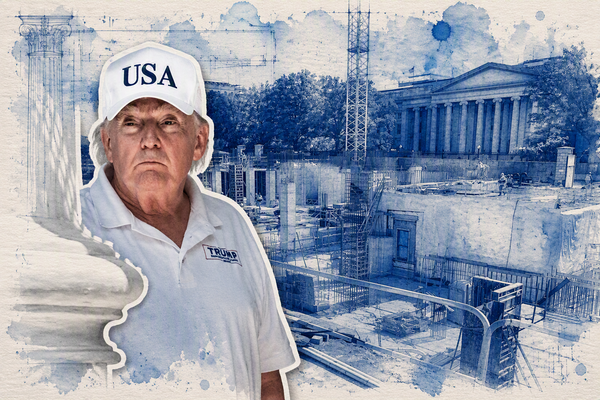
Dignity vs. Demagoguery: A Respect Agenda for a Progressive Majority That Lasts
The urge among Trump’s voters to torch the system isn’t about policy—it’s about frustration and a loss of status in American civic life. Can Democrats offer renewal before all that’s left is ashes?

American politics is running a status deficit. When communities lose standing, flipping off the system feels like agency. Donald Trump sold the catharsis; Democrats too often offered a program manual. If we want to shrink the “burn it down” vote, we have to restore status—through the rules of the market, not just checks after the fact. That starts with distinguishing two groups on the right: the unreachable—those who revel in cruelty and know exactly what they’re backing—and the reachable—people who don’t track every headline, who feel looked down on, who inherited a partisan identity and treat politics as a referendum on where they stand in the national pecking order. The first group thrives on humiliation; the second recoils from it when the facts break through. Our project is to reach the reachable. (The Ezra Klein Show index, episode page)
This is not primarily about policy menus. It’s about dignity, belonging, and whether your work still counts. Decades of deregulation and trade liberalization hit some places harder than others, creating a rural–urban cleavage that now shapes power across institutions—from county commissions and statehouses to the Senate map and the courts. The story of the last 30 years isn’t “big government vs. small government.” It’s that where you live became a stand‑in for what you’re worth. Scholars Suzanne Mettler and Trevor E. Brown show how the divide widened over five decades and now poses democratic risks.
Mettler’s research underscores a blunt truth: rural voters already know Republicans are the party of tax cuts for the wealthy and Democrats are the party of assistance for the needy. They just don’t like either choice. They don’t want handouts anymore than they want tax cuts for the rich—they want to regain their status in American society.
When estrangement becomes a political project
You can see estrangement hardening into projects as well as posts. In one widely covered move, Indiana created a commission to explore bringing rural Illinois counties into the Hoosier State—a legal longshot requiring approval by both state legislatures and Congress, but potent performance politics nonetheless. (WTHR; Indiana House GOP release; NBC Chicago)
The same dramaturgy runs through National Guard deployments into blue cities. The TIME legal analysis of D.C.’s “crime emergency” lays out how the White House leveraged D.C. Guard authority and brought in red‑state Guard units under Title 32, while pushes in other cities triggered court fights over Title 10. A USA TODAY multi‑city roundup shows how those deployments reshaped daily life—helicopter rappels in Chicago, roving checkpoints, and immigration arrests that blurred policing and deportation enforcement. For one audience, that reads as “restoring order.” For another, it reads as occupation theater. Either way, it converts place into power, and power into status. For an overview of authorities and a city map, see Democracy Docket.
“President Trump’s deployment of the National Guard from red states into blue cities isn’t just a partisan attack; it’s also a geographic one.”
— The Ezra Klein Show, Oct. 21, 2025
The bargain that failed: status for stuff
Free trade made microwaves cheaper and finance richer. In places where one plant was the local GDP, the social foundation cracked. The last bargain asked people to trade status for stuff. Many refused. They didn’t want assistance managing decline; they wanted power to reverse it. That’s the context for the Democratic penalty: even candidates running on economic populism can underperform when they wear the “Democrat” label in key Rust Belt states—unless they foreground conflict with concentrated economic power and build local credibility. (See the Center for Working‑Class Politics’ research and a plain‑English summary at Inequality.org and discussion at CWCP.)
Predistribution > Redistribution (but both matter)
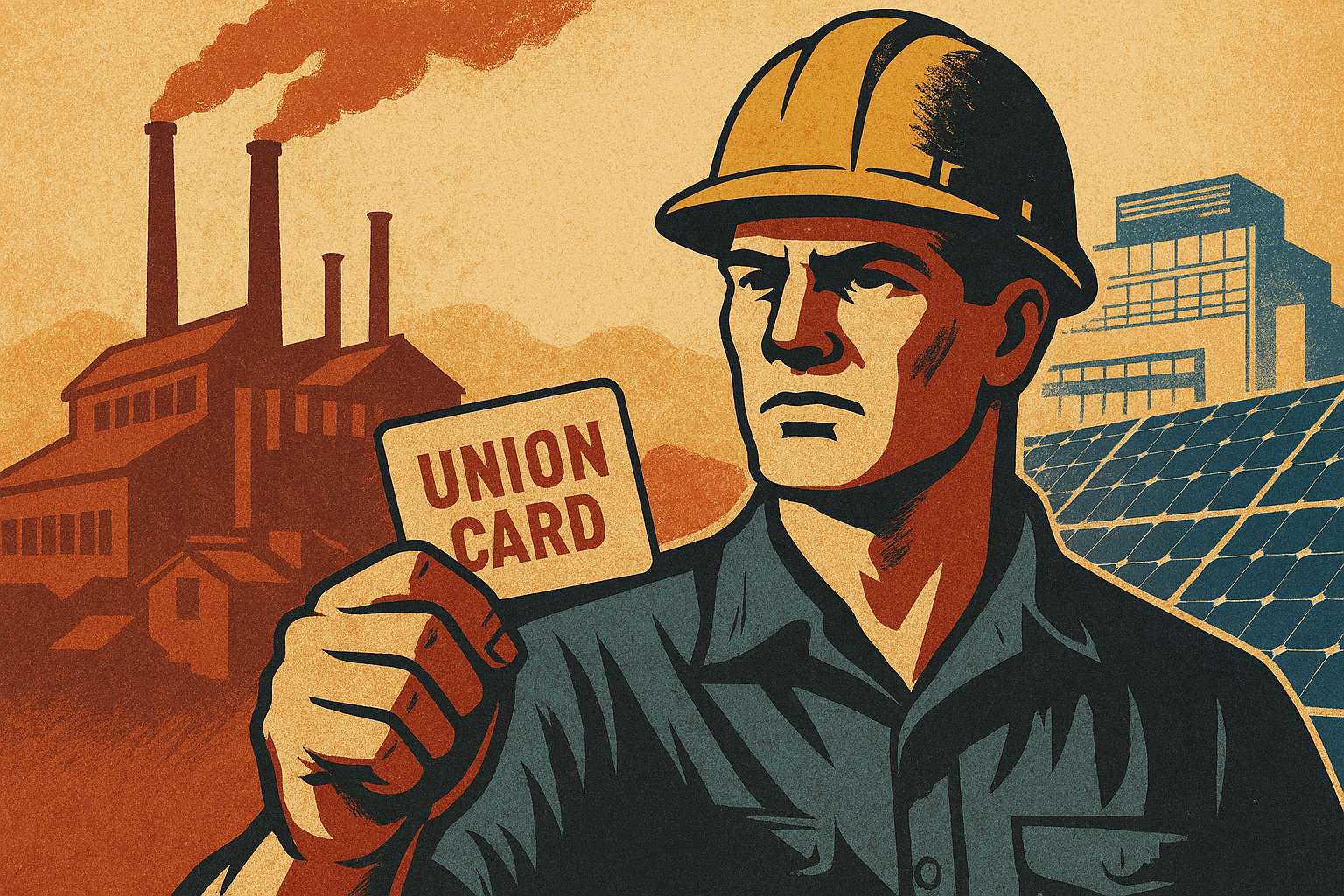
Predistribution means raising pay and power inside the market so families don’t need to be made whole after the market chews them up. Think: sectoral bargaining, easier organizing, enforcement against wage‑suppressing concentration, place‑based industrial policy tied to labor standards, and a higher—enforced—minimum wage. (Equitable Growth explainer)
Redistribution (EITC, CTC, SNAP, vouchers) remains essential, especially for people who can’t work or can’t work enough. But if status is the injury, power at work is the antidote. Assistance without agency can land as managed decline.
One‑line definition: Predistribution improves the rules of the game so paychecks arrive larger and fairer—before taxes and transfers ever show up.
A note on rural America’s diversity. Rural is not monolithic or exclusively white. The Black rural South, tribal nations, and heavily Latino farm counties have experienced place‑based inequality and civic hollow‑out in distinct ways. Any Respect Agenda worthy of the name must account for that plurality—not just rhetorically, but in how funds flow, apprenticeships are offered, and who gets a microphone. (Background: Cornell Chronicle; Princeton.)
Abundance vs. Populism: Make peace, pick a hero
Inside the party, an Abundance frame—cut red tape, build more housing and energy—and an economic‑populist frame—confront monopoly power, raise wages, strengthen labor—are sometimes treated as rivals. They don’t have to be. We need housing, grids, and factories, and we need to stop price‑gouging and wage suppression. But when it comes to persuasion, abundance‑only messaging underperforms with working‑class voters infuriated by affordability and power. Those voters respond when candidates name a villain and pick a fight. (See Hill briefings coverage at POLITICO and recap at Common Dreams; left critique at The Nation.) The practical synthesis: build a lot, and fight the people who profit from scarcity.
The next shock is already here
Many reachable voters want jobs they can be proud of; they also sense AI‑driven automation is about to reorganize whole categories of work. That’s why industrial policy matters—not as charity, as status policy. The CHIPS and Science Act, the infrastructure law, and the Inflation Reduction Act can rebuild domestic capacity if public dollars are tied to union apprenticeships, project labor agreements, local hiring, and community benefits. (U.S. Commerce; NIST CHIPS Workforce.)
What’s changed under Trump’s second term—why this now has to be a fight
Policy reality check: Since January 2025, the administration has paused, restructured, or attempted to claw back large pieces of these very tools.
- CHIPS: Trump urged Congress to repeal the law; signed an order to restructure administration via a new investment body; and began reviewing or renegotiating grants and contracts, with reports of oversight staff cuts. (POLITICO; Foley & Lardner; Ars Technica)
- IRA & IIJA: An “Unleashing American Energy” order froze disbursements; agencies terminated or paused billions in awards, especially for clean energy, EVs, and grid upgrades. Competitive programs face cancellation or compressed eligibility windows under the “One Big Beautiful Bill.” (Columbia Sabin Center; Construction Dive; KPMG brief)
- Labor standards: Biden‑era PLA and apprenticeship directives were rescinded; while IRA’s wage/apprenticeship incentives remain in statute, enforcement capacity is weaker. (UA notice; Apprenticeship.gov)
- Clean‑energy industrial policy: DOE and EPA announced cancellations or freezes of $20B+ in projects (hydrogen hubs, battery plants, grid modernization), with litigation over freezes in multiple courts. (PBS/AP; Washington Monthly; The Conversation)
Translation: We still need these tools, but they are no longer neutral infrastructure—they’re contested terrain. The case for a worker‑centered industrial policy is now inseparable from the case for power: to defend, deliver, and extend status policy in the places that were promised it.
A word on the minimum wage
Voters intuit a higher floor. The economics says: expect localized price pass‑through; pair increases with enforcement and competition policy so firms can’t use wage hikes as cover for opportunistic markups. Recent research shows strong wage gains without disemployment, consistent with monopsony in low‑wage labor markets. Translation: calibrate, enforce, and combine with antitrust and anti‑gouging rules. (REST pass‑through; NBER McDonald’s; Equitable Growth working paper)
When the “factory boom” wobbles
The early industrial build‑out produced historic manufacturing construction. But since spring 2025, tariff uncertainty has chilled hiring and delayed capital spending. One congressional analysis estimates prolonged uncertainty could cut manufacturing investment ~13% per year (~$490B by 2029); recent reporting shows factory jobs sliding since April and PMI demand weakening. (JEC Minority; CBS MoneyWatch; Manufacturing Dive)
If the bargain becomes “software efficiencies for a more brittle labor market” plus “tariffs without certainty”, you will not win back the reachable. Predictable rules—not whiplash—make investment and apprenticeships stick.