Embarrassment Is Not a State Secret: The Real Story Behind the Times Subpoenas
The administration is calling this a national-security leak investigation. Strip away the label and what's left is a president using the Justice Department to punish reporting that made him look bad.
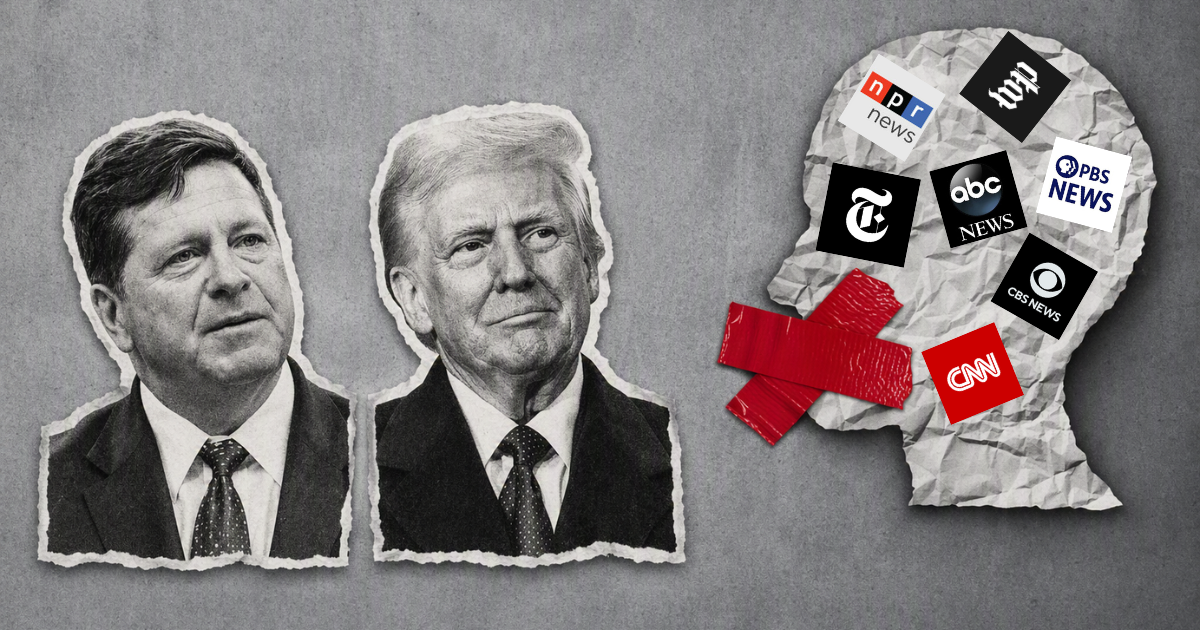
The Trump administration’s escalating campaign against independent journalism took another step forward in recent days, raising an uncomfortable question: When does a leak investigation stop being about protecting national secrets and start being about intimidating those who have made it their mission to inform the public?
The Justice Department has subpoenaed four New York Times reporters after they published stories about security concerns involving Trump’s Qatar-gifted Air Force One. The administration says it is investigating leaks of classified information and that the reporters themselves are not the targets. The Times and press-freedom groups argue that compelling reporters to testify about their sources is a direct threat to press freedom.
For years, debates about press freedom centered on censorship. Can the government stop publication? Can it ban a story? But governments do not need to win a First Amendment case to make journalism more difficult. A leak investigation can become its own deterrent. Reporters start wondering whether sources will still talk. Sources start wondering whether they will be identified. Even unsuccessful investigations can raise the cost of reporting on sensitive topics. That is precisely why, just a few years ago, the Justice Department bound its own hands: after revelations that the first Trump administration had secretly seized the records of reporters at the Times, the Post, and CNN, Attorney General Merrick Garland barred prosecutors from subpoenaing journalists over their newsgathering, and in 2022 the department wrote that ban into federal regulation. That rule still describes subpoenas and court orders against the press as “extraordinary measures, not standard investigatory practices.” This administration is now treating them as routine.
Liberty’s Lens is entirely reader‑supported. We don’t answer to corporate masters deciding what we say or what we cover.
If you find our work valuable, please consider upgrading to a paid subscription. You can take 20% off with this coupon — and support independent media for about the price of a coffee per month.
Thank you to every reader who shares our work and helps it reach new audiences. We couldn’t do this without you. We love you all.
Investigation or Intimidation?
To be fair, the administration’s argument is not frivolous on its face. Every administration investigates leaks of classified information. If government officials unlawfully disclosed protected information, prosecutors have an obligation to determine who did it.
Defenders of the subpoenas often point to leak investigations conducted by previous administrations, including Barack Obama’s—whose Justice Department secretly seized Associated Press phone records and cast a Fox News reporter as a possible co-conspirator. Those cases were real, and they matter—but not for the reason defenders think. Because what happened next is the whole point.
When overreach under Obama drew bipartisan alarm, Obama responded by constraining his own power. He said he was “troubled” that leak investigations could chill the journalism that holds government accountable, directed his attorney general to review the rules, and in 2013 the Justice Department adopted new guidelines protecting reporters engaged in routine newsgathering. Trump reversed them—secretly seizing the records of reporters at the Times, the Post, and CNN to hunt down politically damaging leaks. When Joe Biden took office, his Justice Department rebuilt the guardrails and made them stronger, formally barring the government from subpoenaing journalists for doing their jobs. And now Trump is tearing them down again.
That is the pattern, and it is not subtle. Confronted with the same temptation, one side keeps building protections for the press—even against itself—and the other keeps dismantling them the moment the reporting gets embarrassing. The relevant question was never whether leak investigations happen. They do. The question is what a president does when the press gets too close: whether he protects the freedom that makes accountability possible, or protects himself.
Protecting Secrets, or Saving Face?
Traditionally, investigators begin by identifying government officials who had access to the information in question and narrowing the pool of potential leakers from within. Critics argue that sending federal agents to reporters’ homes and demanding grand-jury testimony at such an early stage makes this case look less like a routine leak investigation and more like an effort to discourage future reporting.
That is also what makes this particular case so troubling. When Obama’s Justice Department went after leakers, there was at least a genuine secret at stake—a live covert operation against an al-Qaeda cell, intelligence sources and methods aimed at North Korea. Whatever you make of the tactics, no one could pretend the leaks themselves were trivial. Trump’s leak hunts have been a different animal. He has not been shielding operations in the field or sources whose lives were on the line. Time and again, what the government has raced to protect is not the nation’s security but the president’s reputation.
Here there were no active spies to protect or ongoing sting operations to compromise. The information disclosed was a physical, structural vulnerability regarding an airplane—and the primary damage done was exposing an administrative blunder to the world. Ankara International Airport is heavily monitored by foreign intelligence agencies, including Iran, which shares a border with Turkey. Intelligence operatives did not need a newspaper article to see that the president had abandoned his prized new aircraft during a sudden escalation of military hostilities. They could easily deduce the tactical reasoning on their own. Besides, aviation and defense experts had already been publicly warning about this exact vulnerability for months.
And the questions raised by the reporting are plainly matters of public interest. After all, the public footed the bill for the retrofit of this so-called gift to the president. They have a right to know if their money was spent wisely or squandered on a vanity project.
Did administration officials conceal security problems with the aircraft? Were the Times’ sources correct? Why did Trump fly the new plane to Turkey, abandon it for an older Air Force One on the leg out of Ankara—the leg nearest Iran—and then climb back aboard the new jet once he reached Britain? Those are precisely the kinds of questions journalists are supposed to investigate.
If the government’s response to reporting on matters of legitimate public concern is to subpoena journalists before a grand jury, the practical effect extends far beyond this one story. Future sources may remain silent not because they were disproven, but because they watched what happened to the people who spoke last time.