From Genocide to Gentrification
Trump’s “Board of Peace” and Israel’s real estate bonanza reveal the true cost of Gaza’s war: sovereignty traded for profit.
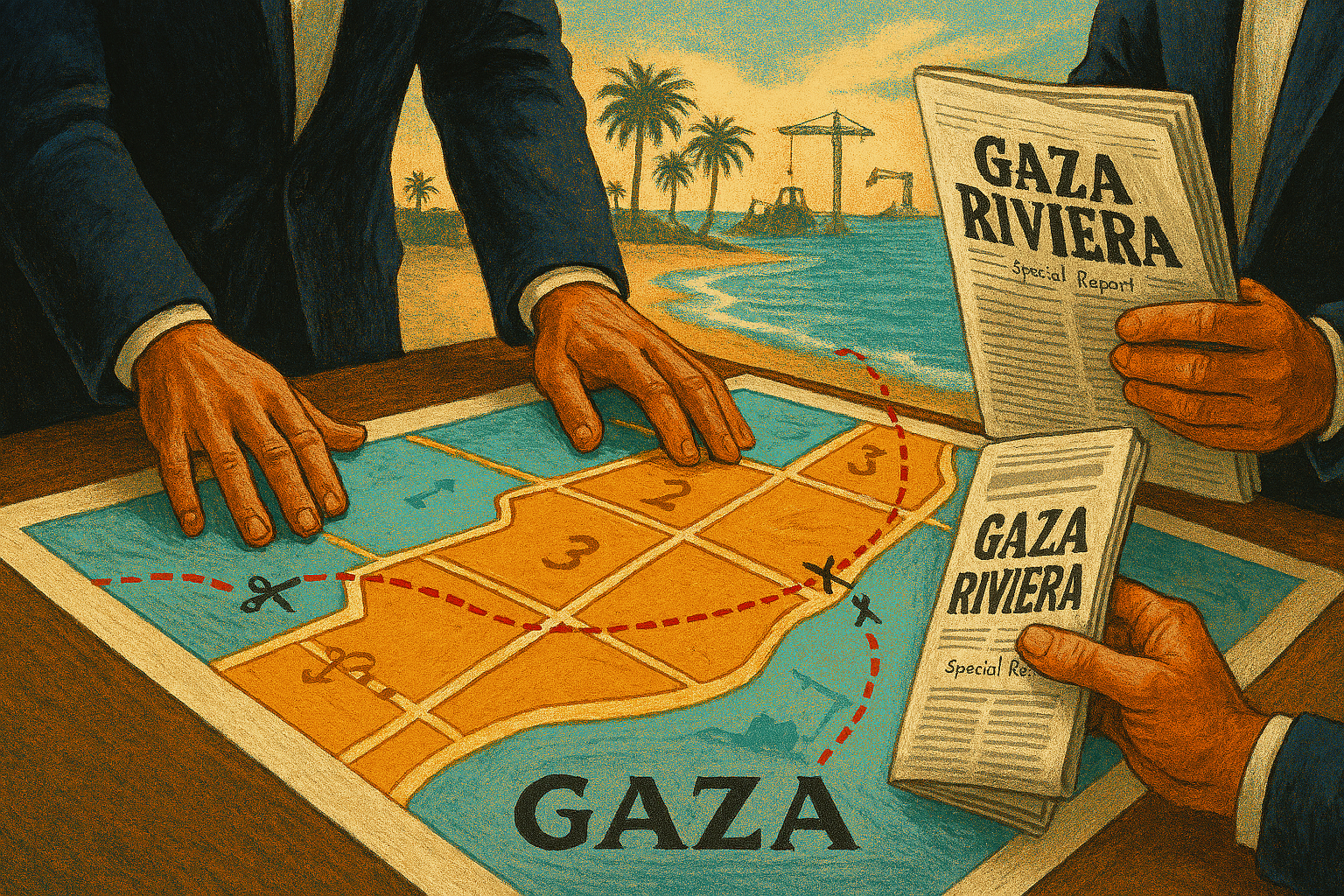
“We have paid a lot of money for this war,” Israel’s finance minister Bezalel Smotrich told a Tel Aviv real-estate crowd. “We have to see how we are dividing up the land in percentages. The demolition, the first stage in the city’s renewal, we have already done. Now we need to build.” He added: “There is a business plan, put together by the most professional people here, that is on President Trump’s desk.” (Times of Israel | NBC News)
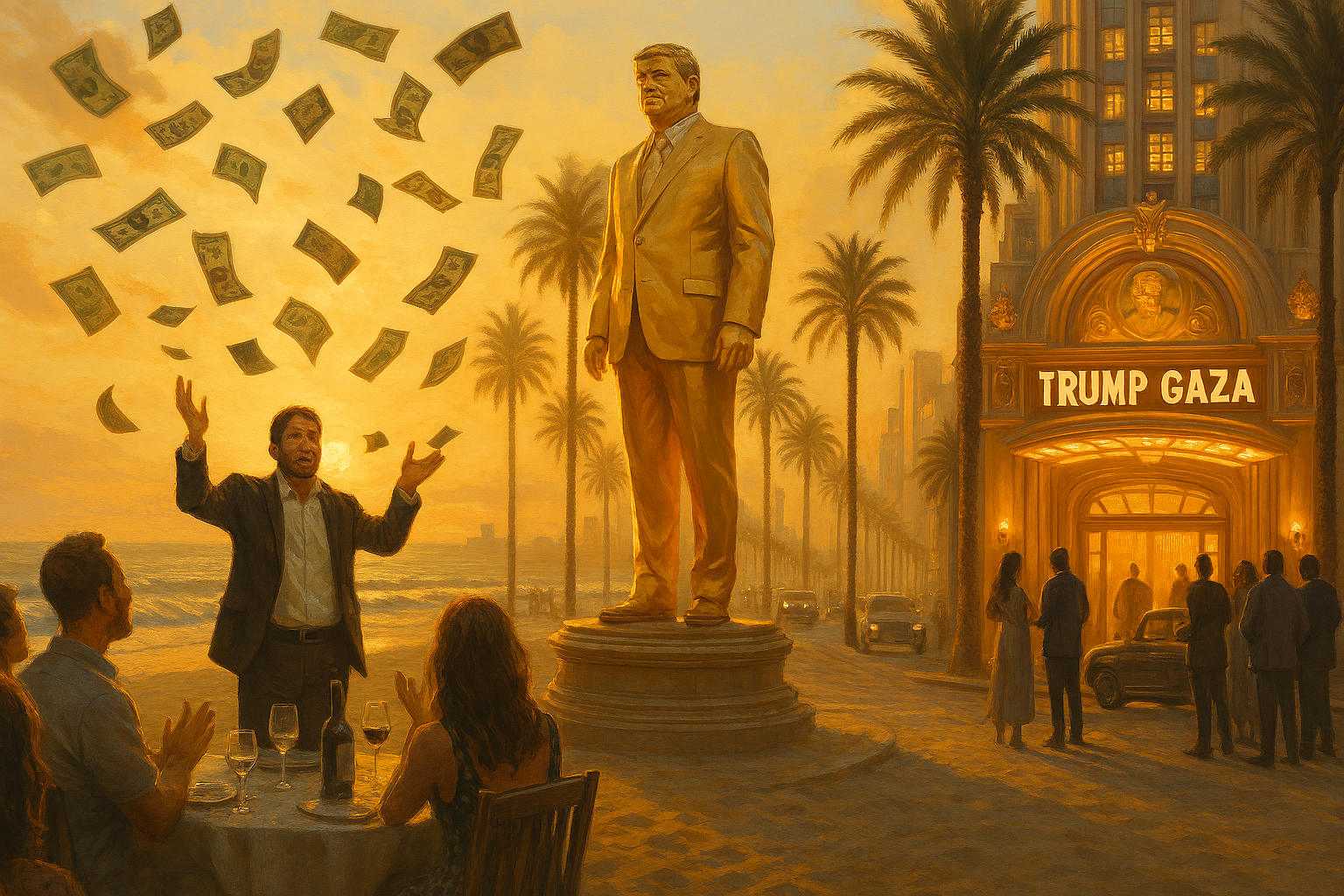
It’s rare to hear the mask slip this far. Smotrich’s language—“real estate bonanza,” “percentages on the land,” “demolition phase”—isn’t an offhand gaffe; it’s a business thesis. And it connects, line by line, to Trump-world’s evolving plan: from February’s blunt proposal to “take over” Gaza and build an international playground, to September’s gentler “Board of Peace” with “technocrats” and an “International Stabilization Force.” (ABC News | The Independent)
What the “technocratic administration” really means
In Trump’s September 29 plan, Gaza is to be run by a “temporary, transitional” committee of Palestinian technocrats—professionals without political mandate—while security is overseen by an International Stabilization Force and a supra-structure called the “Board of Peace,” chaired by Trump, with Tony Blair floated as a member. The plan promises reconstruction and a “pathway” to Palestinian self-determination, but excludes Hamas from any role and leaves ultimate authority with the external board and force. (NBC News | The Independent)
That is governance under receivership. “Technocratic” becomes a polite way to describe administration without sovereignty—local managers executing decisions they didn’t make, while a foreign board controls borders, security, capital flows, and redevelopment concessions. (CBC | The Hill)
Netanyahu at the White House in February → GREAT Trust → September’s ‘Board of Peace’ Announcement: the throughline
February 4, 2025 — “We’ll own it.”
“The U.S. will take over the Gaza Strip, and we will do a job with it, too. We’ll own it… Level the site… Create an economic development… I do see a long-term ownership position.”
That was President Trump at the White House with Netanyahu, on camera and on the record. He also pitched the sales brochure: Gaza as the “Riviera of the Middle East,” where “the world’s people” could make their homes. (ABC News | CNBC | Times of Israel)
Early September — the GREAT Trust leak
A 38‑page slide deck, the GREAT Trust plan, envisioned at least a decade of U.S. trusteeship, AI “smart cities,” luxury resorts, and a high‑tech manufacturing corridor—with “voluntary” relocation of Gazans incentivized by cash payments and property “tokens,” modeled for a fourfold investor return on ~$100 billion. (CNBC | Middle East Eye)
September 17 — Smotrich says the plan is “on President Trump’s desk”
“There is a business plan… on President Trump’s desk… We’ve done the demolition phase… now we need to build… We have to see how we are dividing up the land in percentages.”
Smotrich’s candor ties the trusteeship slides to the politics: demolition as “urban renewal,” postwar Gaza as a profit-sharing exercise. (Times of Israel | Middle East Eye)
September 29–30 — the “Board of Peace” rollout
Trump and Netanyahu unveil a 20‑point plan: ceasefire if Hamas agrees; hostages for prisoners; a technocratic committee under an international force; and reconstruction under external supervision. The materials add an assurance—“No one will be forced to leave Gaza”—that sits uneasily beside the relocation incentives circulating weeks earlier.
On top of everything, the deal seems designed to be rejected by Hamas, who would be required to surrender all leverage and then merely hope that Trump will hold up his end of the deal. Trump is literally famous for reneging on deals. (NBC News | The Independent)
“We paid a lot for this war”: the ROI mindset