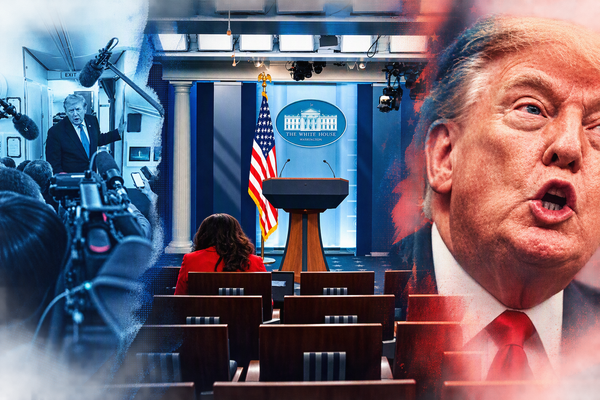
From Riot to Reward: A Payday for Trump’s “Very Fine People”
From pardons to payouts, a new federal fund could turn political loyalty—and violence—into financial reward
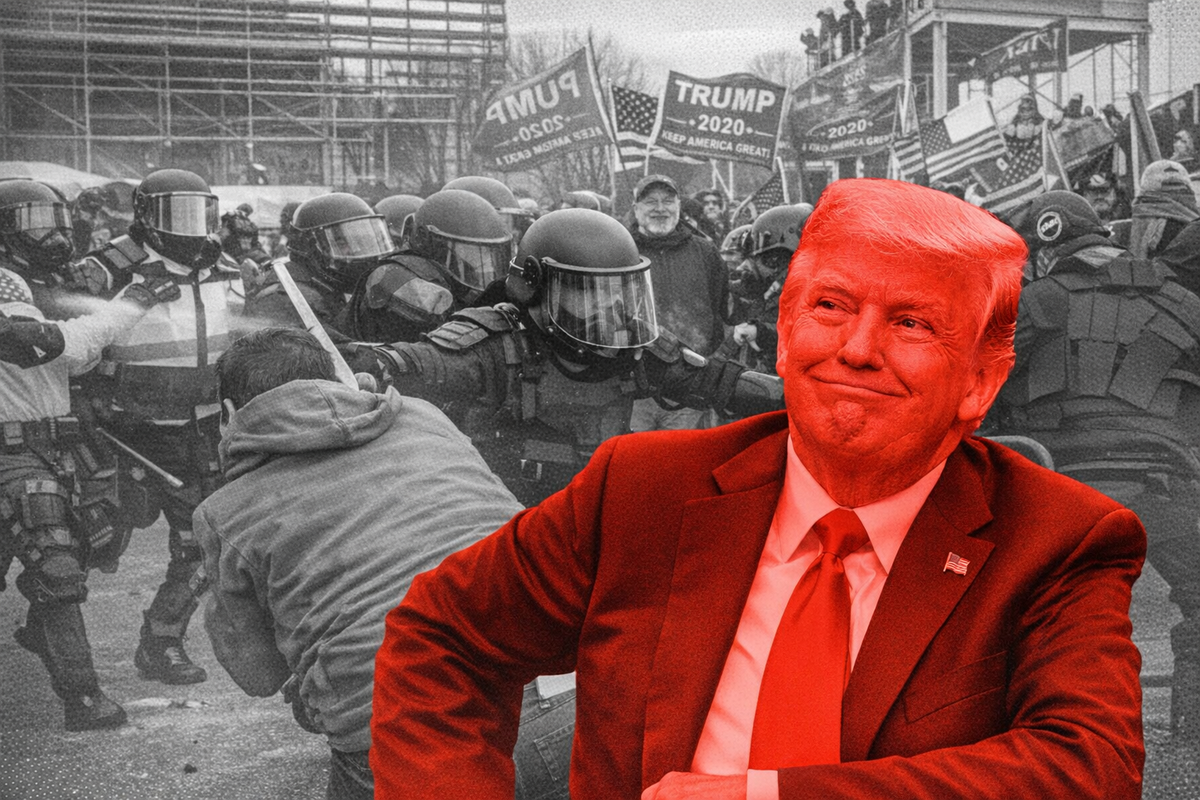
Suggest that Trump called a white supremacist rally in Charlottesville “very fine people,” and you’ll be accused of bad faith by his many red-hatted supporters. But it increasingly appears that individuals drawn from that same movement—people his defenders insist he was not praising—may now find themselves eligible, if not favored, for compensation from his administration’s new “weaponization” fund.
Notice for a moment that I say fund, and not settlement.
The Trump DOJ’s so-called “settlement” was not, in fact, a settlement filed with the courts. Because Trump moved for a voluntary dismissal of his suit, the agreement never underwent judicial review or approval. The presiding judge noted there is “no settlement of record” in the court file (CNN).
The settlement that was actually a taxpayer-funded program
In a typical civil case, when parties reach a compromise, they submit a stipulation of settlement signed by both sides. The judge then reviews and approves it, making the terms part of the official record.
That didn’t happen here.
Instead, Trump’s legal team filed a voluntary notice of dismissal—a unilateral move that simply ends the lawsuit. The actual agreement was negotiated privately between Trump and the DOJ and never attached to the filing. That means the court never evaluated the $1.776 billion deal for fairness, legality, or propriety.
In disputes between private parties, this kind of arrangement is common. Settlement terms are often kept confidential, and courts close cases without examining the agreement.
But when the federal government is involved, avoiding the court record is highly unusual—and has raised significant legal red flags (NPR). The government is not a private litigant; it is expected to operate transparently, particularly when taxpayer money is at stake.
In major public compensation programs—like the September 11th Victim Compensation Fund or the Obama administration’s Keepseagle v. Vilsack settlement—funds were either explicitly authorized by Congress or reviewed and approved by a federal judge.
Here, neither safeguard was present.
More striking still is the absence of any real adversarial process. In a normal case, the DOJ defends the government’s financial interest. But here, Trump effectively settled a lawsuit with his own administration. Critics argue that by bypassing judicial review, the executive branch was able to direct $1.776 billion in taxpayer funds with no meaningful oversight (Yahoo News).
A voluntary dismissal is a standard legal tool. Using it to create a $1.776 billion taxpayer-funded program—without congressional authorization or judicial approval—is not. By any reasonable measure, it is unprecedented in modern U.S. governance.
So what does this new program actually do?
The official purpose of the Anti-Weaponization Fund is to compensate individuals who claim they were victims of political targeting or “lawfare” under the Biden administration (PBS).
According to the DOJ and Acting Attorney General Todd Blanche, the program provides a lawful process to hear grievances and offer redress (DOJ).
But critics—including congressional Democrats and legal watchdogs—see something very different: a taxpayer-funded mechanism to financially reward Trump’s political allies.
And the concern isn’t abstract.
Because Trump has already pardoned many individuals convicted in connection with January 6, this fund creates a pathway for those same individuals to now receive financial compensation.
Political figures previously entangled in federal investigations are already moving to capitalize. Longtime Trump ally Michael Caputo has reportedly filed one of the first claims (The Hill).
House Judiciary Committee Democrats have gone further, describing the fund as a “racket” designed to underwrite an insurrectionist movement.
But even that framing understates the larger issue.
This isn’t just about retroactive benefit. It is a forward-looking incentive structure.
If individuals come to believe that participation in political extremism—or even violence—on behalf of Trump’s objectives may lead not just to pardon but to compensation, the risk calculation changes. The barrier to action lowers. The perceived cost diminishes.
January 6 may have failed in its objective of overturning the will of the voters—but what happens when such attempts become not just normalized, but encouraged?
Can a democracy function under those conditions?
Liberty’s Lens is entirely reader‑supported. We don’t answer to corporate masters deciding what we say or what we cover.
If you find our work valuable, please consider upgrading to a paid subscription. You can take 20% off with this coupon — and support independent media for about the price of a coffee per month.
Thank you to every reader who shares our work and helps it reach new audiences. We couldn’t do this without you. We love you all.
A program rewarding political violence
The push to compensate January 6 defendants did not begin with the creation of the Anti-Weaponization Fund. It was driven by figures like Mark McCloskey, a St. Louis attorney who represents hundreds of January 6 defendants and spent over a year lobbying the Justice Department to establish a structured compensation mechanism. He filed hundreds of administrative claims on behalf of rioters, arguing they were owed restitution for time spent behind bars.
That effort gained real traction when the DOJ settled a $30 million civil lawsuit filed by the estate of Ashli Babbitt—the rioter shot and killed by a Capitol Police officer—ultimately approving a $5 million taxpayer-funded payout to her family. For many in the January 6 community, the message was clear: these claims could succeed (CBS News).
With the creation of the $1.776 billion Anti-Weaponization Fund, that possibility has now been transformed into a formal pathway. What had once been a fringe demand is now an institutional process—potentially available to nearly 1,600 January 6 defendants who argue federal prosecutions destroyed their livelihoods.
That expectation has only been reinforced. Acting Attorney General Todd Blanche has explicitly refused to rule out payments even for defendants convicted of assaulting police officers, while Donald Trump has publicly backed the idea, describing potential compensation for those he claims were wrongly imprisoned or financially ruined (USA Today).
The result has been a sharp legal backlash. Capitol Police officers—including Harry Dunn (Standing Our Ground) and Daniel Hodges—have filed suit to block the program, arguing it constitutes an unlawful system of public financing for insurrectionists and paramilitary actors (CNBC).
What about Trump’s “very fine people”?
High-profile January 6 defendants like Anthime “Baked Alaska” Gionet are actively seeking eligibility, and the Department of Justice has left the door open for them to receive payouts (POLITICO).
Gionet is not an isolated case. A far-right livestreamer who served jail time for his role on January 6, he is also part of a cohort that overlaps with earlier extremist mobilizations. Along with figures like Gabriel Brown—arrested after video surfaced of his participation in the assault on the Capitol’s media staging area—Gionet represents a throughline between the 2017 Unite the Right rally in Charlottesville and the January 6 attack.
That connection matters. It reflects not a collection of isolated actors, but a continuous movement—one that is now finding its way into a system that offers potential financial reward.
Gionet is among the many January 6 defendants who have filed civil claims alleging that law enforcement used “wanton” and “reckless” force against the crowd—claims that, in light of extensive publicly available footage, strain credibility.
 Liberty's Lens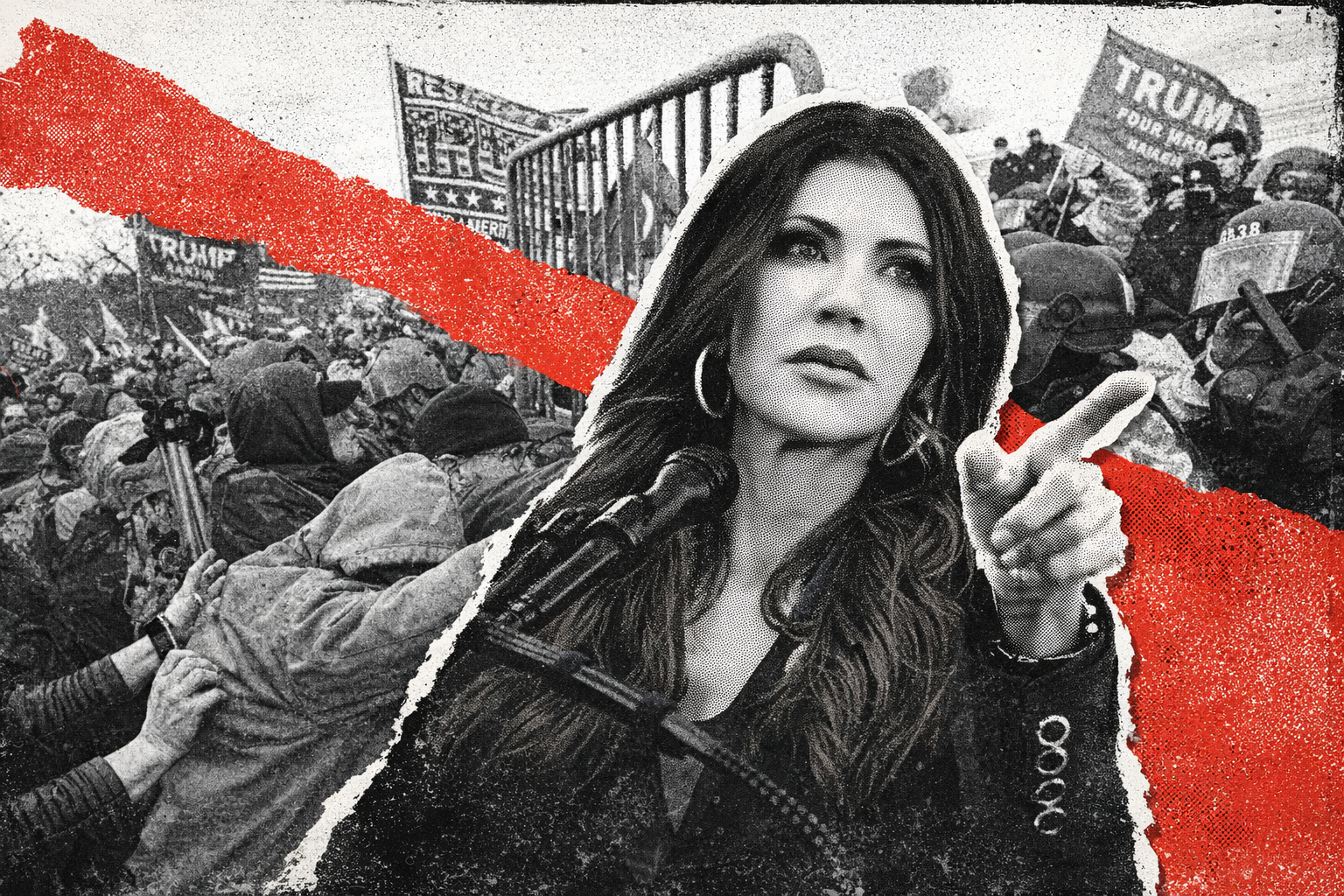
The contrast is hard to ignore. Protesters like Alex Pretti and Renee Good were killed, and others have faced aggressive federal responses—such as ICE operations under Greg Bovino—without any comparable pathway to compensation.
The strategy here is straightforward: convert claims of excessive force on January 6 into payouts from a Justice Department that has signaled it is willing to settle with Trump allies.
Trump’s “very fine people” are no longer just a rhetorical dispute. They now sit within a pipeline that leads—potentially—to taxpayer-funded compensation.
And we already know who he considers worthy of protection. He pardoned them.
What That Pipeline Produces
Trump didn’t just defend those who participated in January 6—he pardoned them, and described them as victims. These are the people he deems worthy of protection—and now he is asking Americans to reward them on his behalf.
These are his “very fine people.” What, exactly, does that include?
Andrew Paul Johnson—a pardoned January 6 defendant—was later arrested on serious state-level child sex abuse charges. According to police affidavits, he attempted to silence one of the victims by offering them a share of a supposed $10 million payout tied to his status as a “Jan 6er.” The promise of government compensation had already entered the equation—enough to be used as leverage (The Intercept).
These, too, fall within the definition of “very fine people”—those the President defends, those he rewards, and those willing to act on his behalf, from marching in Charlottesville to storming the Capitol and beyond.
It is not an isolated case. A formal analysis found that at least 33 pardoned January 6 defendants have already been rearrested, charged, or convicted of additional crimes (CREW | House Judiciary Democrats).
A few examples illustrate the trend:
- Christopher Moynihan — later charged with threatening to assassinate a member of Congress
- Taylor Taranto — arrested after threats involving explosives
- Theodore Middendorf — sentenced to 19 years for the sexual assault of a child
- Shane Woods — convicted in connection with a fatal DUI crash
- Ryan Nichols — arrested after allegedly brandishing a firearm during a dispute
- And these are just a handful of cases—there are many more.
And yet, individuals drawn from this same movement may still fall within the scope of eligibility under a system with limited transparency and concentrated executive control.
Call It What It Is
What began as a defense of “very fine people” is now a system that protects, pardons, and proposes to reward them.
This is not just corruption.
It is the construction of a system that reduces legal risk for political allies while introducing the possibility of financial reward.
It is a system that pays people to break the law.
There has to be a line. If this isn’t it, what is?
And if there is a line, it won’t hold itself.
The Trump regime’s authoritarian project depends on misinformation and disinformation. It thrives in darkness and resists scrutiny. That’s why exposure matters — and why independent media does too.
A free society depends on a free press. Not one shaped by access, intimidation, or political loyalty, but one willing to report what those in power would rather keep hidden.
Liberty’s Lens exists for that purpose. We’re independent, reader‑supported, and committed to reporting without fear or favor.
If that work matters to you, consider supporting it by subscribing — free or paid. Paid subscriptions directly fund our reporting, and right now you can subscribe at 20% off with this coupon, roughly the cost of a monthly coffee.
If a subscription isn’t workable at the moment, one‑time contributions are a meaningful alternative. And whether or not financial support is possible, sharing this work matters — it’s how reporting like this reaches people it would otherwise be kept from.
Your support keeps independent journalism alive.
Find us on X, Blue Sky, and Facebook. Wherever you are, that’s where we want to be.
For readers who want the receipts
Judge notes no formal settlement filed — (CNN)
Legal analysis highlighting lack of oversight — (NPR)
Experts call arrangement unprecedented — (Yahoo News)
PBS reporting on fund creation — (PBS)
Official DOJ announcement — (DOJ)
Criticism and early claims — (The Hill)
Ashli Babbitt settlement payout — (CBS News)
DOJ position on J6 eligibility — (USA Today)
Capitol Police lawsuit — (CNBC)
J6 lawsuits anticipating payouts — (POLITICO)
CREW recidivism analysis — (CREW)
House Judiciary findings — (House Judiciary Democrats)
— Liberty’s Lens
This article is provided for public interest reporting and analysis. All external links open in a new tab and point to their original publishers.
© 2026 Liberty’s Lens. All rights reserved.