Guilty by Association: NSPM-7 and the Criminalization of the American Left
Part 2 of a 2-part series on NSPM-7 and the Trump DOJ's campaign to criminalize dissent. Part 2 examines the collapsed cases in L.A. and Minneapolis, the pattern connecting them, and the J6 asymmetry
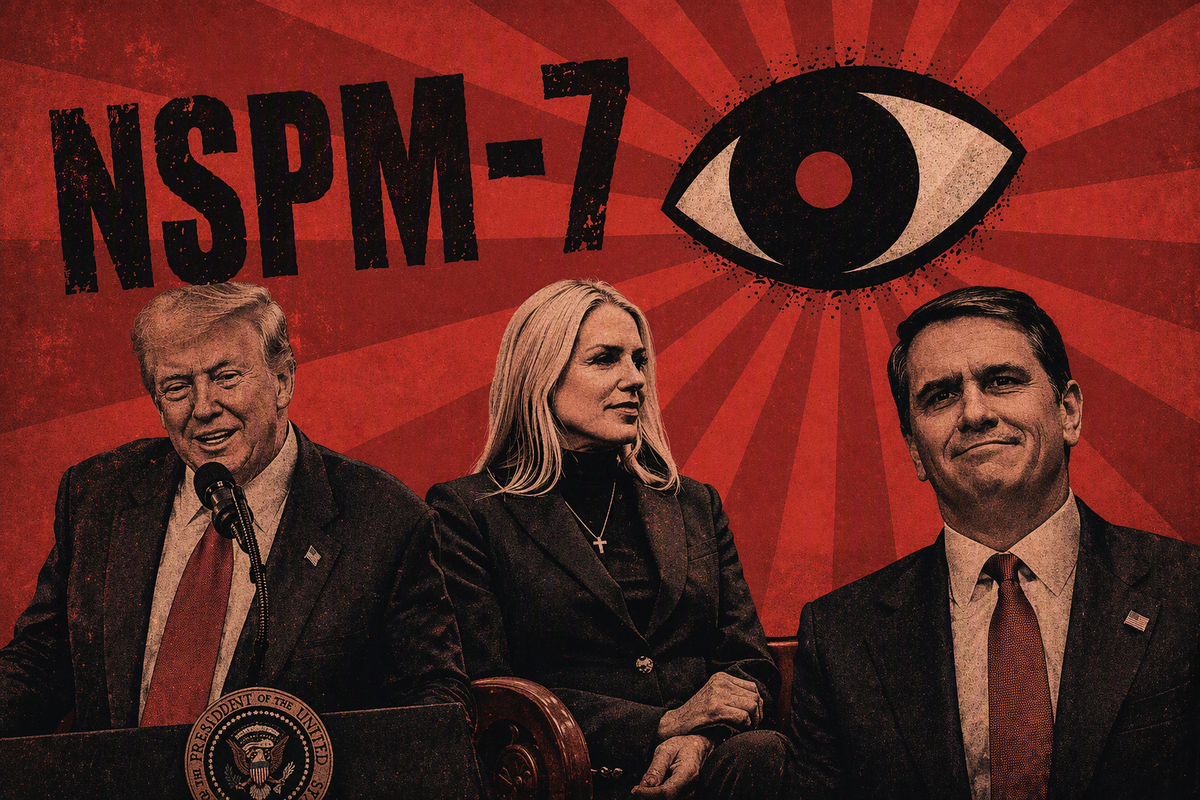
In Part 1, we looked at how NSPM-7 — the presidential memorandum turning left-aligned political dissent into a domestic terrorism priority — produced the extraordinary Prairieland sentences and drove the collapsed Broadview Six prosecution. But Prairieland and Broadview are not isolated cases. They are the two ends of a national pattern that is now visible in courtrooms from Los Angeles to Minneapolis to Atlanta.
Check out part 1 here:
 Liberty's Lens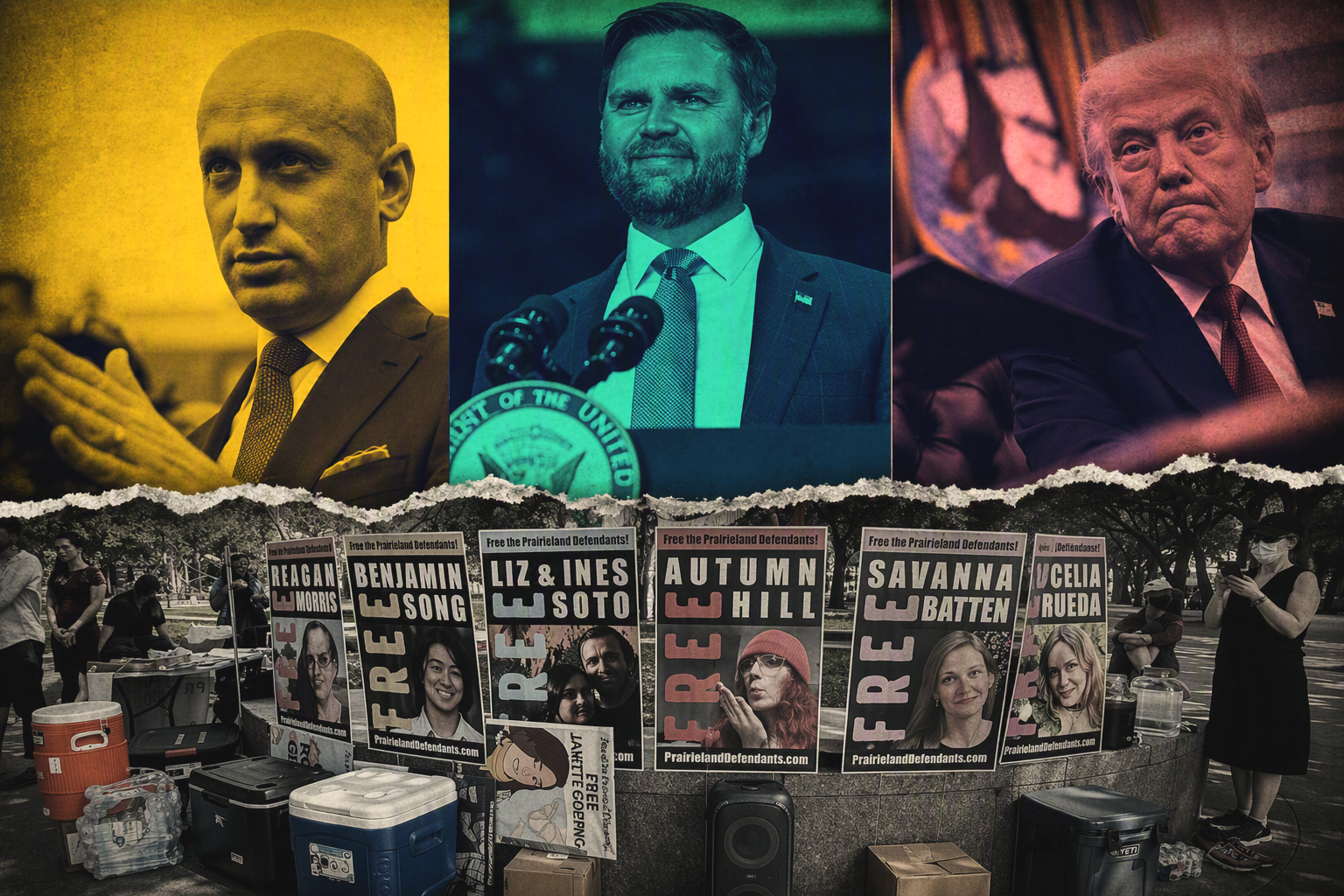
Liberty’s Lens is entirely reader‑supported. We don’t answer to corporate masters deciding what we say or what we cover.
If you find our work valuable, please consider upgrading to a paid subscription. You can take 20% off with this coupon — and support independent media for about the price of a coffee per month.
Thank you to every reader who shares our work and helps it reach new audiences. We couldn’t do this without you. We love you all.
Los Angeles and Minneapolis: The Pattern Emerges
Broadview is not alone. Across the country, cases against anti-ICE protesters have collapsed as soon as courts have looked closely at the evidence.
In Los Angeles, TikTok creator Jonathon Redondo-Rosales spent six months in federal detention before a judge threw out the case against him, ruling that the government had acted in “bad faith.” He had been charged with assaulting a Federal Protective Service officer at an August 2025 anti-ICE protest — specifically, with striking the officer using a cloth sun hat. Video showed the officer lunging at Redondo-Rosales as a government vehicle rolled into him. When defense attorneys examined the officer’s record, they discovered he had failed to disclose three prior criminal convictions to his DOJ supervisors. Charges against a second protester, Ashleigh Brown, were also dropped. The dismissal, U.S. District Judge Cynthia Valenzuela wrote, was necessary to avoid “chilling lawful protest.”
In Minneapolis in February 2026, a federal judge dismissed felony assault charges against two Venezuelan men, Alfredo Alejandro Aljorna and Julio Cesar Sosa-Celis, after ICE’s acting director admitted that two ICE officers “appear to have made untruthful statements” in sworn testimony about a January shooting that wounded Sosa-Celis in the leg. U.S. Attorney Daniel Rosen filed an unusual motion admitting that “newly discovered evidence” was “materially inconsistent” with the government’s original allegations. Both officers were placed on administrative leave. Minnesota Public Radio has since reported that federal prosecutors have dismissed more than a third of the cases they filed against ICE protesters in the state after the allegations failed to survive scrutiny.
Not every case involves government misconduct. But the pattern is undeniable: when federal prosecutors have moved aggressively against anti-ICE protesters, judges are increasingly finding the underlying evidence unable to support the charging theories.
At the same time, Joint Task Force Vanguard is opening new fronts. In June 2026, federal prosecutors indicted two Stop Cop City activists in Atlanta on federal arson charges tied to a May 2022 protest — nearly four years after the incident. The DOJ press release explicitly announced the case as “part of a nationwide National Security Presidential Memorandum 7 initiative” led by Vanguard. State charges against the same defendants had been dismissed a week earlier. That same month, prosecutors in Minneapolis handed down a 94-page federal conspiracy indictment against 15 activists involved in resisting Operation Metro Surge, with much of the indictment consisting of Signal messages, references to anarchist writings, and out-of-state speaking engagements.
The Common Thread
Across every one of these cases — successful convictions and collapsed prosecutions alike — the same categories of evidence keep appearing:
Political literature. Encrypted messaging. Protest logistics. Choice of clothing. Attendance at demonstrations. Affiliation with ideological movements. Signal chats. Zines. Anarchist writings. Anti-ICE flyers. Association with people who later become accused of violence.
At Prairieland, prosecutors used all-black clothing and Signal use as evidence of material support for terrorism. In the Minneapolis Operation Metro Surge indictment, most of the 94 pages consist of group-chat messages and anarchist affiliations. In the Atlanta Cop City case, prosecutors reached back four years to build a federal arson case out of a protest at a general contractor’s headquarters. And in Sanchez Estrada’s case, the government convicted a man of concealing a document based on a box containing zines about squatting and radical political thought — literature it acknowledged was protected by the First Amendment.
This is the pattern NSPM-7 was built to produce. It is not necessary to prove that a specific defendant committed or intended violence. It is only necessary to establish membership in an ideological project the government has labeled as terrorism-adjacent, and then to attach ordinary protest activity to that label. The chain does the rest.
The Bondi memos say the quiet part out loud. Antifa-aligned extremists, the December memo declares, are defined by their “adherence to the types of extreme viewpoints on immigration, radical gender ideology, and anti-American sentiment.” The threshold is belief. The evidence is affiliation. The result is federal terrorism charges.
The Process Is the Punishment
None of this requires the government to win. And that may be the point.
Sanchez Estrada is heading to federal prison for 30 years. Rueda for 70. Song for 100. But even in the cases the government lost — Broadview, Redondo-Rosales, the Minneapolis dismissals — the defendants still lost months to pretrial detention, tens of thousands of dollars in legal fees, jobs, reputations, and the constant fear of federal imprisonment. Redondo-Rosales alone spent six months in custody before his case was dismissed with prejudice.
Bondi’s September memo told federal prosecutors to charge anti-ICE protest conduct "to the fullest extent of the law." That is not a sentencing philosophy. It is a deterrence strategy. And it works whether or not any given defendant is ultimately convicted. It works by making protest itself feel legally and financially ruinous. It works by teaching potential demonstrators that the wrong flyer, the wrong chat app, the wrong bookshelf, or the wrong hoodie could turn a routine act of civil disobedience into a domestic terrorism prosecution.
That is not a bug in the NSPM-7 system. That is the system.
The January 6 Yardstick
The comparison is not subtle, and it cannot be avoided.
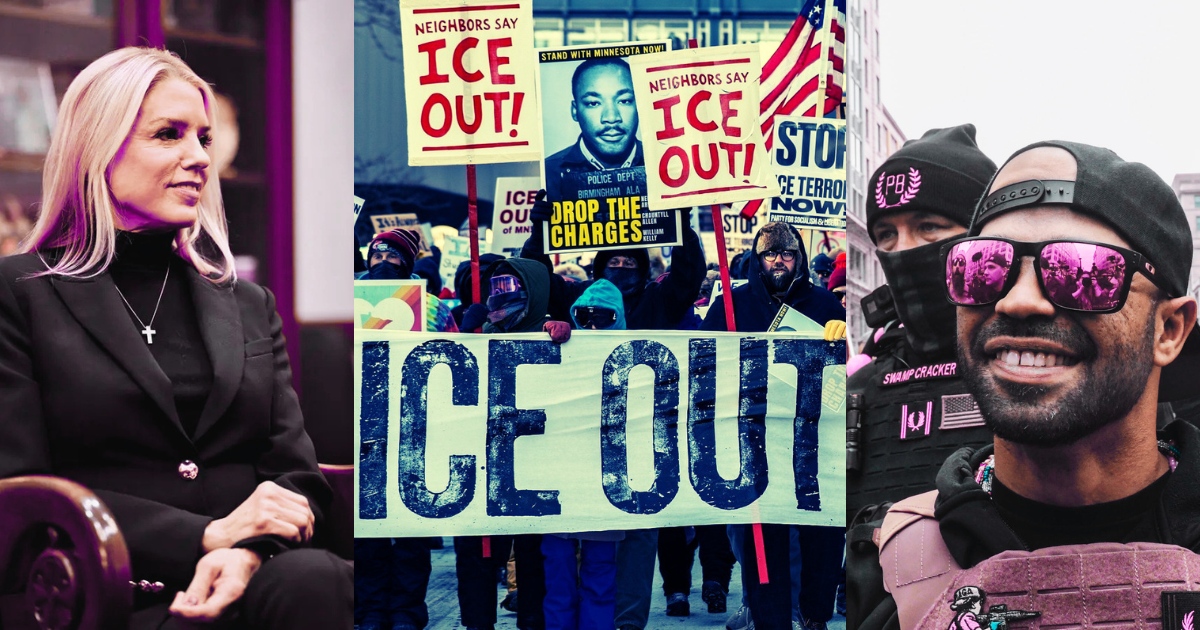
The longest sentence imposed on any January 6 defendant before the pardons was 22 years, given to former Proud Boys chairman Enrique Tarrio for masterminding a seditious conspiracy — though, like Sanchez Estrada, Tarrio was not present at the crime scene itself. Tarrio’s sentence, along with roughly 1,500 others, was commuted when Trump returned to office and pardoned the January 6 defendants.
Sanchez Estrada, who never went to Prairieland, will not be pardoned. He will serve more time in federal prison for moving a box of zines than the leader of the Proud Boys served for coordinating a violent attempt to overturn a presidential election.
Rueda, convicted of no violent act, will serve more than three times as long.
Song, who shot a police officer released from the hospital within 24 hours, remains in prison. Daniel “D.J.” Rodriguez — the January 6 rioter who drove a stun gun into the neck of D.C. Metropolitan Police Officer Michael Fanone, causing a heart attack and traumatic brain injury — walks free.
That is the yardstick. It is the same Department of Justice, the same Constitution, the same country. The variable is which political movement the defendants belong to.
What Happens Next
The Prairieland appeals are moving. MLFA is aggressively challenging Rueda’s conviction. Sanchez Estrada has filed a motion to overturn his verdict. The Broadview Six may pursue civil claims for vindictive prosecution. The Minneapolis and Los Angeles dismissals may produce follow-on litigation about ICE officer misconduct. And Joint Task Force Vanguard has only just begun.
The open question is whether the courts will treat Prairieland as an outlier — the extraordinary product of aggressive prosecutors, deferential Texas judges, and a jury persuaded by the terrorism label — or as the new template for how the federal government prosecutes political speech it disapproves of. If the appeals succeed, NSPM-7 becomes a cautionary tale about overreach. If they don’t, Prairieland becomes a model.
Authoritarian systems rarely begin by outlawing dissent. They begin by making dissent legally, financially, socially, and personally unbearable. They redefine ordinary political activity as evidence of extremism. They inflate misdemeanors into felonies and felonies into terrorism. They stack sentences until people stop showing up.
NSPM-7 does not need to succeed in every court to succeed as policy. It only needs to make enough people believe that protesting the Trump administration’s agenda could send them to federal prison for decades.
The Prairieland sentences already tell them exactly that.
And now, please enjoy this poem by a gifted writer here on Substack.
My friend, thank you for your ongoing efforts to make sense of this senseless time. - LL
For Thirty Minutes:
One dozen or so people
Outside an ICE detention center
Protesting unjust laws
Fireworks cracking, camera destroyed, cars vandalized
For 30 minutes
One officer pulled out a weapon
A protester shot first
Officer discharged from the hospital
After one night
Not even 24 hours
Now these protesters
Were convicted
For 30 minutes
For 1800 seconds
How long?
Altogether sentenced to
Wait!
To 450 years?
That’s 164,250 days
Also 3,942,000 hours
So 236,520,000 minutes
I don’t even bother with seconds
For 30 minutes
And 1800 seconds
The Trump regime’s authoritarian project depends on misinformation and disinformation. It thrives in darkness and resists scrutiny. That’s why exposure matters — and why independent media does too.
A free society depends on a free press. Not one shaped by access, intimidation, or political loyalty, but one willing to report what those in power would rather keep hidden.
Liberty’s Lens exists for that purpose. We’re independent, reader‑supported, and committed to reporting without fear or favor.
If that work matters to you, consider supporting it by subscribing — free or paid. Paid subscriptions directly fund our reporting, and right now you can subscribe at 20% off with this coupon, roughly the cost of a monthly coffee.
If a subscription isn’t workable at the moment, one‑time contributions are a meaningful alternative. And whether or not financial support is possible, sharing this work matters — it’s how reporting like this reaches people it would otherwise be kept from.
Your support keeps independent journalism alive.
Find us on X, Blue Sky, and Facebook. Wherever you are, that’s where we want to be.
— Liberty’s Lens
This article is provided for public interest reporting and analysis. All external links open in a new tab and point to their original publishers.
© 2026 Liberty’s Lens. All rights reserved.