I’ll Tone Down My Rhetoric the Second Trump Does
The right’s cavernous silence on the stochastic violence of the inciter‑in‑chief
The Shift
Just hours after the incident at the White House Correspondents’ Dinner, Trump, the acting attorney general, and dozens of pro‑Trump influencers converged on the same argument: that the best way to stop a bad guy with a gun is with a rich guy with a ballroom.
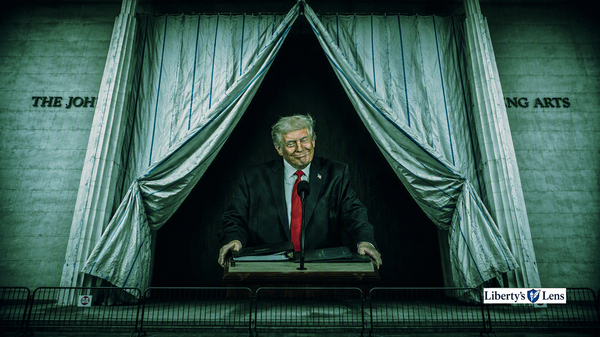
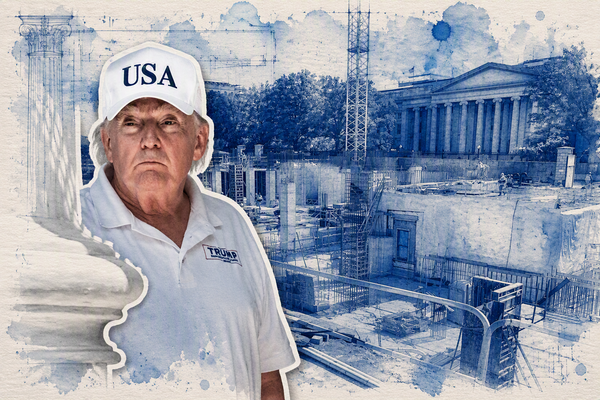
The administration is now asking a court to dismiss a lawsuit filed by preservationists seeking to block the president’s $400 million ballroom, arguing that it is essential to—quote—“ensure the safety and security of the president for decades to come” and to prevent future assassination attempts.
This, despite the fact that the dinner is hosted by the White House Correspondents’ Association, not the president, and that Trump’s proposed ballroom would be far smaller than the Washington Hilton. Any move to relocate the event would fundamentally alter a third‑party fundraising dinner he does not run and cannot unilaterally remake—not least because he would control the guest list.
For a brief window, it seemed as though that might be the takeaway from the incident—that opposition to Trump’s vanity project must yield in light of recent events. But once it became clear from the shooter’s manifesto and social media presence that he was motivated by opposition to Trump, the right‑wing response shifted. The push to strong‑arm approval for the ballroom gave way to something more familiar: tone policing the left.
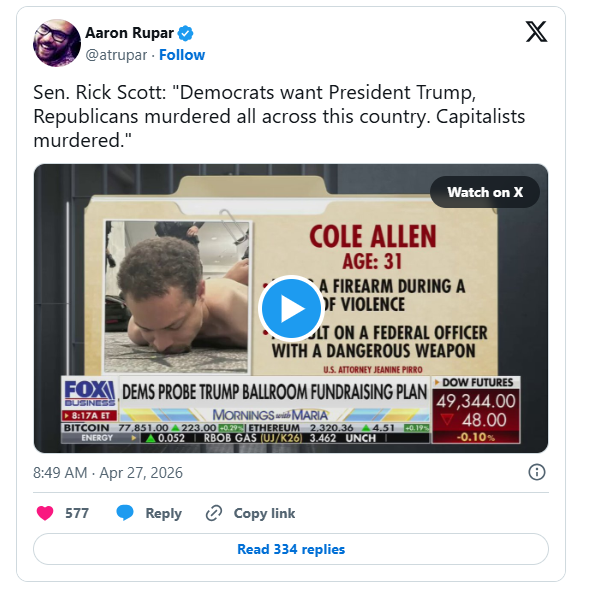
Just to give a sense of the histrionics that followed, Senator Rick Scott of Florida declared, without irony, that “Democrats want President Trump and Republicans murdered all across this country.” Totally normal stuff.
Liberty’s Lens is entirely reader‑supported. We don’t answer to corporate masters deciding what we say or what we cover.
If you find our work valuable, please consider upgrading to a paid subscription. You can take 20% off with this coupon — and support independent media for about the price of a coffee per month.
Thank you to every reader who shares our work and helps it reach new audiences. We couldn’t do this without you. We love you all.
The Outrage Cycle
The latest round of this discourse reached its inevitable climax in recent days, when Melania Trump tweeted a condemnation of what she called “hateful and violent rhetoric” from Jimmy Kimmel—apparently referring to a joke he’d made days earlier in a mock Correspondents’ Dinner monologue that no one had even been talking about until after the shooting. Shortly after Melania posted, Trump jumped in, calling the sketch a “call to violence,” deeming it “beyond the pale,” and demanding that Kimmel be fired.
The joke itself was that Melania doesn’t like her husband and that he’s quite old. That’s it. Standard fare for late‑night comedians for as long as there have been late‑night comedians, and probably longer.
Notably, there was also a line about Epstein introducing Melania to Trump, coming shortly after she held a press conference to emphasize—unprompted—that she had no personal relationship with Epstein. That context may help explain why the joke received the attention it did.
It’s hard not to notice how familiar this all feels: another campaign to cancel Kimmel, another eruption of performative outrage, another sidetrack from anything that actually matters. Meanwhile, the Strait of Hormuz remains closed and inflation continues to surge.
Bad Faith, in Context
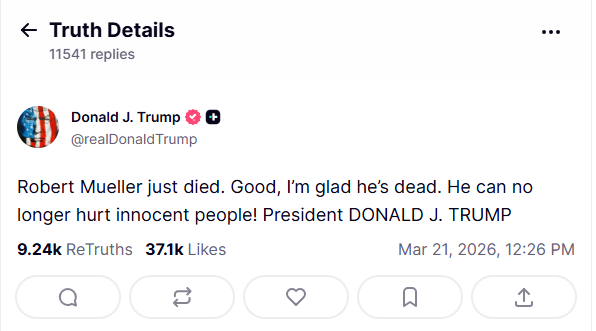
The bad faith here is breathtaking. Just weeks earlier, Trump himself had tweeted that he was glad Bob Mueller was dead because, in his words, “he can no longer hurt innocent people.” By any reasonable standard, that registers as more severe—and more revealing—than anything said in a late‑night comedy monologue.
This is also not new behavior. Last December, at an event with members of Congress, Trump talked about visiting Steve Scalise in the hospital after Scalise was shot. He joked that Scalise’s wife was crying “which means she really loves you,” adding, “I know many wives who wouldn’t be crying.” Literally the same joke.
And now we’re supposed to be outraged.
The Ritual After Violence
It’s part of a familiar pattern after moments like this. People aren’t allowed to sit with how bad it feels. It’s more comfortable to be angry than scared or shaken. So they go hunting for something—anything—that allows them to return to the default political emotion: antipathy toward their opponents.
We’ve seen it before. After Charlie Kirk was assassinated, the same ritual kicked in—calls to “turn down the temperature,” denunciations of the “left’s violent rhetoric”—all of it. And each time—especially after Kirk—members of the legacy media, and at times even leaders within the Democratic Party, fell for it.
What Actually Followed
But these calls for restraint are never about restraint at all. They are demands for silence.
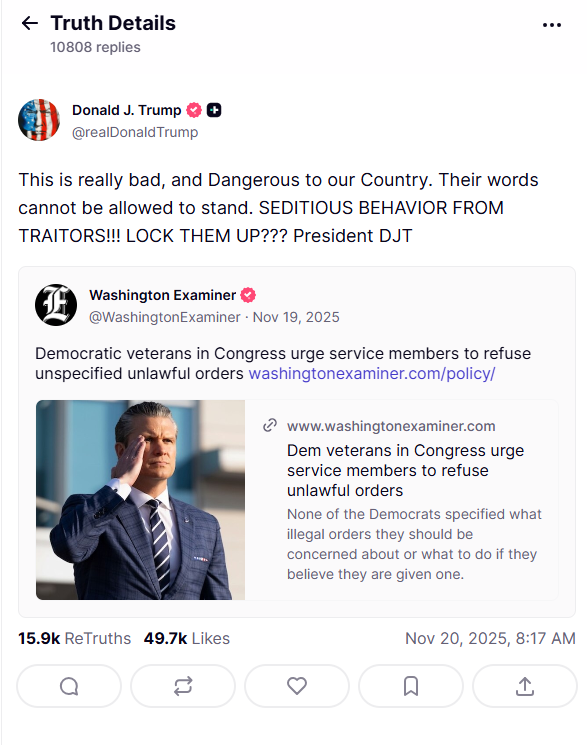
After the Kirk shooting, members of Congress released a video doing little more than restating a settled principle: members of the military are not obligated to follow illegal orders. In response, the same president accusing comedians of inciting violence called for those members of Congress to be tried for treason. He amplified calls for their execution. He said they should be hung—invoking, approvingly, the claim that “George Washington would have hung them.”
This is what happens while others are being told to lower the temperature.
The president went on to celebrate the deaths of public figures including Rob Reiner and Bob Mueller. That same logic—of absolute license and total impunity—then moved from speech to policy, as JD Vance and Stephen Miller told ICE agents they had full immunity to act. Two Americans were killed. Rather than pause or reflect, the administration branded the victims domestic terrorists using claims it knew were false. And in recent days, Trump has taken the rhetoric even further—openly threatening genocide in Iran, warning that its civilization would end.
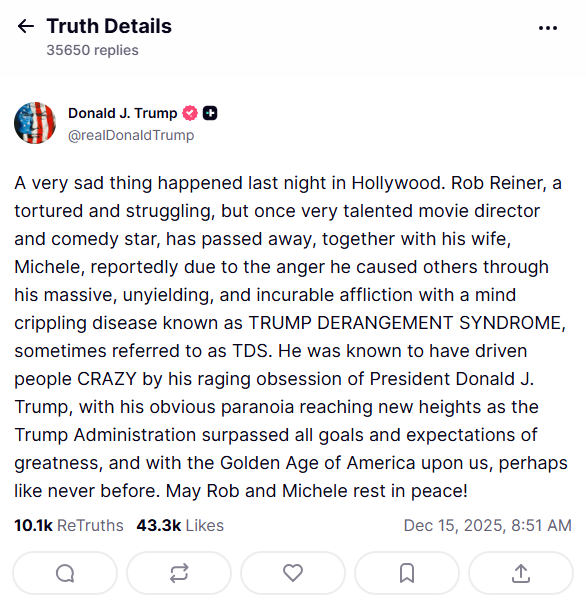
There is no effort to moderate their rhetoric, because moderation is not the goal. Silence is.
Not Just Rhetoric
And it isn’t just rhetoric. Trump pardons violent criminals. He posts snuff videos of boats full of fishermen being blown up. He blows up a school in Iran and doesn’t apologize.
The president, his party, and this administration have done—and continue to do—awful, monstrous things. That has led to countless deaths and enormous suffering. And we get to say that. We also get to say they should be removed from power through peaceful and legal means. Those two things can and must coexist.
Accountability and the Line
Political violence is wrong—not just because it silences the person being targeted, but because it silences society. It silences democracy. It is an authoritarian act, no matter the justification. In a system where elections, courts, speech, and participation remain available, violence is not resistance—it is abdication.
By the same token, the motivation of one shooter cannot be used to silence everyone who shares some of those views. It is not their fault that some random person on the internet decided to commit an act of violence.
It is therefore especially galling to claim the left is responsible when the president of the United States has encouraged political violence for years—and when Republicans have repeatedly refused to reckon with it. In 2016, Trump said Hillary Clinton would abolish the Second Amendment and that if she picked her judges, “nothing you can do—although the Second Amendment people, maybe there is.” Many people were shocked at the time, but others on the right bent over backward to excuse it. You can draw a straight line from that moment to the insurrection.
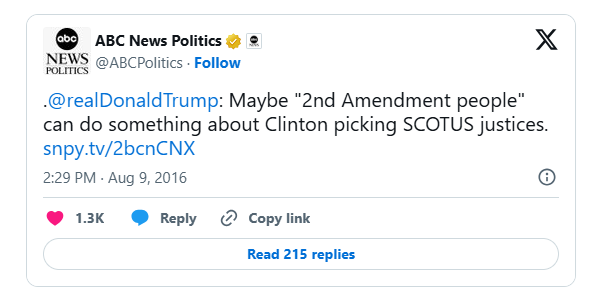
The left has been consistent. Political violence is abhorrent. It’s wrong on the right, it’s wrong on the left, it’s wrong when people justify it, and it’s wrong when the president encourages it.
If only the president—and those who enable him—saw it that way.
The Tell
It would take just one person on the right saying, plainly, “Donald Trump’s rhetoric is dangerous—and there is incendiary rhetoric on the left too,” for their complaints about tone to be taken seriously. I might still disagree with their conclusions. I might still believe their criticisms are selective or misplaced. But I could at least recognize them as good‑faith arguments—offered within a shared moral framework.
That never happens. They do not apply their standard upward. They do not grapple honestly with what the president actually says. The condemnation is always one‑way, aimed exclusively at his critics and never at Trump himself. At that point, the pattern becomes impossible to ignore. This is not a disagreement about civility. It is an effort to silence.
And right on cue, the rhetoric gives way to action. Trump’s attack dog at the FCC, Brendan Carr, has announced a review of Disney’s broadcast licenses. We are told that this is unrelated. That it is routine. That the timing is coincidental. We are told not to notice the leverage being applied—or the fact that Disney owns ABC, the network that airs Jimmy Kimmel Live.
But the message is clear enough. Criticism will not be answered with rebuttal, but with regulatory threat. Speech will not be met with speech, but with power. This is what “tone policing” looks like when it is backed by the machinery of the state.
Taken together, the pattern resolves into something unmistakable. Calls for “restraint” are not meant to bring the temperature down across the board. They are meant to enforce silence on one side, while the other escalates without consequence. And when dissent persists anyway, the institutional tools of punishment are placed conspicuously on the table.
To my friends, everything; to my enemies, the law.
That is the tell. Not a concern for civility. Not a fear of violence. But a belief—revealed again and again—that criticism itself is the problem, and that it must be stopped.
Support Independent Journalism!
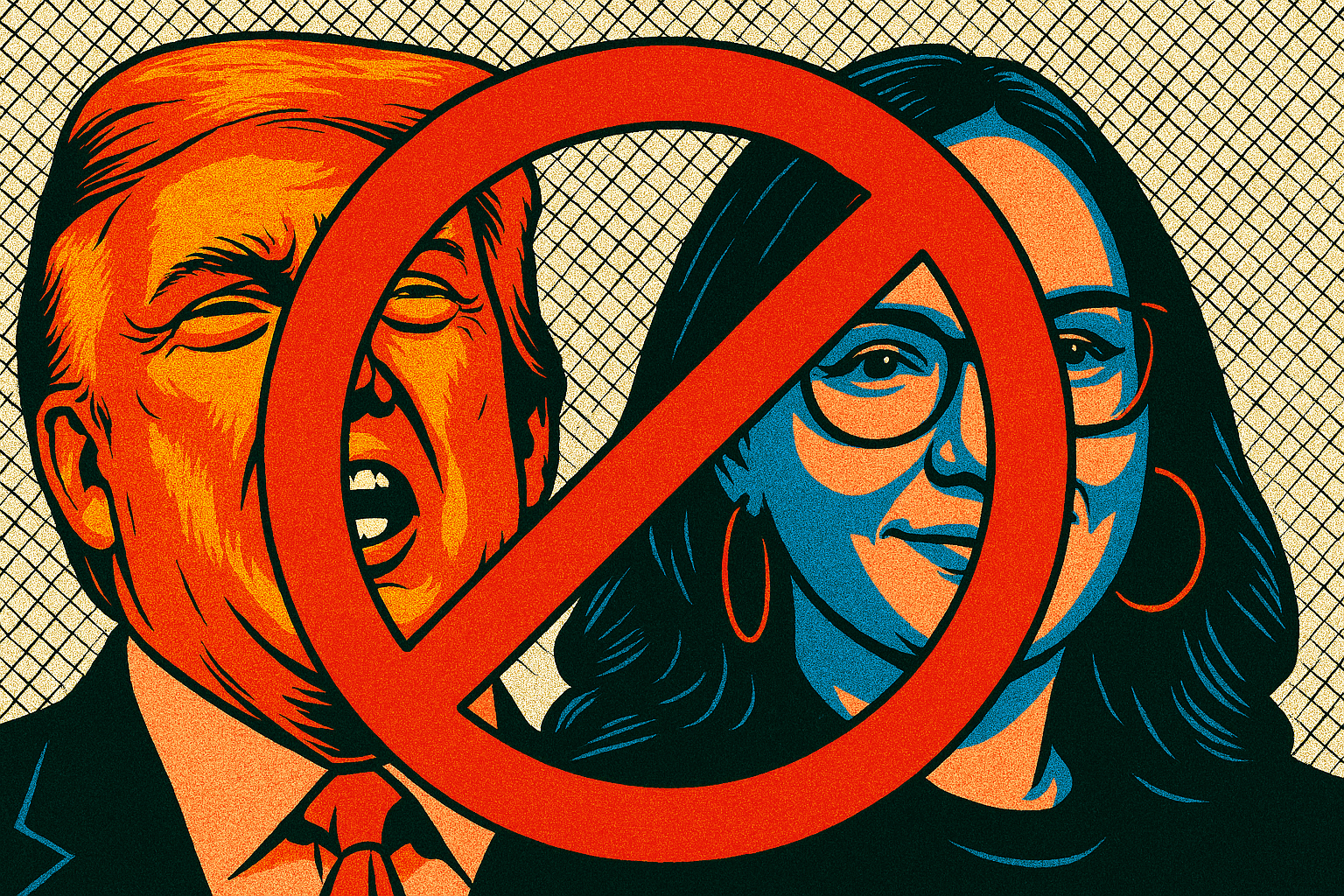
Look around: media consolidation isn’t subtle anymore.
A single ideological camp is amassing platforms—social networks, news outlets, streaming services—all under its banner. One by one, spaces for open dialogue are being converted into echo chambers.
But not independent media.
Liberty’s Lens is part of a growing movement of independent progressive voices refusing to be absorbed, censored, or silenced.
We publish what powerful interests would prefer you not see.
We ask the questions their platforms no longer allow.
We stay independent because independence is the last defense against narrative control.
👉 Join the resistance to media monopolization:
20% OFF for life when you upgrade to paid!
They can buy platforms.
They can’t buy us.
— Liberty’s Lens
This article is provided for public interest reporting and analysis. All external links open in a new tab and point to their original publishers.
© 2026 Liberty’s Lens. All rights reserved.