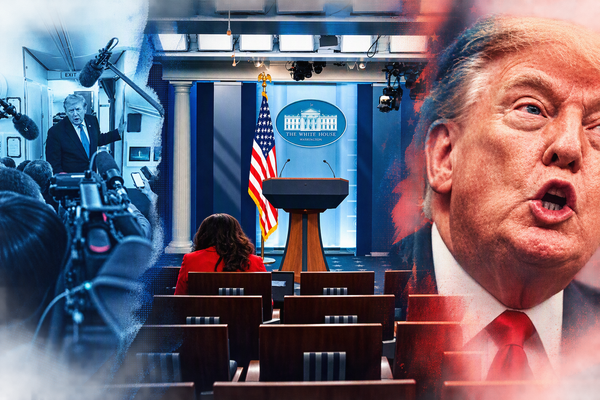
Nigeria in the Crosshairs: Trump’s "Guns-A-Blazing" Diplomacy
When moral posturing comes with war talk, the CPC label becomes more than symbolic.
For my Nigerian readers: How far, how body? I go break this matter small-small so e go sweet for ear. No vex if I miss any gist.
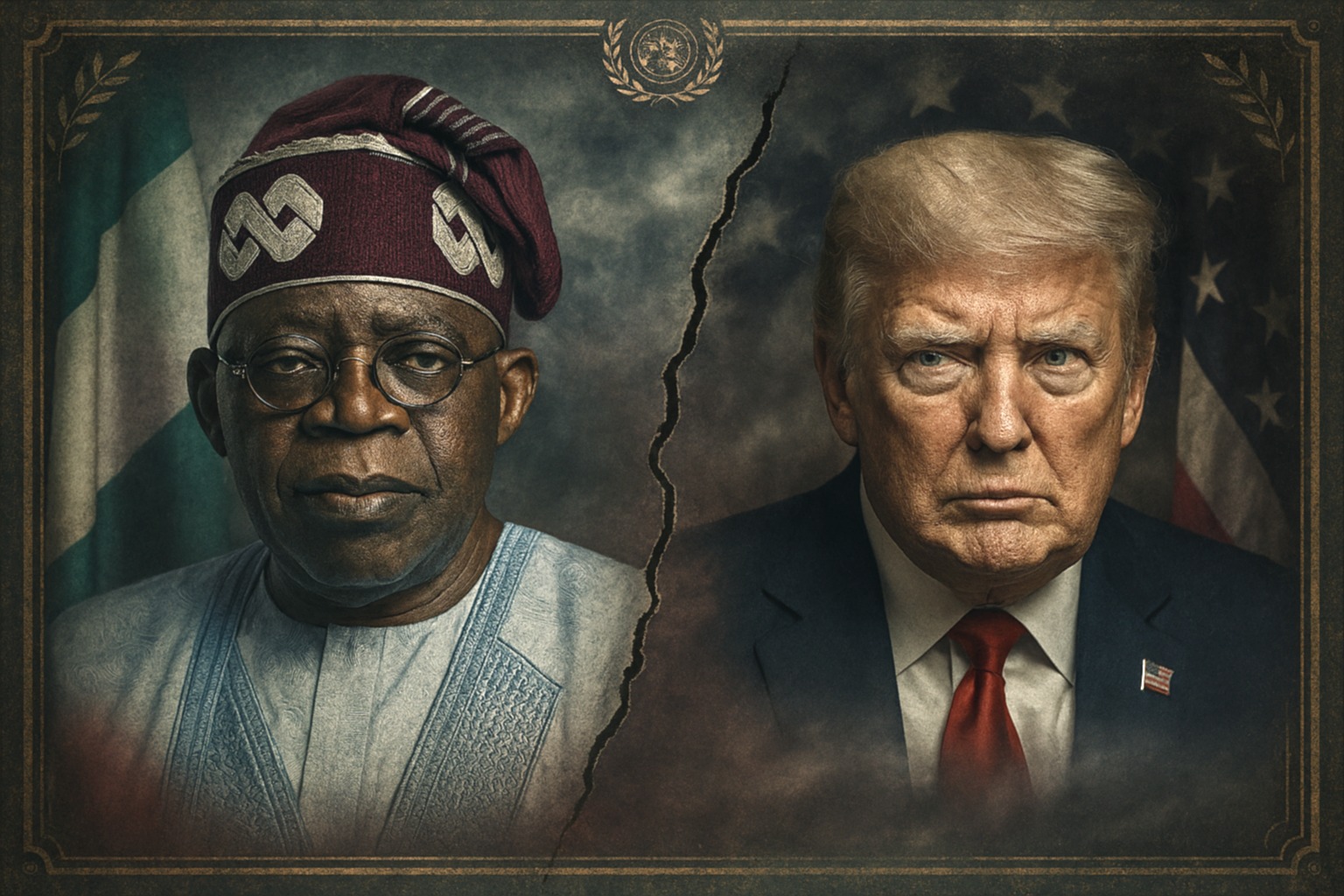
Is Nigeria the Next Venezuela?
Look, I’m not going to act like I’m some expert on Nigerian politics—I’m not. I have an interest in politics there, but I’m more of an outsider looking in.
Trump’s decision to “take an interest” in Nigeria hasn’t gotten the attention it deserves. Threats that the “Department of War” should “prepare for possible action” of the “guns-a-blazing” variety belong in the things that could lead to a shooting war category.
Most outlets shrugged it off as “Trump being Trump.” And honestly, with headlines about Epstein, insurance hikes, tariff reversals, the invasion of Charlotte, and more kinetic strikes on boats in the Caribbean, it’s been a noisy few weeks. I get it. But given the stakes, it’s worth asking what this rhetoric really means, and what the administration’s actual motives might be.
So let’s take a look at what Trump said and why Nigerians, and Americans, should pay attention.
Trump’s Words: What I Thought I heard
My first thoughts upon hearing the news that Trump was intervening in Nigerian politics was that this was related to the messy 2023 elections. Bola Tinubu was declared the winner amid widespread allegations of irregularities and voter suppression from opposition candidates and international observer groups alike.
Despite this, the Biden administration offered its congratulations to Tinubu and recognized his victory. Nigeria is no stranger to election controversies—technical failures, voter intimidation, and legal challenges dominated 2023. For many Nigerians, especially Peter Obi supporters, Biden’s endorsement during active court cases was disheartening to say the least. I had hoped Trump was weighing in to address those controversies. This was not the case.
Trump’s Words: What He Said — Exactly
On October 31, 2025, Trump said Christianity is “facing an existential threat” in Nigeria, that “thousands and thousands of Christians are being killed,” and that “radical Islamists are responsible for this mass slaughter.” He declared Nigeria a Country of Particular Concern (CPC) under the U.S. International Religious Freedom Act and followed up by threatening sanctions, aid cuts, and even military action — to “go into that now‑disgraced country, guns‑a‑blazing.” (National Catholic Register | Tempo English | ABC News).
Lest readers think I’m taking Trump out of context here, let’s take a moment to look at what he said. Here are the statements in their entirety:
Trump’s CPC Declaration (Oct. 31, 2025)
“Christianity is facing an existential threat in Nigeria. Thousands and thousands of Christians are being killed. Radical Islamists are responsible for this mass slaughter. I am hereby making Nigeria a COUNTRY OF PARTICULAR CONCERN. When Christians, or any such group, are slaughtered like is happening in Nigeria (3,100 versus 4,476 worldwide), something must be done! The United States cannot stand by while such atrocities are happening in Nigeria, and numerous other Countries.”
(Truth Social post, reported by International Christian Concern | ABC News)
Trump’s Military Threat (Nov. 1, 2025)
“If the Nigerian Government continues to allow the killing of Christians, the U.S.A. will immediately stop all aid and assistance to Nigeria, and may very well go into that now disgraced country, ‘guns-a-blazing,’ to completely wipe out the Islamic Terrorists who are committing these horrible atrocities. I am hereby instructing our Department of War to prepare for possible action. If we attack, it will be fast, vicious, and sweet, just like the terrorist thugs attack our CHERISHED Christians! WARNING: THE NIGERIAN GOVERNMENT BETTER MOVE FAST!”
(Truth Social post, reported by CBS News | CBC | POLITICO)
Nigeria’s Pushback — and a Split in the Pews
Abuja’s reaction was swift. Foreign Minister Yusuf Tuggar publicly rejected Trump’s framing, pointing to Nigeria’s constitutional guarantees of religious freedom and calling state‑backed persecution “impossible.” That rebuttal and others stressed that violence is driven by insurgency, banditry, and resource conflicts hitting Muslims and Christians alike (Tempo English | Leadership Nigeria | National Post Nigeria | TVC News).
Inside the church, reactions diverged. Some bishops praised the move as overdue pressure on Abuja; others warned the CPC label could inflame tensions and complicate interfaith efforts (National Catholic Register | PBS/AP).
The Numbers Fight: Whose Data Counts?
Part of the pushback from Abuja is related to a fundamental disagreement regarding the facts. If Trump’s numbers were accurate, his case for CPC would be compelling. The reality is, it’s complicated. Trump isn’t pulling that “3,100 versus 4,476 worldwide” fatalities stat out of thin air. Those figures come from advocacy reports like Open Doors’ World Watch List, which claims Nigeria accounts for nearly 70% of global Christian killings. Groups like International Christian Concern amplified the same narrative.
Independent conflict trackers tell a very different story, however. The Global Terrorism Index logged fewer than 600 terrorism-related deaths in Nigeria last year—total, not just Christians. ACLED data shows religion was a factor in only a fraction of civilian-targeting events. Nigerian think tanks like IMPI call the advocacy numbers “jaundiced, obtrusive data,” arguing they inflate fatalities and oversimplify complex violence to fit the ‘Christian genocide’ frame.
Why does this matter? Because numbers drive policy. When casualty counts balloon, they shape headlines, congressional hearings, and foreign designations like CPC. Advocacy groups say they’re giving voice to victims ignored by official stats. Critics say they’re weaponizing data to force Washington’s hand. Both can be true, but the gap between 3,100 and 565 is more than a rounding error. With this administration, it could be the spark for an unfortunate spiral, like the one tragically playing out in Venezuela (Guardian Nigeria | New Telegraph | Hudson Institute/National Review).
What Nigerian Writers Think of Trump’s Motives
Moral Diplomacy as Geopolitical Weapon
Daily Trust frames CPC as a “moral technology of power.” In their framing, “religious freedom” functions as an instrument for reasserting U.S. influence via symbolic acts where American influence has waned in recent years. Nigeria’s resource-based, extractive economy has drifted from U.S. influence (shale reduced U.S. oil demand; China, India, Gulf states expanded ties). With hard power waning, the U.S. has retreated to moral capital (like the CPC) to reassert their hegemony.
This reading is echoed by a content analysis of how Nigerian media emphasized sovereignty and reputation over sectarian frames (CJID media analysis).
Resource War Disguised as Religious Crusade
Abuja Network News argues this is about access to oil, gold, lithium, and rare earths—not piety. In their words, CPC is “economic blackmail wearing a priest’s collar.” They view the CPC designation as little more than a tool of recolonization: brand a nation as “unstable” or “intolerant” to scare off investors, then offer aid and reforms that tighten American control. By labeling Nigeria a Country of Particular Concern, Washington is morally delegitimizing Abuja to isolate it economically and force compliance. Critics call this economic blackmail disguised as moral diplomacy.
This claim matches U.S. political dynamics around the designation and rhetoric coming from the advocacy ecosystem. Over 30 advocacy groups and Christian organizations applied consistent pressure leading up to the CPC designation, joined by celebrity voices like Bill Maher and Nicki Minaj, who publicly thanked Trump (The Hill | Congress.gov).
Strategic Warning to Beijing
Writers like Anngu Orngu in Ripples Nigeria and policy columns at Political Panorama place Nigeria squarely in a U.S.–China resource rivalry, with illegal Chinese mining, militia protection rackets, and mineral corridors in the background. In this framing, the CPC designation is a message to Beijing, not Abuja.
Some who hold this view even welcome U.S. intervention, seeing attacks as a partnership between violent domestic groups and Chinese mining firms. But here’s the question: what else does inviting foreign actors into Nigeria’s security space, actors with their own motives, open the door to?
Domestic Political Theater
Outside Nigeria, analysts note a convergence of factors: Trump’s evangelical base, congressional pressure, celebrity amplification (yes, really), and a Secretary of State who made the International Religious Freedom Act (IRFA) a priority all pushing the administration to act. The tone in 2025 is louder, riskier, and more performative than in 2020 (The Hill | ABC News).
Same Label, Different Playbook (2020 vs. 2025)
2020: Pompeo + USCIRF + Evangelical Advocacy. In December 2020, Secretary of State Mike Pompeo quietly added Nigeria to the CPC list, leaning on years of recommendations by the U.S. Commission on International Religious Freedom and sustained advocacy from groups like International Christian Concern and Open Doors (Hudson Institute | The Banner/RNS). Nigerian officials rejected the religion‑only frame.
2025: Rubio + Trump’s “guns‑a‑blazing” rhetoric + China angle. In 2025, Secretary of State Marco Rubio and Trump’s public threats escalate the playbook: sanctions/aid leverage, talk of force, and a blast of public pressure, with Nigeria again formally re‑listed by State. All this amid a backdrop of Chinese resource extraction efforts, not formally sanctioned by either the Tinubu or Jingping governments. All this unfolds against a backdrop of Chinese resource extraction through shadow networks—without formal sanction from either Tinubu or Xi Jinping. This time, congressional hearings and the advocacy ecosystem are keeping the pressure high. This isn’t quiet diplomacy, it’s loud, risky, and layered with global stakes (Congress.gov | ABC News).
What’s at Stake for Nigeria
Nigeria is caught between two superpowers and two narratives. Beijing touts non‑interference while Chinese actors appear in illegal mining corridors where insecurity does the heavy lifting; Washington wraps pressure in moral language and legal labels that can chill investment, trigger sanctions, or possibly even lead to escalations similar to those currently being seen in the Caribbean. For Nigerians, Christian and Muslim alike, the stakes are basic: security, justice, and whether their mineral wealth is governed by Abuja or by militias, middlemen, and foreign buyers (China‑Global South Project | Political Panorama).
The Take
If this is a story about religious freedom and security, why now? Why here? The violence being spotlighted by the Trump administration, attacks on Christian communities in Nigeria’s Middle Belt and by Fulani militias, is hardly new. These conflicts have simmered for years, which makes the timing of this designation all the more curious—especially given Washington’s unqualified support for the IDF’s actions in Gaza.
So what’s really driving this move? It is clear that Trump’s 2025 CPC decision is not a single‑issue story. It’s a cocktail of domestic politics, religious freedom law, great‑power competition, and Nigeria’s own governance gaps. If you’re in Abuja, the question is sovereignty. If you’re in Washington, the question is leverage. If you’re in Benue or Plateau, the question is survival.
For the average American, the question—as we all watch Trump’s “guns-a-blazing” diplomacy play out in increasingly serious escalations with our Latin American neighbors—is what might similar escalations look like with a country of over 200 million people? If these hawkish impulses continue to be indulged, how long before we find ourselves embroiled in an array of unjust conflicts that make Iraq look tame?
This administration is stoking the fires of war. For what? Resource extraction? Fringe evangelical interest groups and their elite patrons? Regime change politics of a bygone era? What?
For readers who want the receipts
- Trump’s formal CPC move and rhetoric in 2025 — (ABC News)
- “Guns‑a‑blazing” language; Nigeria’s foreign minister rebuttal — (Tempo English)
- Faith‑community reactions; bishops split — (National Catholic Register)
- On‑the‑ground complexity and mixed victimization — (PBS/AP)
- Punch editorial quoting Trump’s “3,100 vs 4,476” figures — (Punch)
- ICC recap of the CPC announcement and figures — (International Christian Concern)
- Factcheck on Trump’s Christian persecution claims — (The Guardian)
- Nigeria’s official responses and sovereignty framing — (Leadership Nigeria)
- Explainers on what CPC means in practice — (TVC News)
- Daily Trust’s theory of moral diplomacy — (Daily Trust)
- How Nigerian media framed the story (sovereignty/image) — (CJID analysis)
- Resource‑war framing — (Abuja Network News)
- China‑signal framing — (Ripples Nigeria)
- U.S.–China competition context — (China‑Global South Project)
- 2020: Pompeo’s CPC designation; USCIRF pressure — (Hudson Institute)
- 2020 coverage and rationale — (The Banner/RNS)
- Congressional hearing record (2025) — (Congress.gov)
- IMPI critique of data and methodology — (Guardian Nigeria)
- Further IMPI statements — (New Telegraph)
- U.S. politics/advocacy ecosystem around CPC — (The Hill)
— Liberty’s Lens
This article is provided for public interest reporting and analysis. All external links open in a new tab and point to their original publishers.
© 2025 Liberty’s Lens. All rights reserved.