No Safe Harbor
How Miller‑Era Enforcement Punishes Asylum Seekers, Sidelines Felons, and Tests the Courts
The story of immigration enforcement in Trump’s second term isn’t just “more raids.” It’s a governing philosophy. Guided by Stephen Miller’s deterrence‑at‑all‑costs agenda—and an ethnonationalist worldview that migrated from fringe blogs to federal playbooks—agencies pivoted from targeting serious offenders to hitting arrest quotas and high‑visibility sweeps. Detention beds filled with asylum seekers while tens of thousands of noncitizens with serious criminal convictions were released. Courts stepped in to curb racial profiling and denial of counsel, eventually, while leaked Justice Department messages surfaced claims of pressure to ignore injunctions when deportation planes were already airborne (NBC News; Al Jazeera).
The Ideology Behind the Tactics
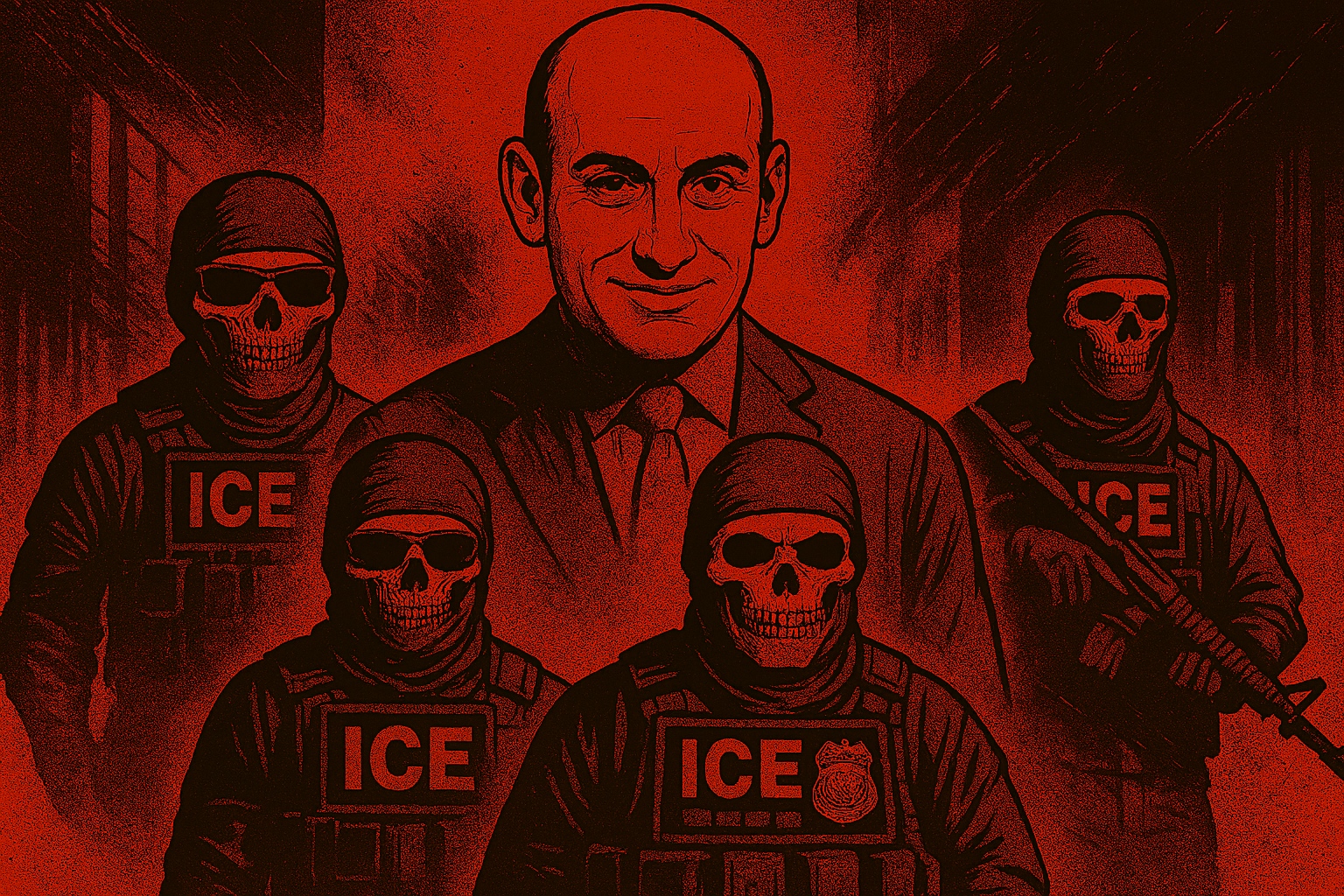
Stephen Miller’s fingerprints on immigration policy weren’t just about “law and order.” Leaked emails published in 2019 showed Miller promoting white nationalist sources like VDare and American Renaissance to Breitbart editors, pushing stories about ending birthright citizenship and amplifying “white genocide” conspiracy themes (NBC News). Those ideas didn’t stay in the inbox—they became operational doctrine.
Fast forward to 2025: a federal judge in Los Angeles found ICE using race, language, and job type as proxies for enforcement, issuing a restraining order that explicitly barred racial profiling and mandated access to counsel. What began as ideological talking points in Miller’s emails ended as constitutional violations in the field.
What changed—and why it matters
Very early in the first Trump term, the White House rescinded Obama‑era guidance that had prioritized the detention and removal of people who posed clear public‑safety threats, replacing “worst first” with enforcement “against all removable aliens.” New FOIA‑derived data shows how that choice diluted focus on violent offenders and redirected manpower toward easy‑to‑reach targets—frequently asylum seekers and people with no criminal record (Cato Institute; NBC News). By mid‑2025, the strategy had become explicit: the White House pressed for 3,000 arrests per day, pulling personnel from the FBI, DEA, U.S. Marshals, CBP—and even some IRS agents—into immigration operations at the expense of other investigative work (NBC News).
How the tactics evolved
When leadership chases quota optics, the field adapts. Civil‑rights groups documented agents posing as local police or probation officers to gain “consent” at doors, staging traffic stops, and using other ruses to bypass warrants—methods that erode Fourth Amendment protections by laundering consent (ACLU). In New York, researchers tracked sharp post‑2017 increases in courthouse arrests, warrantless entries, surveillance, collateral arrests, and force—yes, some of these practices predate Trump, but the frequency and aggressiveness spiked alongside the policy shift (NBC News).
The data that breaks the “law and order” narrative
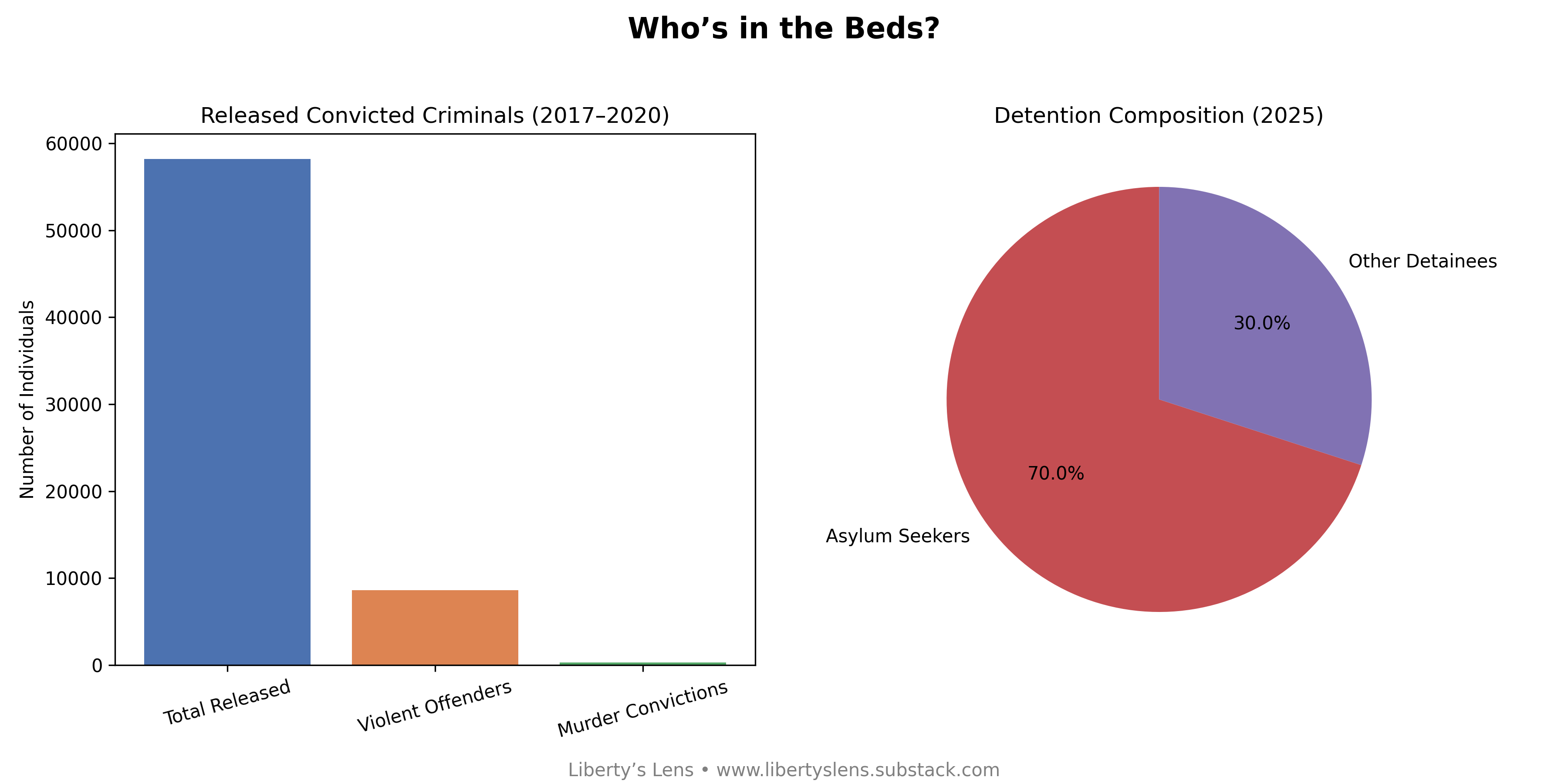
FOIA is the great leveler. From January 2017 through February 2020, ICE released at least 58,184 noncitizens with criminal convictions, including 8,620 convicted of violent offenses and 306 with murder convictions. At the same time, detention space filled with asylum seekers—even as Justice Department officials warned during family separation that prosecutors were missing “worthy felony defendants, including sex offenders,” because agents were redeployed to jail asylum seeking families as a form of deterrence (Cato Institute).
When courts hit the brakes
In July 2025, a federal judge in Los Angeles issued back‑to‑back temporary restraining orders that barred DHS and ICE from conducting suspicionless stops based on race or ethnicity, language or accent, job type, or presence at locations like car washes, bus stops, and fields. The court also ordered seven‑day access to counsel for detainees held at the downtown B‑18 federal building—an extraordinary remedy for extraordinary violations (ACLU of Southern California; USA Today).
“The planes needed to take off no matter what”
At the same time, Senate Democrats published redacted texts and emails from Justice Department insiders alleging that senior leadership pressured line attorneys to mislead courts and proceed with deportation flights despite injunctions—“the planes needed to take off no matter what.” The context was Trump’s controversial use of the Alien Enemies Act to fast‑track removals without typical appeals. In one episode, a judge ordered planes to turn around; documents released by the Senate suggest they landed anyway (Al Jazeera; Al Jazeera follow‑up).
That pressure wasn’t abstract. According to a whistleblower complaint, senior DOJ official Emil Bove told colleagues in a March 14 meeting that those deportation flights needed to continue—even if a court enjoined them—and suggested DOJ lawyers should consider telling the courts “f*** you” (Bloomberg Law). A second whistleblower later corroborated those allegations, and a judge has since opened a probe into whether the administration defied his order to halt deportation flights (The Hill).
Today, Bove isn’t sidelined for that stance. He’s been rewarded with a lifetime seat on the Third Circuit Court of Appeals after Senate Republicans confirmed him despite three separate whistleblower complaints (Yahoo News; NBC News). In this administration, defying the Constitution isn’t a bug. It’s a résumé line.
CECOT: Outsourcing Detention, Exporting Authoritarianism
Trump’s deportation strategy briefly included El Salvador’s mega‑prison, CECOT—the largest in the world and notorious for mass incarceration without due process. In March, the administration deported roughly 250 Venezuelan migrants there under the Alien Enemies Act, ignoring a federal court order to halt the flights. Most had no U.S. criminal record (News From The States).
That chapter ended in July, when the U.S., El Salvador, and Venezuela struck a deal: all Venezuelan deportees were removed from CECOT and sent back to Venezuela as part of a prisoner swap that also freed 10 Americans (News From The States). But the episode revealed something deeper: the administration was willing to use offshore detention as leverage, even in facilities condemned for human rights abuses. Trump has since floated sending U.S. citizens to CECOT, calling it “a model” and urging Bukele to “build five more.” Legal scholars call the idea unconstitutional, but the administration says it’s “looking into it.” The message is clear: in this playbook, authoritarian partnerships aren’t a bug—they’re a feature.
The human story, without the slogans
Policy abstractions land on real families. In Diamond Bar, California, an Iranian mother who publicly supported Trump was taken into federal custody outside her home after years of routine check‑ins over an old theft case that had already cost her a green card. On camera, her husband—still flying Trump flags—defended vetting Iranian nationals amid heightened tensions, even as he described the pain of watching agents escort his wife away from their children (FOX 11 Los Angeles).
Trust, citizenship, and the national mood
You can hear the broader social recoil in how people now describe their relationship to the country—what some are calling “citizenship insecurity.” It’s not just immigrants. Even citizens and new Americans report carrying passports to the grocery store, covering tattoos at TSA, or weighing second passports because the country they thought they lived in doesn’t feel stable anymore (The Guardian).
That anxiety now extends online. ICE has moved to monitor social media for “negative” comments about the agency or the Trump administration broadly, using contractors to scrape posts and build profiles (The Independent; The Intercept). At the same time, DHS requires immigrants to disclose social media handles on applications, and officers routinely review online activity (Brennan Center; Caribbean National Weekly). Legal experts warn that even jokes or casual posts can jeopardize immigration cases, creating a chilling effect on speech (LawSB). For many, the fear isn’t just what they carry through TSA—it’s what they’ve posted on X.
The bottom line
This isn’t a debate about whether to enforce immigration law. It’s a debate about what goals you prioritize—and what you’re willing to break to get there. Across independent reporting, FOIA data, court orders, and whistleblower messages, the pattern is the same: a deterrence‑maximizing posture rooted in ethnonationalist ideology that floods the system with low‑risk detainees while serious offenders slip through is not just unjust. It’s unsafe.
For readers who want the receipts
• NBC on Miller‑era arrest quotas and interagency redeployments (NBC News)
• NBC detention snapshot and backlog context (NBC News)
• Cato FOIA data on criminal releases vs. asylum detention (Cato Institute)
• ACLU explainer on deceptive ICE tactics (ACLU)
• NBC on courthouse arrests and ruses (NBC News)
• ACLU SoCal press release on TROs (ACLU of Southern California)
• USA Today coverage of SoCal ruling (USA Today)
• Al Jazeera on DOJ leaks and appeals ruling (Al Jazeera; Al Jazeera follow‑up)
• Yahoo and NBC on Emil Bove’s whistleblower allegations and confirmation (Yahoo News; NBC News)
• FOX 11 Los Angeles case study (FOX 11)
• The Guardian on “citizenship insecurity” (The Guardian)
• ICE social media monitoring plans (The Independent; The Intercept)
• DHS social media vetting for immigration applications (Brennan Center; Caribbean National Weekly)
• Legal risks of social media posts for immigrants (LawSB)
• CECOT human rights concerns and U.S. funding (News From The States)