Operation Epic Fail: Trump’s War Ends in Strategic Failure
Sold on a quick victory, Trump’s MOU instead signals surrender
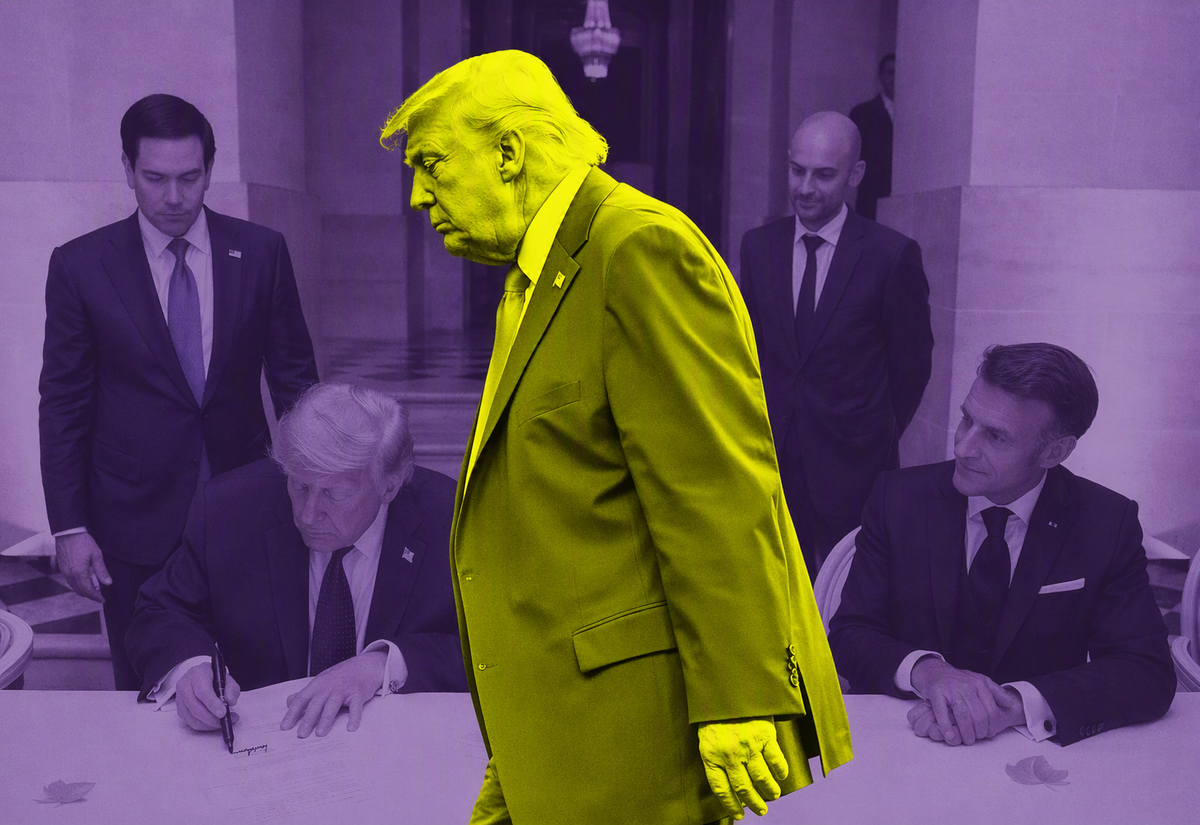
The war is ending with the Trump administration having largely failed the goals it set.
One of the major operational objectives was to eliminate Iran’s financing and patronage of terrorist proxies, including Lebanese Hezbollah. Instead, this agreement appears to reverse that objective outright. By linking the Lebanon front to the broader agreement with Iran, it implicitly recognizes Tehran’s central role in the conflict and leaves that structure intact. Worse, it risks constraining Israel’s ability to act independently, as escalation in Lebanon could disrupt the broader effort to stabilize the Strait of Hormuz.
The second objective was to destroy Iran’s missile program. U.S. intelligence estimates that Iran retains roughly 70% of its mobile launchers, around 70% of its pre-war stockpile, and access to most of its missile silos along the Strait of Hormuz. Israeli officials dispute those figures, but the underlying reality is unchanged: Iran still has the capacity to carry out sustained missile attacks, including strikes deep into Israeli territory. By any meaningful standard, the missile program remains largely intact.
The third objective was to eliminate Iran’s nuclear program once and for all. While centrifuges have been damaged and enrichment disrupted, highly enriched uranium remains buried underground. The MOU offers no clear mechanism for removing or neutralizing that material. Instead, it defers the issue to subsequent talks—effectively kicking the most dangerous part of the problem down the road. U.S. intelligence officials have reportedly signaled skepticism about that approach, warning that Iran has every incentive to stall while preserving its nuclear leverage.
The one operational objective that can plausibly be counted as achieved is the severe degradation of Iran’s navy. But that raises the obvious question: was that outcome worth the cost in blood, treasure, and strategic position?
And now comes the next phase. As sanctions ease and oil exports resume, Iran stands to generate significant new revenue. There is little reason to believe that money will be directed toward improving the lives of ordinary Iranians. The IRGC remains firmly in control of large parts of the economy and is positioned to benefit from any influx of capital tied to this deal.
That outcome didn’t happen in a vacuum.
Liberty’s Lens is entirely reader‑supported. We don’t answer to corporate masters deciding what we say or what we cover.
If you find our work valuable, please consider upgrading to a paid subscription. You can take 20% off with this coupon — and support independent media for about the price of a coffee per month.
Thank you to every reader who shares our work and helps it reach new audiences. We couldn’t do this without you. We love you all.
What Trump Needed Was a Short, Victorious War
Russian Interior Minister Vyacheslav von Plehve famously argued in 1904 that Russia needed a short, successful war to distract from domestic unrest and stabilize the regime. Instead, the Russo-Japanese War became a disaster that accelerated the collapse it was meant to prevent.
The parallels here are unmistakable.
By the start of the war, the administration was under mounting political pressure. Economic approval had deteriorated, tariffs were beginning to bite, and unrelated scandals—the Epstein files and the killing of two Americans by state agents among them—were dominating the media narrative in ways the White House could neither shape nor escape.
In that environment, a short, decisive military success offered something valuable: the ability to reset the narrative. Venezuela had shown Trump the way—to short-term political gains, if not to the kind of legacy-building his public comments suggest he craves.
In stepped Netanyahu with a familiar argument. For years, he had insisted that the Iranian regime was more fragile than it appeared—a “paper tiger” that would collapse under direct, sustained military pressure. The pitch was straightforward: act decisively, strike hard, and watch the regime fall from within. A short war. A clean outcome. A permanent solution that would secure Trump’s place in the history books.
Instead, the opposite happened.
Rather than collapsing, Iran absorbed the strikes, escalated, and widened the conflict. Energy corridors were disrupted, missile exchanges intensified, and the United States found itself pulled into a broader regional confrontation that was anything but short or contained. What began as a targeted campaign quickly took on the shape of a war with no clear endpoint.
At that point, the objective changed.
Trump was not willing to own a long, grinding conflict. As in his handling of the Houthis the year before, once it became clear that this war would be neither quick nor decisive, he pivoted—hard. The priority shifted from victory to exit. The Iran MOU followed.
But that pivot came at a cost.
The original premise—that this war would fundamentally weaken or collapse Iran’s position—proved wrong. In stepping back, the United States has effectively accepted a negotiated outcome that not only preserves Iran’s regional power, but reinforces the leverage it demonstrated during the war—particularly its ability to shape the flow of global energy through the Strait of Hormuz. It is hard to overstate how catastrophic that is from Israel’s perspective.
Instead of a quick victory that eliminated the Iranian threat, the war exhausted Washington’s patience, leaving Israel more strategically isolated from its primary ally than it was before the conflict began.
That shift became visible almost immediately in Washington.
According to a report by Axios, Trump held tense phone calls with Benjamin Netanyahu warning him that if Israel re-ignites a direct war with Tehran, the United States will not bail them out. He was explicit: “Bibi, you better be careful, or you will be on your own very soon.”
At the G7 summit, Trump openly criticized Israel’s ongoing military operations against Hezbollah, arguing that they “throw a negative light” on the emerging Iran deal and accusing Netanyahu of prolonging the conflict unnecessarily.
Vice President JD Vance reinforced that message, warning that Israel “can’t just kill [its] way out of solving every single national security problem” and urging Israeli leadership to fall in line with the administration’s diplomatic timetable.
Israeli officials, in turn, have begun to push back publicly. Far-right ministers have rejected the premise that U.S.-brokered arrangements should constrain Israel’s military options, with National Security Minister Itamar Ben-Gvir declaring that these agreements “do not bind” Israel’s actions.
The MOU Sure Looks Like an American Surrender
Despite the claims coming from JD Vance and others in Trump’s orbit, the structure of this agreement reads less like a negotiation and more like an Iranian wish list.
The recently released 14-point framework—now publicly available—makes the core tradeoff unmistakable. Iran receives immediate, tangible economic relief simply for reopening the Strait of Hormuz and remaining at the negotiating table.
Start with the upfront concessions. The agreement allows Iran to resume oil exports and re-enter the global market. At the same time, the United States is lifting key elements of its naval blockade and restoring access to global trade and financial channels. The result is not theoretical—the regime begins to generate billions in new revenue almost immediately.
Only after that come the conditions.
Yes, the framework includes phased access to frozen Iranian assets. Yes, it gestures toward a much larger end-state agreement, including a reconstruction fund expected to exceed $300 billion, to be developed with regional partners and international investment. And yes, permanent sanctions relief is technically tied to the successful conclusion of future nuclear negotiations.
But those provisions are deferred, contingent, and uncertain. The front-loaded relief is real. The back-end constraints are promises.
That asymmetry is the heart of the criticism. Iran stabilizes its economy first—regains its revenue streams, re-enters global markets, and relieves immediate internal pressure—while the hardest issues, including the fate of its nuclear program, are pushed into the future.
Even the requirement to reopen the Strait of Hormuz is left largely to Iran’s timetable, with toll-free passage guaranteed in writing for only 60 days. Beyond that, the agreement pushes the question of access into future negotiations. And what’s more, the MOU places Iran—alongside Oman—at the center of those discussions, effectively making it a central stakeholder in determining how access to the Strait is managed going forward.
Supporters of the deal argue that this sequencing is necessary to bring Iran to the table. Critics see something else entirely: a negotiation in which the United States has already begun paying upfront, before securing any meaningful concessions in return.
In other words, American leverage isn’t being held. It’s already being spent.
Right Back Where We Started From
Given where this negotiation is headed, Trump will be lucky if he ends up roughly where he began: back at something approximating the JCPOA he tore up early in his first term.
That reality has brought the central question into focus: what was this war actually for?
Critics argue that the United States has effectively fought a destructive and costly war only to accept the same underlying premise it rejected eight years ago. The core commitment now being floated—that Iran will not pursue a nuclear weapon—looks strikingly familiar. The difference is the context around it has deteriorated.
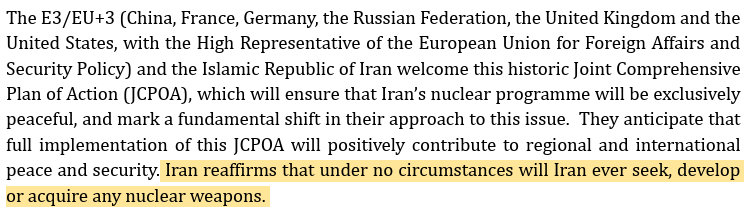
In 2018, Iran’s enrichment levels were capped, its stockpile was limited, and inspectors had meaningful visibility into the program. Today, the United States is negotiating with Iran in possession of near–weapons-grade uranium and significantly more leverage—including its demonstrated ability to disrupt global energy markets and inflict broader economic damage. Trump himself has acknowledged that the war, if allowed to continue, “could have caused an international depression.” To use a popular Trumpism, “they have the cards.”
And the cost of getting here is no abstraction. It is measured in financial outlays, regional instability, and lives lost. What was once framed as a campaign to dismantle Iran’s nuclear capability now yields, at best, a temporary pause and a promise to keep talking.
But supporters of the administration push back on that comparison. They argue that while the language may ultimately echo the JCPOA, the underlying reality has changed. The war, in their view, demonstrated credible military force in a way that the Obama-era deal never did. Iran is not negotiating from confidence, but from pressure.
They also point to the possibility—still unproven—that any final agreement could impose stricter and more durable constraints than the original deal, eliminating the “sunset provisions” that critics long viewed as its fatal flaw. And unlike the JCPOA, they argue, enforcement would now rest not just on inspections and diplomacy, but on an implicit understanding of what happens if Iran seeks to circumvent them.
That’s the theory.
But it rests entirely on what happens next. The current agreement doesn’t resolve the nuclear issue—it postpones it. It doesn’t dismantle Iran’s leverage—it may actually enhance it.
So the question isn’t only whether this war changes the terms of the deal. It’s whether it changes them enough to justify the cost.
Because if the final result looks materially the same—or worse—the unavoidable conclusion will be that this wasn’t a strategic reset. It was a very expensive circle, one that is likely to have far-reaching consequences for years to come.
The Trump regime’s authoritarian project depends on misinformation and disinformation. It thrives in darkness and resists scrutiny. That’s why exposure matters — and why independent media does too.
A free society depends on a free press. Not one shaped by access, intimidation, or political loyalty, but one willing to report what those in power would rather keep hidden.
Liberty’s Lens exists for that purpose. We’re independent, reader‑supported, and committed to reporting without fear or favor.
If that work matters to you, consider supporting it by subscribing — free or paid. Paid subscriptions directly fund our reporting, and right now you can subscribe at 20% off with this coupon, roughly the cost of a monthly coffee.
If a subscription isn’t workable at the moment, one‑time contributions are a meaningful alternative. And whether or not financial support is possible, sharing this work matters — it’s how reporting like this reaches people it would otherwise be kept from.
Your support keeps independent journalism alive.
Find us on X, Blue Sky, and Facebook. Wherever you are, that’s where we want to be.
— Liberty’s Lens
This article is provided for public interest reporting and analysis. All external links open in a new tab and point to their original publishers.
© 2026 Liberty’s Lens. All rights reserved.