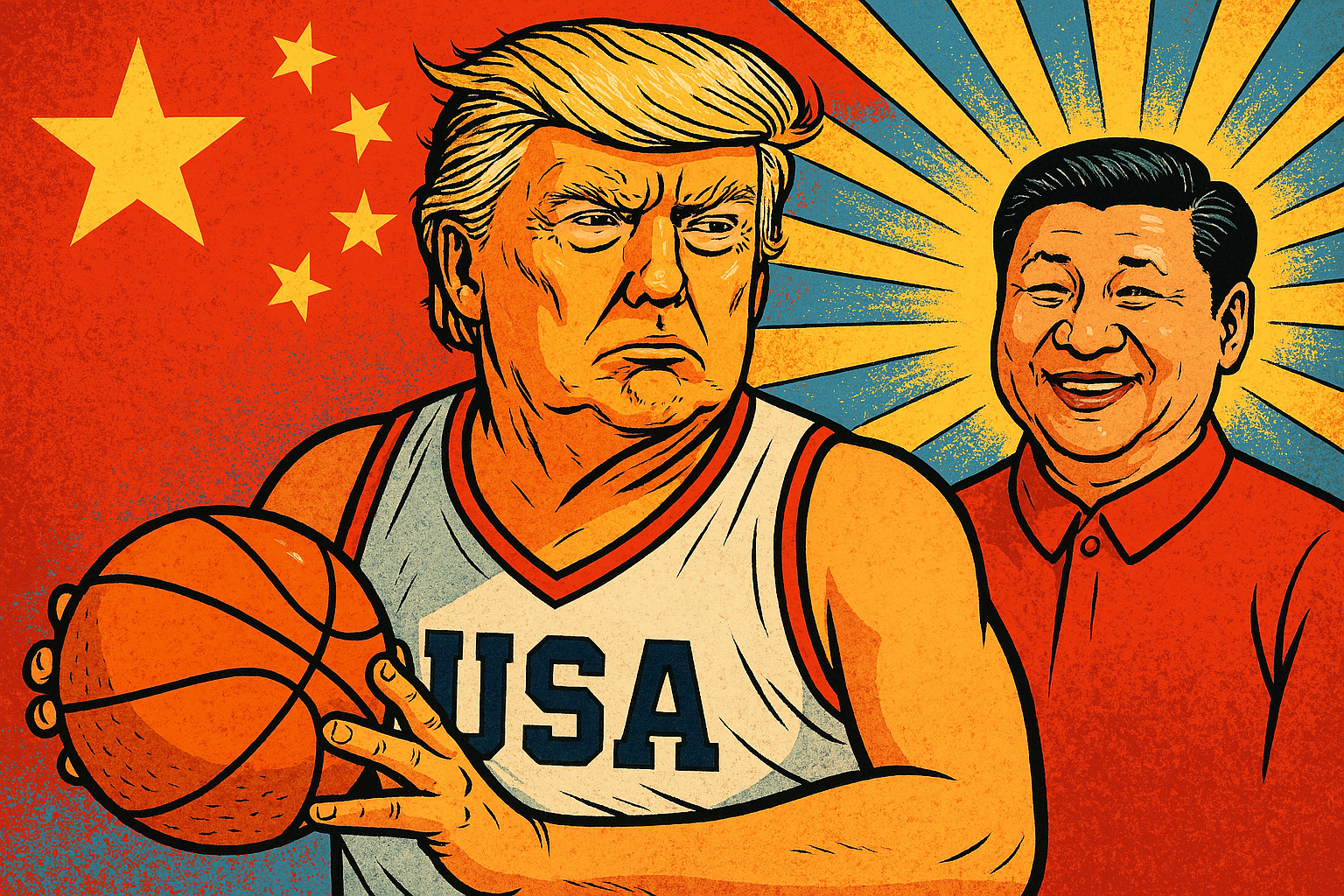
Own Goal: Trump Is the Best Player on China’s Team
Beijing doesn’t need a perfect game plan if Washington keeps scoring on itself
China’s long-run strategy is to chip away at U.S. leadership and split coalitions at the margins, a patient wedge approach that works best when America undercuts its own credibility. Those gambits often fail when the U.S. plays disciplined team ball. But when we burn soft power, rattle our research engine, tax our friends, and even monetize export controls, we spot our rival easy points without forcing a turnover ( CNA | Institute for Peace & Diplomacy ).
Soft power: In July, the administration moved to slash $9 billion from America’s influence toolkit—foreign aid (democracy support, refugee assistance, disaster relief) and public broadcasting (CPB funding for NPR, PBS, and 1,000+ local stations). These aren’t rounding errors; they are the scaffolding of U.S. persuasion and example abroad. Analysts warn the cuts don’t just dent credibility; they cede ground to rivals that are investing aggressively in narrative power. Beijing even cheered: Hu Xijin, the former editor-in‑chief of the PRC’s Global Times, called defunding Voice of America and Radio Free Asia “really gratifying,” hoping it would be “irreversible.” Moscow is likewise expanding its “e‑propaganda” footprint where U.S. broadcasting retreats. When adversaries celebrate your budget, that’s not fiscal prudence—it’s strategic malpractice ( Soufan Center | Forbes ).
Zoom out and the pattern is familiar: when the U.S. narrows its diplomatic aperture, rivals fill the opening with subsidized media, culture, and economic outreach—from Xinhua’s bureaus across Africa to infrastructure packages linked to political messaging. That’s the difference between bench strength and playing short-handed ( Soufan Center | Harvard Kennedy School ).
R&D and talent: You don’t win titles by gutting training budgets and scaring off recruits. Courts have allowed termination of $783 million in NIH grants, part of a broader push that injected political vetoes into peer review and froze panels—leaving early‑career scientists in limbo. Institutions braced for a 15% cap on indirect costs, a line item that keeps labs open and compliance met. Across campuses, researchers reported paused awards and program cancellations—consequences that don’t show up in a headline but do show up in lost cohorts and shelved experiments. Meanwhile, international scholars—long the lifeblood of U.S. innovation—now see America as a risk: one Harvard Medical School cancer researcher was detained for months over undeclared frog-embryo samples, visa revoked, work derailed, her lab’s unique system idled. That’s the opposite of recruiting season ( PBS | Inside Higher Ed | PBS NewsHour ).
The downstream effects are predictable. Canada, the UK, and Australia have been courting displaced labs and graduate talent for years; disruptions and detentions in the U.S. simply accelerate that flow. When top scientists start choosing Toronto, Munich, or Sydney over Boston and Palo Alto—or worse, Beijing—that’s not just a brain drain; it’s a slow bleed of the edge that made America the innovation capital of the world ( Inside Higher Ed | PBS NewsHour ).
Trade & tech: Fouling your own teammates mid‑play is a bad look. Tariffs on allies pushed effective rates toward historic post‑war highs, raising costs at home and inviting retaliation—an own goal that weakens the coalition needed to counter Beijing. Independent estimates point to GDP drag and four‑figure annual costs per household, while allied counter‑tariffs hit U.S. exports and political goodwill. Even where “wins” are claimed, economists find inflationary and growth‑sapping side effects that compound supply‑chain stress rather than relieving it ( Tax Foundation | Investopedia ).
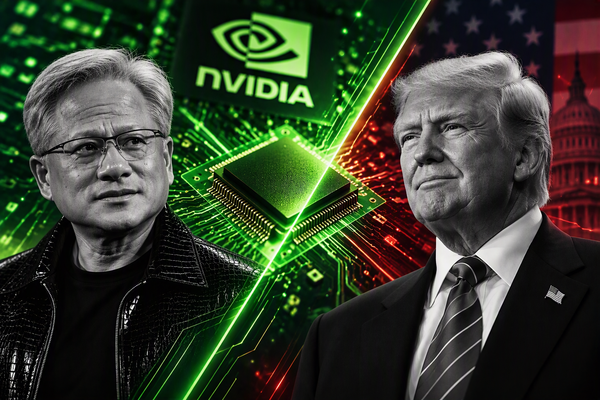
Then came a different kind of unforced error: the Nvidia/AMD export‑license deal. By allowing certain AI chips to be sold to China for a 15% revenue share to the U.S. government, Washington blurred the line between national security and revenue extraction. Hawks in both parties objected that export controls exist to protect, not to be monetized; legal analysts questioned whether the arrangement flirts with statutory prohibitions on license fees and the Constitution’s export‑tax bar. If chips are risky enough to restrict, they’re not a pay‑to‑play privilege; if they’re safe enough to sell, Washington shouldn’t skim the receipts ( POLITICO | Newsweek ).
Critical minerals: You can’t win the rebound if you’ve boxed yourself out. China dominates rare‑earth refining—the choke point that turns mined material into magnets and components for EVs, missiles, and advanced electronics. Beijing has repeatedly wielded export controls as leverage, from gallium and germanium to graphite and heavy rare earths like dysprosium. Tariff theatrics don’t substitute for a patient, allied industrial strategy; they raise costs while we remain dependent on the other team’s processing base. Veterans warn this is a 30‑year catch‑up game, not a six‑month sprint for a press release ( TIME | CNBC ).
There is a path: co‑invest with allies in separation and magnet-making capacity; lock in offtake agreements across the Five Eyes and the EU; use targeted incentives that reward processing and end‑product capacity onshore or in trusted partner states. That’s how you box out, crash the boards, and get second‑chance points ( TIME | Semafor ).
Ukraine & coalition signals: If you want trust in the Indo‑Pacific, don’t spook partners in Europe. Twice this summer, the Pentagon paused weapons shipments to Kyiv without White House coordination, then reversed under bipartisan blowback. Allies were blindsided; Congress demanded answers; Kyiv recalibrated expectations in real time. The episode telegraphed wobble—exactly the doubt Beijing exploits to pry open seams from Warsaw to Tokyo. Credibility is built on consistent execution, not last‑minute audibles ( CNN | NBC News | The Independent ).
The fix: China’s playbook hinges on a world where the U.S. is strong but not trusted enough for others to line up behind it. Reversing course isn’t complicated, just difficult: rebuild soft power (restore USAID/USAGM capacity and public diplomacy), depoliticize science (stabilize grants, protect international scholars), align trade and tech with allies (targeted controls, not tariff firehoses), and keep security decisions clean and predictable. Beijing doesn’t beat us if we stop beating ourselves ( Institute for Peace & Diplomacy | CNA ).
For readers who want the receipts
- China’s wedge strategy and why it often backfires — ( CNA )
- Beijing’s long game: eroding U.S. hegemony, not replacing it outright — ( Institute for Peace & Diplomacy )
- How China plans to displace American order without direct confrontation — ( Brookings )
- How U.S. soft power cuts are empowering rivals and ceding narrative control — ( Soufan Center )
- U.S. soft power decline and why it matters for security — ( Forbes )
- Harvard forum on the global backlash to Trump’s immigration order — ( Harvard Kennedy School )
- Supreme Court clears Trump to cut $783M in NIH research grants — ( PBS )
- Executive orders disrupting academic research and grant stability — ( Inside Higher Ed )
- Harvard cancer researcher detained by ICE over undeclared samples — ( PBS NewsHour )
- Tariff levels, GDP drag, and household costs — ( Tax Foundation )
- How Trump’s trade wars raised costs and strained alliances — ( Investopedia )
- Tariffs and global inflation dynamics — ( Brookings )
- Trump’s Nvidia export‑control license deal and backlash — ( POLITICO )
- Legal and constitutional concerns over monetizing export licenses — ( Newsweek )
- China’s rare earth dominance and U.S. vulnerability — ( TIME )
- Rare earths as a bargaining chip in the trade war — ( CNBC )
- Competition heating up; U.S. lag persists — ( Semafor )
- Weapons‑pause confusion and reversal — ( CNN )
- Readiness rationale disputed; allies blindsided — ( NBC News )
- Trump says shipments will resume — ( The Independent )
- Reporting on internal backlash — ( Military Times )