Press freedom under siege: this week's four fronts
Attacks on the Press and Free Speech
The war on the free press continues. This week brought four new fronts — each one, on its own, would have been a scandal in any previous administration. Because the Overton window has shifted so far, they now arrive almost as background noise. But strung together, they show a president who treats criticism of himself as harm to the country, and a government increasingly willing to act on that belief.
Start with Kristen Welker. On Sunday, before her show even aired, Trump posted a lengthy attack on the Meet the Press moderator on Truth Social, calling her the “hostess” of “Meet the Fake Press” and insisting his endorsed candidates were sweeping primaries at “100%” in Senate races and “98%” in House races. Then came the actual threat: “Because of this purposeful inaccuracy, she will be reported to the FCC for rebuke or punishment.” Welker hadn’t even made the comment on the show itself — it came from a local NBC affiliate preview, where she noted Trump had seen “some mixed results” with his endorsements, which is true. NBC backed her: “Kristen is one of the best in the business and we stand by her.” FCC Commissioner Anna Gomez called Trump’s threat “dangerous” and noted the agency has “no authority to punish journalists this administration doesn’t like.”
The FCC has essentially no legal authority to punish an individual journalist for what she says on air — its own rules explicitly protect editorial viewpoint. So whether or not Chair Brendan Carr does anything with the “referral” is almost beside the point. We shouldn’t live in a country where a reporter has to wonder whether accurate reporting will bring a federal regulator down on her employer. Government officials are supposed to act for good reasons, not out of presidential irritation — and Trump, again, doesn’t seem to draw a line between what’s bad for him and what’s bad for the country.
Please, just a moment of your time...
Liberty’s Lens is entirely reader‑supported. We don’t answer to corporate masters deciding what we say or what we cover.
If you find our work valuable, please consider upgrading to a paid subscription. You can take 20% off with this coupon — and support independent media for about the price of a coffee per month.
If you've been thinking about upgrading to paid to support the work of Liberty's Lens, now is the time. Upgrade and save.
If a subscription isn't in the budget right now, a one time contribution, any amount, is always appreciated.
Thank you to every reader who shares our work and helps it reach new audiences. We couldn’t do this without you. We love you all.
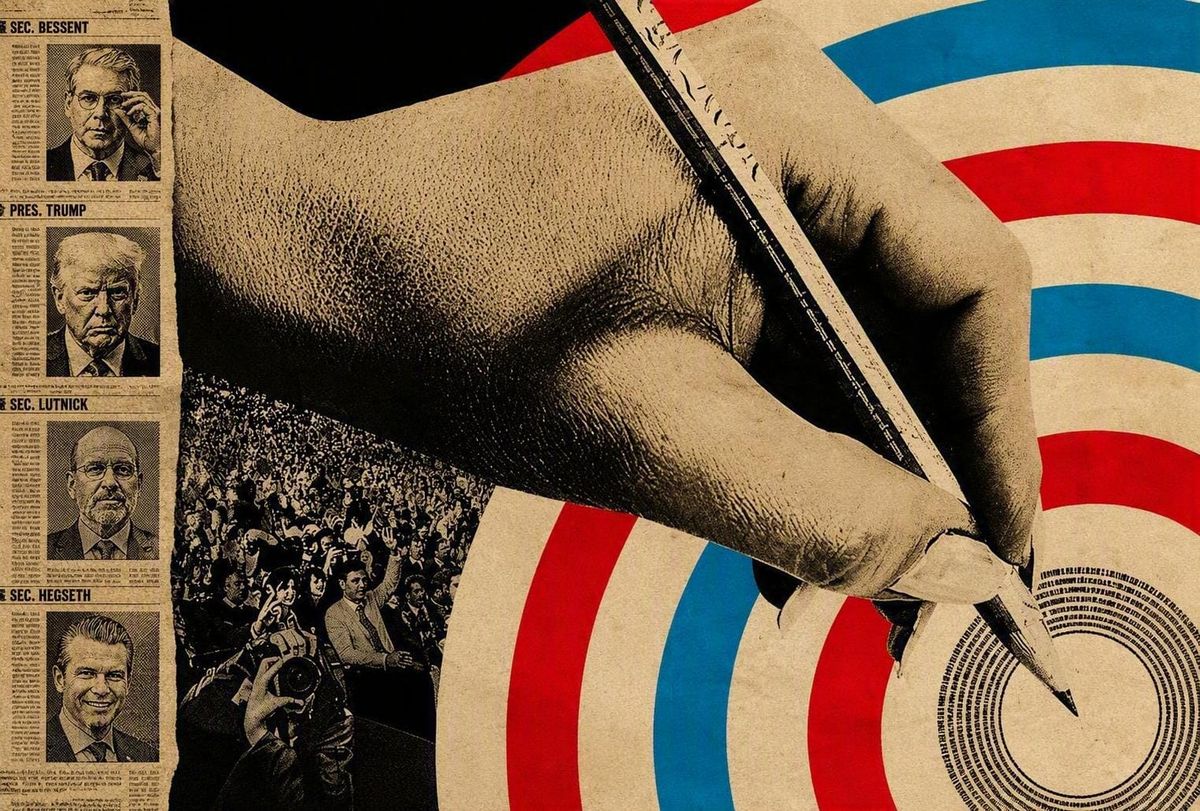
This wasn’t isolated. The Treasury Department denied G20 press credentials to reporters from The New York Times, The Wall Street Journal, and Bloomberg — including the Times’ Alan Rappeport, who has covered Treasury since 2017 — while admitting nearly 300 other journalists. Treasury offered no explanation beyond a vague line about “established journalistic standards,” and Secretary Scott Bessent insisted the decision had “nothing to do with point of view.” The Times called it “a blatant attempt to evade public scrutiny”; Bloomberg said it “undermines media freedom and public accountability” (New York Times | Bloomberg). The irony is hard to miss: Bessent is already fighting to keep confidence in American debt amid a shaky bond market. Locking out the reporters who cover that exact beat doesn’t inspire trust — it looks like something worth hiding.
Then there’s the Pentagon. The Washington Post reported that four-star commanders — including the heads of Naval Operations, European Command, Southern Command, and Pacific Command — filed formal objections warning Defense Secretary Pete Hegseth that continuing large-scale Iran operations is straining the military’s ability to respond to threats elsewhere, including at home. That’s about as serious and high-level a warning as the military issues, and notably, none of these officers are natural administration antagonists. Rather than engage with the substance, Pentagon spokesman Sean Parnell attacked the reporting as a “crime” and a “betrayal of the force” — without actually disputing that the objections were real. An active-duty official went further, accusing the Post of wanting service members killed for a headline, which is grotesque and, frankly, defamatory. Yes, leaking a classified document is a crime. Publishing it is journalism — settled law since the Pentagon Papers case in 1971. The administration would do better turning its attention to whoever inside the Pentagon leaked it, rather than the reporters who did their jobs.