Private Profits, Public Pain — The Logic of the Trump Economy
Why Trump’s economic chaos is working exactly as intended
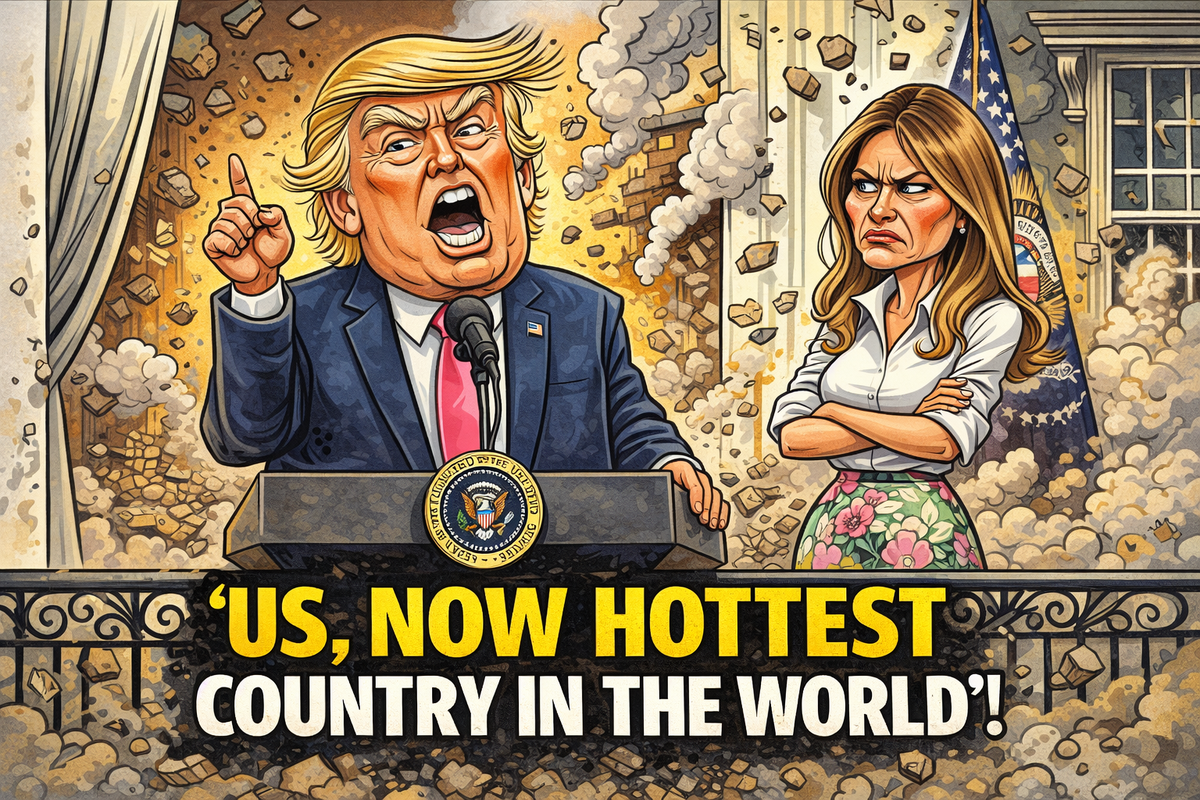
The Juxtaposition You Can’t Unsee
Two things can be true at the same time, and they’re both true right now.
First: a war of choice is effectively acting as a tax on middle‑class American incomes—really, on all American incomes if you drive. It isn’t abstract. It isn’t theoretical. It’s a direct withdrawal from people’s paychecks every time they fill up a tank, every time increased shipping costs ripple through the economy.
Second: at the very same moment that this “tax” is landing on everyone else, the president is making another $100 million off some new crypto scheme every few weeks.
That is a really, really difficult juxtaposition. Not just morally. Politically. Psychologically. If you’re trying to demonstrate to people who aren’t full‑bore loyalists that you give a damn about this country, it’s hard to explain why ordinary families are being squeezed while the people in charge keep finding new ways to get richer.
And it gets worse, because the people making these decisions aren’t exposed to the consequences. When the president tells you not to worry—that gas prices are going to “drop like a rock”—the obvious question is: what does he know? When is the last time he put gas in his car? Never. When is the last time he went grocery shopping? Never. Millions of Americans voted for an out‑of‑touch billionaire, and this is what being governed by one looks like.
Except it isn’t just Trump voters paying higher prices. It’s all of us. Rising costs are a growing burden on the working class, while the people at the top who launched this crisis remain completely insulated from its effects.
Trump’s most ardent supporters may be content paying their “MAGA Freedom Tax,” or whatever they choose to call it. The rest of the country is done carrying the cost for wealthy elites.
Liberty’s Lens is entirely reader‑supported. We don’t answer to corporate masters deciding what we say or what we cover.
If you find our work valuable, please consider upgrading to a paid subscription. You can take 20% off with this coupon — and support independent media for about the price of a coffee per month.
Thank you to every reader who shares our work and helps it reach new audiences. We couldn’t do this without you. We love you all.
What the “Tax” Looks Like in Real Life
If you want to understand the impact of these policies, don’t start with charts. Start with people who drive for work—people whose livelihoods depend on fuel, and who don’t have the luxury of waiting out a crisis. Truck drivers. Delivery drivers. Lyft and Uber drivers—anyone whose paycheck depends on what’s at the pump.
Imagine gas that had been running around $2.70 a gallon—about $40 to fill a tank.
Now that same “cheap” station is charging $4.37. About $76 for the same tank. Nearly double. Money straight off the bottom line.
And that’s the part people miss: this isn’t a political argument. It’s arithmetic. If your costs jump and your income doesn’t, you have to cover the difference somehow.
So you drive more hours. But driving more hours isn’t safe. And driving more hours uses more fuel. It becomes a loop you can’t escape.
That’s how regular people “manage” a crisis like this: burning through savings, stretching workdays, and carrying stress that never shows up in White House briefings. It does show up in the polling, though—which is why Trump increasingly prefers to cite polls that sample only his own supporters.
Support is falling among those who aren’t ride‑or‑die MAGA. Plenty of former Trump voters are experiencing buyer's remorse, and who can blame them? Bills don’t pay themselves. The tank doesn’t fill itself. And for people already digging into savings just to keep working, this isn’t a short‑term bridge.
It’s managed decline.
Meanwhile, the president’s message never changes: don’t worry. It will be resolved. Prices will come down soon. Any day now.
But again: what does he know?
 Liberty's Lens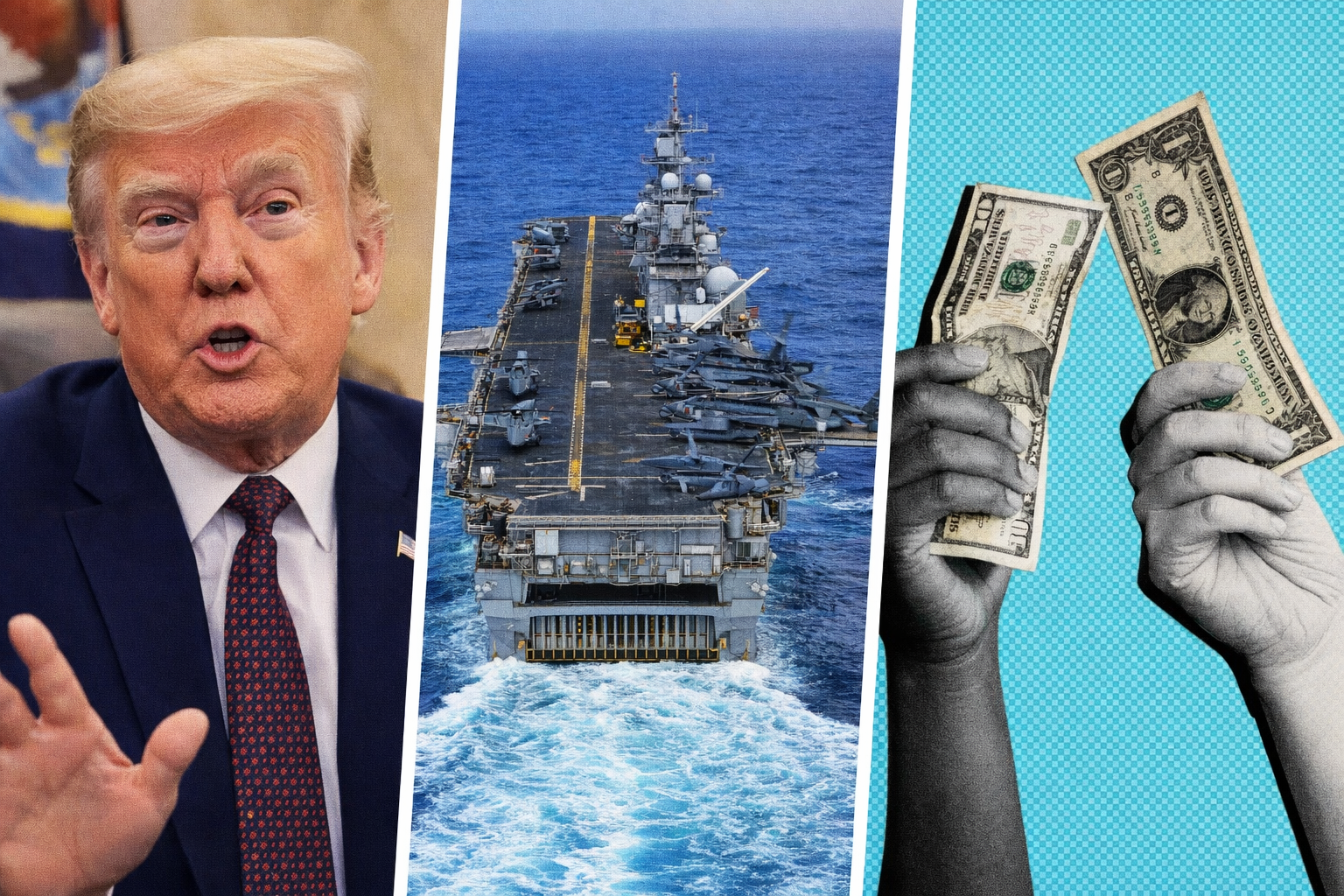
The Real Scandal: Misery Below, Money Above
Here’s the part that makes Trump’s handling of the economy seem far darker than simple ineptitude.
Yes, gas prices are rising. Yes, the war is bleeding into everything. But the problem isn’t just the material reality of higher prices.
It’s the way this administration is setting itself up to be accused—credibly—of carelessly hurting American lives while doing everything it can to absorb as much crooked money as possible from the chaos it creates.
That’s what makes the juxtaposition so toxic.
Median Americans don’t feel good about the economy. People feel miserable. They feel the sticker shock. They feel the stress.
And then, every couple of weeks, there’s another headline: the Trump family has found a new way to pull in $100 million—or $1 billion—through a crypto scheme that looks suspiciously like politically connected profiteering.
Start a war with Iran, and Trump’s children are soon bidding on Pentagon drone contracts. Trigger a supply‑chain shock, and a Trump‑linked business steps in to soak up government funds mining rare earth minerals.
Crypto schemes. Personal deals for tariff relief. The list goes on.
Anyone else remember when Republicans lost their collective minds over the tens of thousands of dollars Hunter Biden received from a Ukrainian energy company—money with no connection whatsoever to U.S. policy or presidential decision‑making?
Here, by contrast, the corruption is so brazen, so vast, that it borders on the surreal. The president’s own son‑in‑law is openly soliciting billions—with a b—from Middle Eastern autocrats while simultaneously serving as a so‑called Special Envoy for Peace. While negotiating on behalf of the American people, he is courting personal fortunes from the very governments entangled in a conflict that is destabilizing the global economy and driving price shocks worldwide.
Once enrichment is constant and visible, it stops being a scandal and starts being the operating environment. Economic pain becomes externalized—something that happens to other people. Private gains are paired seamlessly with public costs.
And policy decisions no longer need to justify themselves in terms of outcomes, because the people making them aren’t exposed to those outcomes in the first place.
That insulation explains the brazenness.
It explains why there’s no correction.
And it explains how decisions that hurt the public can coexist so comfortably with personal windfalls.
Tariffs make that coexistence explicit.
 Liberty's Lens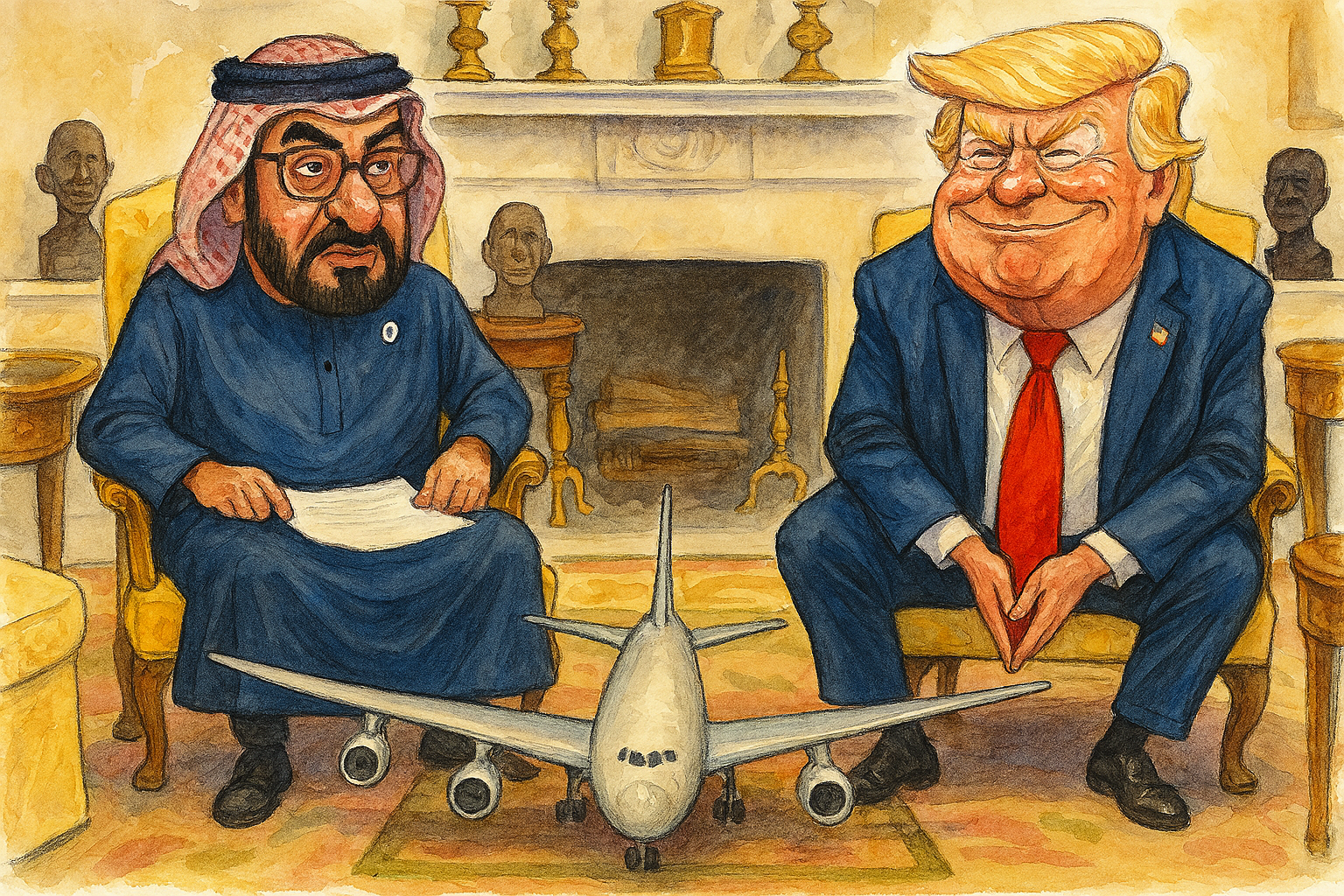
When Pressure Turns Into Payment
Tariffs offer a clear window into how corruption operates in this administration. As long as the president exercises direct control over them, tariffs become a tool of leverage—and where that kind of power exists, corruption quickly follows.
In theory, tariffs are meant to be surgical: a form of economic protectionism used to shape markets or respond to foreign behavior. In practice, it’s increasingly clear the president doesn’t see them as economic policy at all. He sees them as a revenue stream—for himself.
That’s why the pattern keeps repeating. A punishing tariff appears. A country or corporation wants relief. And somehow, relief coincides with the president being personally rewarded.
Your tariff is 40 percent. Can I have a gold bar?
Here’s a gold bar.
And the tariff gets cut.
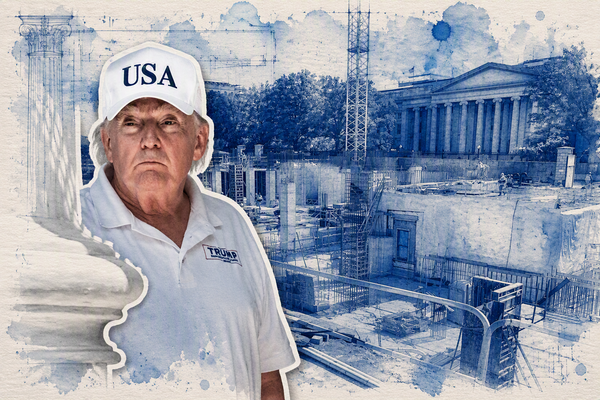
The same thing happens with steel. We’re tariffing it—unless the president wants it for his own project, his own palace, his own vanity build. Suddenly, a manufacturer promises millions of dollars’ worth of materials, and just like that, the tariff shifts to make it possible.
The details barely matter. Whether it’s gold bars, free construction materials, regulatory carve‑outs, or informal exemptions, the structure is always the same: pain is applied broadly, relief is granted narrowly, and the criteria for relief are personal, not principled.
That isn’t governance. It’s extraction.
And once policy can be traded this way, it doesn’t stay confined to tariffs. Favoritism becomes the organizing principle. Decisions speed up or stall based on who flatters the president, who pressures him, or who can deliver something of value. From the outside it looks incoherent—policies lurch, standards bend, exceptions multiply—but inside this system, it’s the logic of leverage playing out again and again
Everything responds to one metric: personal advantage. And in an environment ruled by transactions, instability isn’t a flaw.
It’s the feature that makes the whole thing work.
 Liberty's Lens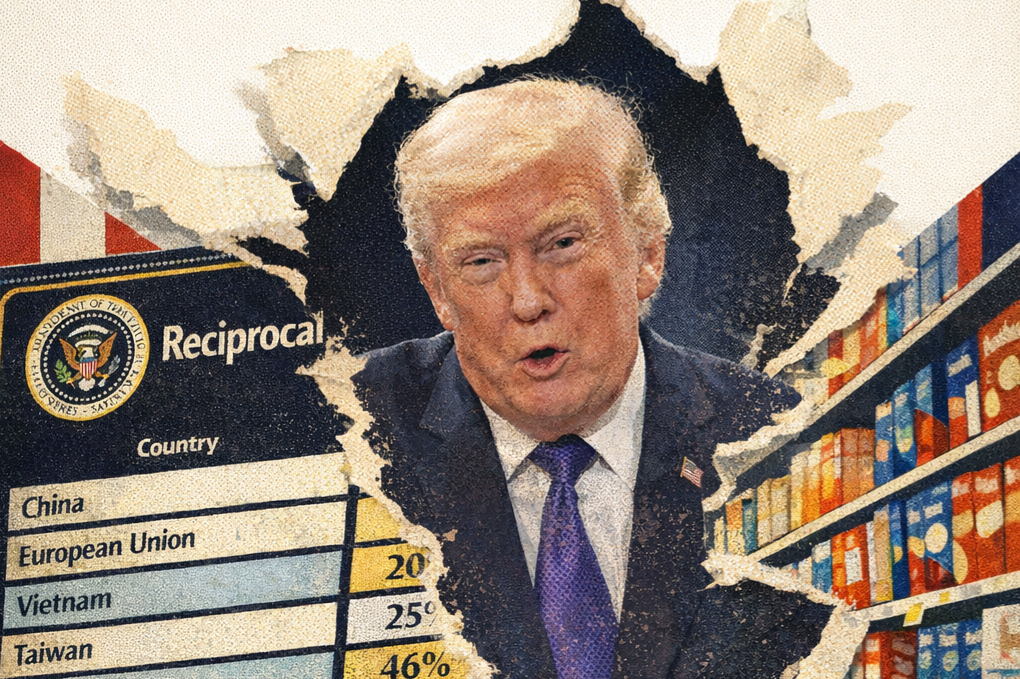
Why It Keeps Happening: Leverage, Not Ideology
That’s why so much of Trump 2.0 feels incoherent.
It’s not just because the policies are unpopular or poorly explained, but because they repeatedly fail on their own terms. We were promised a manufacturing renaissance and got tariff policies that discourage long‑term capital investment. We were promised non‑interventionism and delivered a foreign policy whose most consistent output seems to be new profit opportunities for Trump‑aligned businesses. We were promised lower prices—not just lower inflation, but actual price relief—and instead got policies that almost seem engineered to do the opposite.
The problem isn’t that these policies are half‑formed.
It’s that they were never meant to function as policy at all.
Once you stop assuming these decisions are guided by ideology, coherence, or the public interest, the pattern snaps into focus. What replaces those things is leverage—pressure applied until it produces a desired personal or political return.
That’s why everything feels chaotic. Tariffs appear, collapse, reappear, and mutate. Costs rise. Ordinary people are left holding the bill. And personal enrichment continues openly, right alongside the decisions causing the harm.
When policy is treated as extraction rather than governance, instability isn’t accidental.
It’s structural.
Seen this way, the disorder resolves into a system. These policies don’t fail randomly.
They succeed precisely at what they’re designed to do.
And this is why the costs never seem to stop rising—at the pump, at the grocery store, on the rent notice that arrives every month like clockwork. The pain is real, persistent, and widely felt—because it isn’t a side effect.
It’s the price of being governed by a system designed to extract, not to serve.
For readers who want the receipts
- Trump’s Swiss tariffs were arbitrarily raised and then lowered after he accepted lavish gifts, including a rare Rolex and a gold bar, from Swiss interests — (U.S. Senate Finance Committee)
- The White House intervened in foreign steel tariffs affecting Trump’s $400 million private ballroom project, raising questions about self‑dealing and selective enforcement — (New York Times)
- Voter regret among non‑hardline Trump supporters has grown as economic pressures mount, particularly around prices and cost‑of‑living issues — (CNN)
- Trump repeatedly promised gas prices would “drop like a rock” once the Iran war ended, despite no credible evidence or mechanism to support the claim — (KPTV / FOX 12 Oregon)
- House Democrats opened a sweeping investigation into Jared Kushner’s foreign financial entanglements and conflicts of interest while acting as U.S. Special Envoy for Peace — (House Judiciary Democrats)
- A company backed by Donald Trump Jr. positioned itself to benefit from government‑backed rare‑earth mineral initiatives following supply‑chain disruptions — (Yahoo Finance)
Trump’s sons backed a drone company that later pursued Pentagon contracts amid escalating conflict with Iran — (Wes O’Donnell)
Support Independent Journalism!

Look around: media consolidation isn’t subtle anymore.
A single ideological camp is amassing platforms—social networks, news outlets, streaming services—all under its banner. One by one, spaces for open dialogue are being converted into echo chambers.
But not independent media.
Liberty’s Lens is part of a growing movement of independent progressive voices refusing to be absorbed, censored, or silenced.
We publish what powerful interests would prefer you not see.
We ask the questions their platforms no longer allow.
We stay independent because independence is the last defense against narrative control.
👉 Join the resistance to media monopolization:
20% OFF for life when you upgrade to paid!
They can buy platforms.
They can’t buy us.
Thanks for reading! This post is public so feel free to share it.
— Liberty’s Lens
This article is provided for public interest reporting and analysis. All external links open in a new tab and point to their original publishers.
© 2026 Liberty’s Lens. All rights reserved.