Sounding the Alarm: Why the War in Iran Is More Dangerous Than We’re Being Told
How Impulsive Escalation, Weakened Institutions, and Downplayed Risks Leave Americans Exposed at Home
This war carries risks that matter deeply to everyday Americans—but those risks are being minimized rather than clearly explained. The administration is asking the public to absorb escalation abroad without fully grappling with the most predictable consequence of a direct conflict with Iran: blowback. That blowback does not need to arrive as a single dramatic attack. It more often shows up as cyber disruption, lone‑actor violence aimed at soft targets, instability in global trade, and the gradual weakening of the institutions meant to keep people safe. The danger is not only that these risks exist, but that the public is being denied a clear, honest accounting of them.
These risks are not speculative. Senior officials have already pointed to recent, credible Iran‑related threat concerns inside the United States—while simultaneously resisting broader public warnings. The result is a widening gap between what the government knows, what it prepares for internally, and what it is willing to explain to the people who would bear the consequences. That gap, not any single act of retaliation, is what makes this moment so dangerous.
A War With Iran Raises Homeland Risk by Definition
Iran has a long record of asymmetric retaliation, proxy activity, and indirect coercion. As direct confrontation escalates, the incentive shifts away from conventional battlefield responses—where Iran is overmatched—and toward forms of retaliation that are dispersed, difficult to contain, and capable of imposing cost beyond the battlefield: cyber operations, proxy violence, targeted intimidation, disruption of trade and infrastructure, and the encouragement of ideologically motivated attacks by individuals who treat global events as justification for violence. This does not mean a mass‑casualty event is inevitable. It means the threat environment becomes more volatile, more fragmented, and harder to manage.
That reality is not controversial inside the national‑security world. It is the baseline assumption. Which makes it all the more troubling that the public conversation about this war has focused almost entirely on dominance, victory, and humiliation of the enemy—while giving short shrift to the consequences Americans are most likely to experience at home. (DHS)
The Alarm System Itself Is Being Muffled
What makes this moment especially dangerous is that the systems designed to warn and prepare the country appear constrained by politics. Federal agencies prepared internal assessments warning of an elevated threat environment tied to the Iran conflict, intended for state and local authorities who actually protect communities. Yet those warnings were slowed and subjected to political review. (Reuters via U.S. News)
These advisories are not press releases. They are operational guidance that affects patrol patterns, intelligence sharing, and protection of vulnerable sites. When that pipeline is delayed or softened, the gap between rising risk and real‑world preparedness widens. The result is a false sense of calm layered over a genuinely more dangerous environment. (DHS)
Liberty’s Lens is entirely reader‑supported. We don’t answer to corporate masters deciding what we say or what we cover.
If you find our work valuable, please consider upgrading to a paid subscription. You can take 20% off with this coupon — and support independent media for about the price of a coffee per month.
You can also gift a paid subscription to a friend who’d appreciate what we do.
Thank you to every reader who shares our work and helps it reach new audiences. We couldn’t do this without you. We love you all.
Critical Security Resources Are Being Redirected at the Worst Time
At the same time, homeland security capacity is being hollowed out by choice. Agents and analysts with counterterrorism and counterintelligence expertise have been reassigned, pushed out, or lost to attrition, while large portions of the federal law‑enforcement apparatus have been redirected toward routine immigration enforcement. That shift is not cost‑free. (NBC News)
Whatever one’s views on immigration enforcement, it is not a substitute for the work that prevents foreign intelligence services from operating inside the United States, tracks extremist networks before they mobilize, or disrupts plots before they mature. Those missions require time, continuity, and specialized expertise. Informant networks do not survive leadership purges. Technical knowledge cannot be regenerated on command. When experienced personnel leave, they don’t just take staffing slots with them—they take judgment, context, and human sources that cannot be quickly replaced. (CBS News)
This matters most during crises. A system stripped of expertise can still appear active, but it is less capable of detecting subtle warning signs or responding quickly as threats evolve. In a crisis driven by asymmetric retaliation and diffuse risks, capacity—not political optics—is what determines whether harm is prevented or merely explained after the fact.
Ideological Purity Has Replaced Institutional Judgment
The erosion of capacity is not accidental. Expertise itself has become suspect. Career professionals who once handled complex national‑security cases have been sidelined for perceived political impurity or past involvement in investigations that angered the regime. What replaces them is not deeper competence, but greater ideological alignment. (NBC News)
 Liberty's Lens
This creates an enforcement culture optimized for loyalty and visibility rather than accuracy and prevention. It also encourages the pursuit of politically convenient enemies while sidelining empirically grounded threats. When ideology substitutes for evidence, the state ends up chasing labels instead of behavior—and real dangers slip through the cracks. (CBS News)
The Strait of Hormuz Is Not an Abstraction
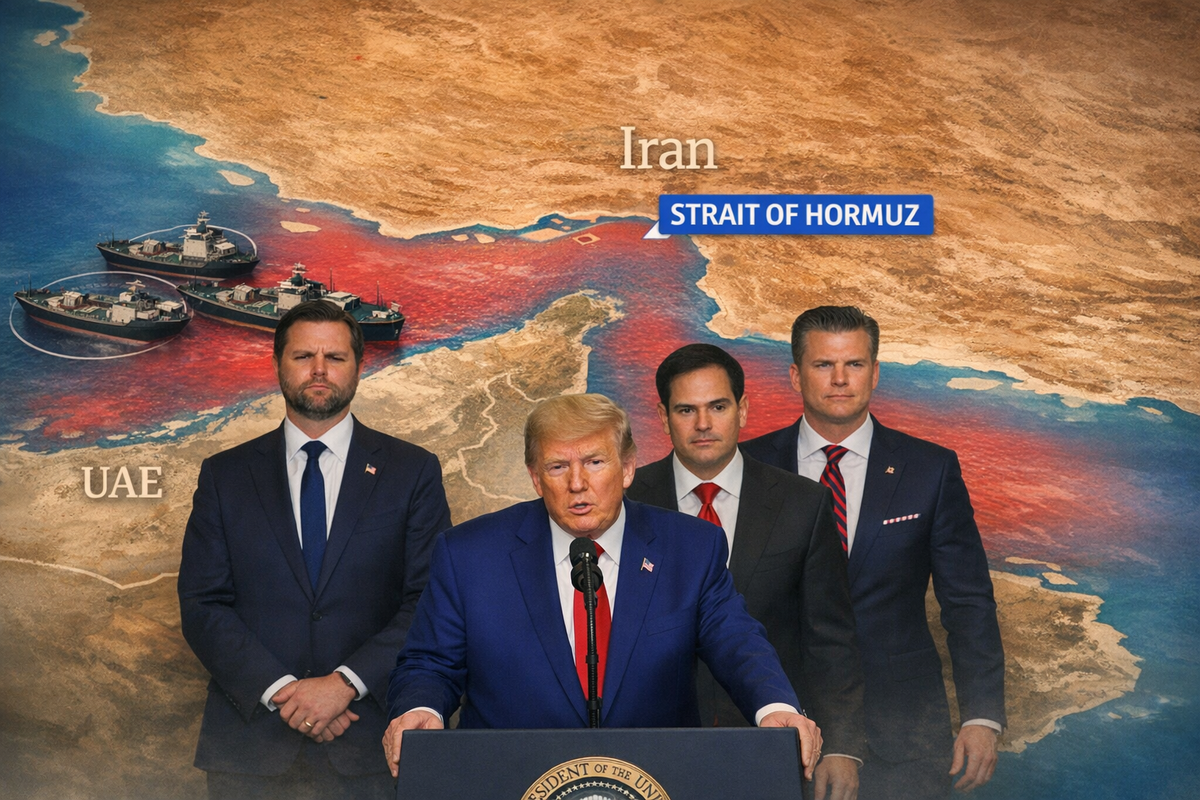
One of the most immediate dangers of this war lies far from American shores, but it will be felt quickly at home. The Strait of Hormuz is one of the most important economic chokepoints on the planet, carrying a massive share of the world’s oil and liquefied natural gas. When traffic through the strait is threatened—by attacks, insurance withdrawal, or fear alone—the effects ripple outward almost instantly. (CNBC)