The Death Panel Prophecy Fulfilled—By the People Who Invented It
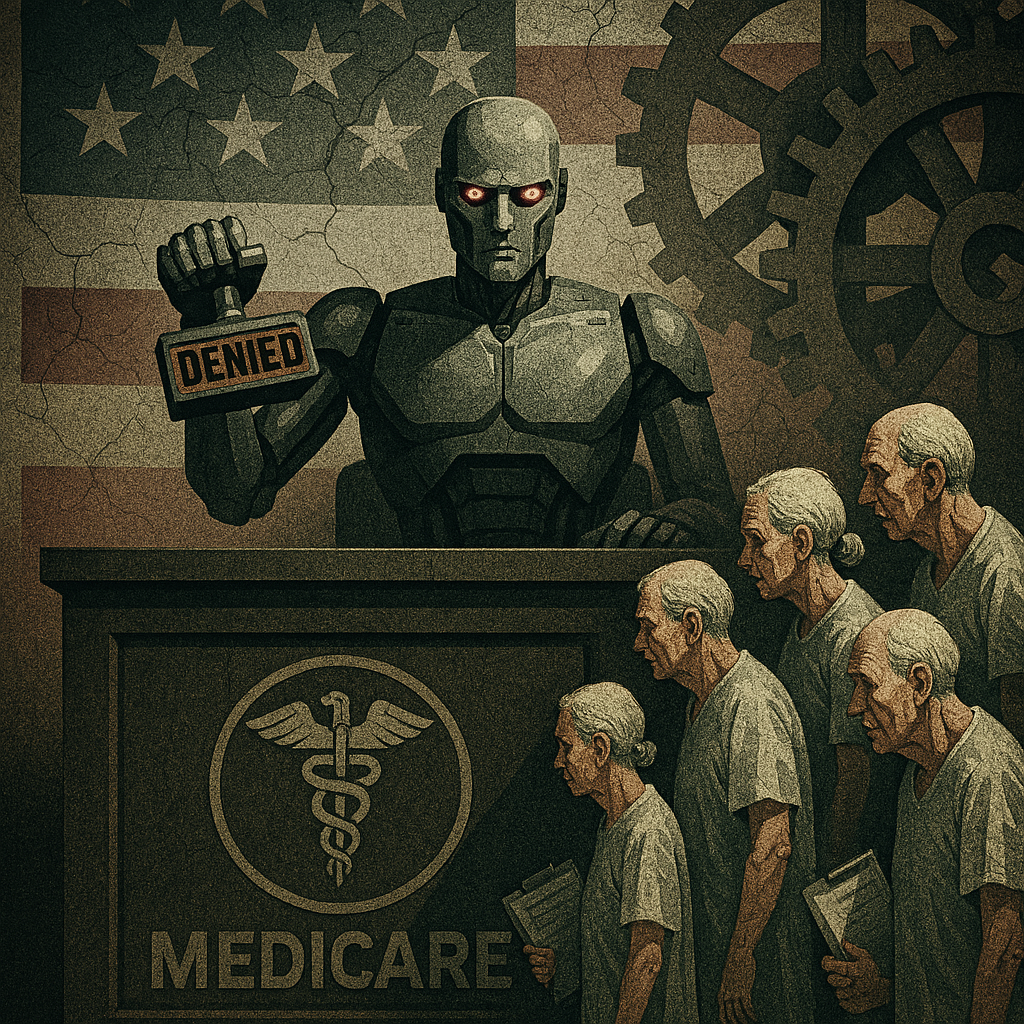
The Affordable Care Act never rationed care. But Trump’s new Medicare model? It hands life-and-death decisions to unfeeling machines with a profit motive.
The Myth That Started It All
Back in 2009, former Alaska Governor Sarah Palin coined the phrase “death panels” to describe a provision in the Affordable Care Act. Conservative media amplified the claim, warning that government boards would decide who lives and dies. The phrase dominated headlines, fueled town hall meltdowns, and became a rallying cry against health reform.
The truth? There were no death panels. The ACA provision in question allowed Medicare to reimburse doctors for voluntary end-of-life counseling—conversations about living wills and hospice care, not rationing treatment (FactCheck.org). But the myth stuck. It was political gold.
How We Got Here
Fast forward to today. The same political movement that weaponized fear of imaginary rationing is now piloting a system that comes dangerously close to the nightmare they once imagined. Under the Wasteful and Inappropriate Service Reduction (WISeR) Model, the Centers for Medicare & Medicaid Services will use artificial intelligence algorithms to decide whether certain procedures under Original Medicare are “appropriate” before they’re approved (Gizmodo).
This isn’t a human doctor reviewing your case—it’s a machine. And the companies running it get paid more when they say “no.”
Who’s at Risk?
This change doesn’t just target obscure billing codes. It affects real people with real conditions:
- Parkinson’s patients who need deep-brain stimulation.
- Chronic pain sufferers who rely on nerve stimulators or spinal injections.
- Seniors with severe heart disease who need valve replacements.
- People with non-healing wounds or mobility issues who require advanced therapies.
- Patients recovering from fractures or spinal injuries who need stabilization procedures.
In short: some of the most vulnerable patients in Medicare.
Why It Matters
- Scope: The pilot launches in January 2026 across six states: Arizona, New Jersey, Ohio, Oklahoma, Texas, and Washington (CMS).
- Profit Motive: Private contractors share in the “savings” from denied claims. The fewer approvals, the bigger their payday (Modern Healthcare).
- The Irony: The same politicians who cried wolf over imaginary rationing are now institutionalizing algorithmic rationing.
Critics warn this is a dangerous precedent: importing the worst practices of for-profit insurers into traditional Medicare. And unlike the ACA’s mythical death panels, these ones are real—and they run on code.
What to Watch For
Expansion Beyond Six States: If CMS declares the pilot a success, expect a nationwide rollout.
Algorithm Transparency: Will patients or doctors ever see how these AI models make decisions? Or will it remain a black box?
Appeals Process: How fast—and how fair—will appeals be when an algorithm denies care?
Private Sector Influence: Which contractors win these bids, and how much do they profit from denials?
Congressional Response: Will lawmakers who once railed against “death panels” speak up now that they’re real?
The Bottom Line
For years, “death panels” were a political ghost story—a weaponized myth to scare voters and sink reform. Now, the same movement that invented that lie is building something far worse: a system where algorithms, not doctors, decide whether you get care. And unlike the myth, this one comes with real consequences for real people. If we don’t pay attention now, the future of Medicare could be written in code—and optimized for profit, not patients.
For readers who want the receipts
CMS announces WISeR Model — (Centers for Medicare & Medicaid Services)
Trump administration to use AI for Medicare prior authorization — (Gizmodo)
Critics call it “AI death panels” — (Modern Healthcare)
Background on the “death panel” myth — (FactCheck.org)