The Energy Crisis Is Worse Than You Think
Why This Could Be Worse Than the 1973 Oil Crisis
Liberty’s Lens is entirely reader‑supported. We don’t answer to corporate masters deciding what we say or cover. If you find our work valuable, please consider upgrading to a paid subscription (get 20% off an annual subscription using this coupon)—or gifting a paid subscription to a friend who’d appreciate what we do. Thank you to every reader who shares our work and helps it reach new audiences. We love you all.
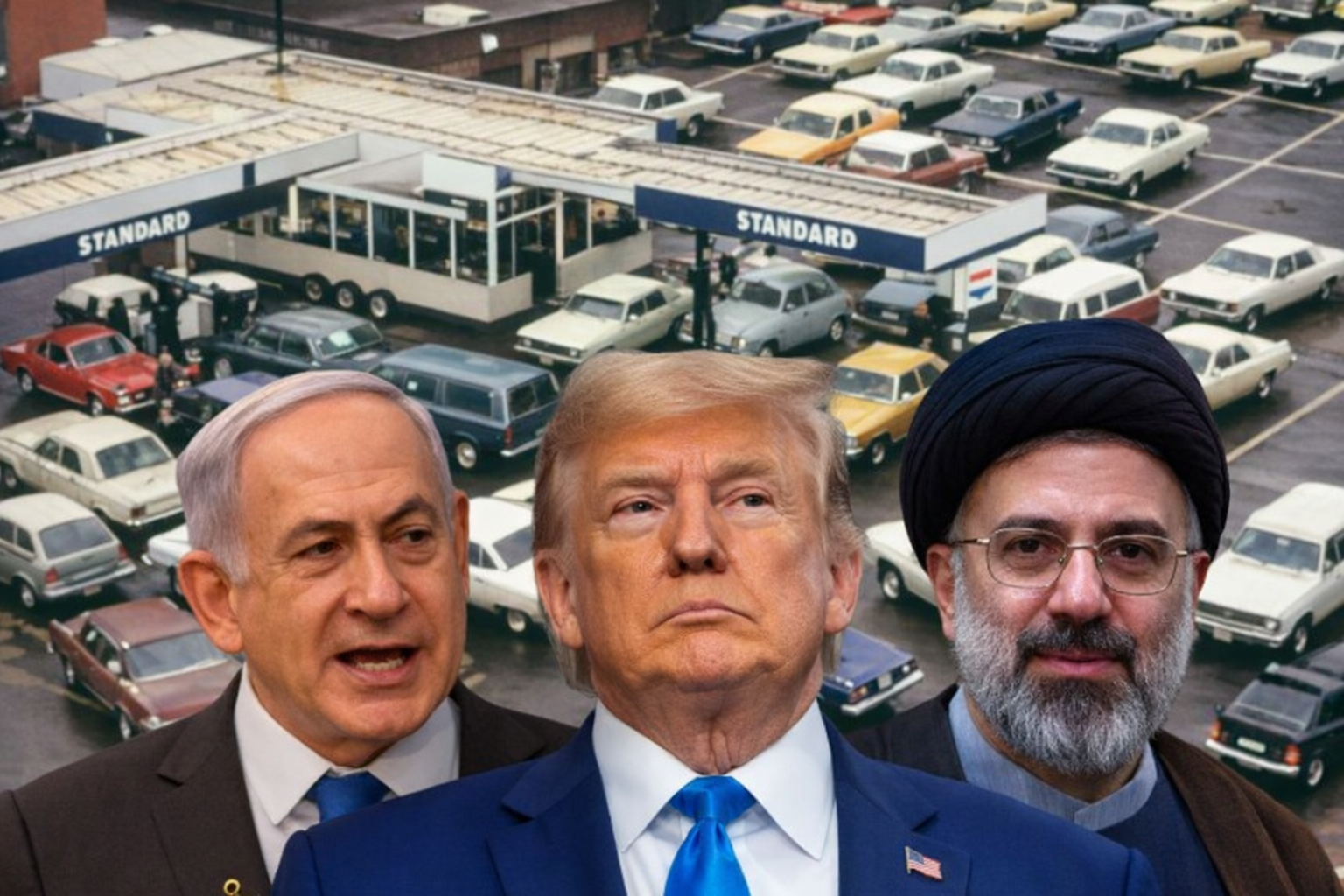
This White House would have you believe that the Strait of Hormuz can be reopened with a “simple military maneuver” — or that it will “open itself” at some undefined point. And yet, as of now, the Strait of Hormuz remains mostly closed.
If it stays that way — and even more so if the war expands, if Iran destroys additional energy infrastructure across the region, and if the U.S. and Israel do the same inside Iran — then we are headed toward the kind of energy crisis we have not seen since the 1970s, and possibly something much, much worse.
What’s critical to understand is that the Strait does not need to be “sealed shut” in the literal sense for global supply to seize up. The modern energy system isn’t just pipelines and tankers; it’s a chain of commercial decisions — shipping schedules, insurance coverage, port access, storage capacity.
When enough of those links fail, “mostly closed” functions no differently than closed.
The scale of the shock
The Strait of Hormuz moves about 20 million barrels of oil a day in a roughly 100‑million‑barrel‑a‑day global market — around 20% of the world’s oil supply. It also carries about 20% of the world’s liquefied natural gas. And right now, very little of that traffic is successfully transiting.
It really is the most critical global maritime choke point for the energy sector — but not just for energy. Huge quantities of petrochemicals, aluminum, and fertilizer move through the strait as well, with direct consequences for industrial output, food production, and food prices. But even focusing only on oil and gas, there is no choke point in the world that matters more than this one.
The Gulf region has been central to global energy markets since the 1970s. Iraq, Saudi Arabia, the United Arab Emirates, Iran — all are major producers. And most of that oil reaches global markets by tanker, through this single, narrow passage. The strait is a small corridor that bends around a corner and runs directly along Iran’s coastline.
Because of that geography, it doesn’t take much to disrupt traffic. A few drones, or explosives in a small boat racing toward a tanker — you don’t need a large or prolonged military campaign. Before this conflict, roughly 100 tankers a day passed through the strait. You only need one or two credible attacks for insurance to be withdrawn and for ship operators to decide the risk is no longer acceptable.
There are some workarounds. Saudi Arabia can move limited volumes through pipelines. Iranian oil, somewhat ironically, is still flowing. Strategic petroleum reserves have been tapped. Sanctions on Russia and Iran have been eased — a choice whose wisdom is very much open to debate.
But even after accounting for all of that, analysts estimate a disruption on the order of 10 million barrels of oil per day, possibly more. That’s over 10% of global supply.
For comparison, during the Arab oil embargo in 1973 — which produced long gas lines, rationing, and severe inflation — the world saw roughly 6 to 7% of supply disrupted. By any measure — in absolute terms or as a share of global demand — the disruption implied by a closed Strait of Hormuz would be significantly larger than anything the modern global economy has ever experienced.
How risk perception is the key driver here
Or why a navy can’t just open the strait on command.
It doesn’t take much to create a perception of risk — and in global shipping, perception is everything.
You don’t need to completely block the Strait of Hormuz. You don’t need to stop every ship. You only need to hit — or even plausibly threaten — one tanker every few days, or every week or two, to make insurers and shipping companies conclude that the risk is unacceptable.
There are simply too many vessels moving through the strait to secure them all. Given modern drone technology and small, fast boats, it is not particularly difficult to create the impression that any one of those ships could be vulnerable at any moment. Once that impression takes hold, the entire route begins to look unsafe.
You might be able to protect a couple of warships, or even escort a handful of commercial vessels through under heavy security. But protecting dozens of tankers — an entire daily flow of global energy traffic — is a fundamentally different problem.
And once insurance coverage is withdrawn, the market effectively shuts itself down.
Tankers carry enormously valuable cargoes. Operators are not going to send them through a high‑risk zone without insurance, and insurers are not in the business of underwriting open‑ended geopolitical escalation. At that point, the decision is no longer political or military — it’s commercial.
So even if naval escorts could move some traffic, that does not resolve the underlying blockage. The Strait does not close because of a single dramatic blockade; it closes because insurers pull coverage, operators refuse the risk, and global commerce grinds to a halt.
In other words, this isn’t just a military problem. It’s an insurance problem, a risk‑management problem, and ultimately a commercial one — and those systems respond far faster than fleets can be deployed.
Why this can look deceptively calm at first
One reason this moment can appear strangely quiet is that disruption begins with absence, not spectacle. Tankers don’t burn on camera; they simply stop moving. Production scales back preemptively. Inventories cushion the first shock.
For now, much of the region’s energy infrastructure remains physically intact — and that distinction matters. If the Strait were reopened quickly and infrastructure spared, flows could normalize within weeks or months. But that window narrows rapidly as risk hardens and damage accumulates.
How impacts compound over time
Closing the Strait of Hormuz is the mother of all nightmare scenarios for global energy markets. If you had told people that 20 million barrels a day — most of the supply moving through the strait — was going to be disrupted, you might have expected oil prices of $150 or even $200 a barrel.
What’s striking right now is that prices are still just a bit over $100. Historically, that’s high, but it’s not outrageously high.
There are, analysts say, a few reasons for that.
One is a general market perception that this could end with leaders pulling back, declaring mission accomplished, and finding a way out — the expectation being that the political system will not tolerate a prolonged, grinding crisis.
But if this goes on, we probably haven’t seen anything yet in terms of where energy prices could go.
Right now, the oil price you read about in the newspaper is essentially a price set by traders every day, based on expectations about what’s going to happen. But at a certain point, physical reality has to assert itself.
And we’re already starting to see early signs of this disconnect. The prices of jet fuel and heating oil, for example, are significantly higher than what you’d normally expect given a benchmark crude price of around $100 a barrel.
That tells you physical constraints are starting to matter.
Another reason the market can look “calm” at first is timing. Physical disruptions in certain markets take time to show up.
If you load a tanker with crude oil from Iraq or Saudi Arabia, it can take two weeks for that ship to reach its destination. We’re still working through oil that was loaded before this crisis even began.
So for now, markets are drawing down inventories. They’re relying on oil that’s already in transit. But as time progresses, you’ll start to see the physical shortage bite much harder.
That’s when the lag between market expectations and physical reality closes — and when prices can move very quickly.
Demand destruction and recession — the possible impacts
As the physical reality of the disruption catches up with market expectations, prices will have to rise high enough to actually destroy demand. And that is not easy to do. It requires real changes in behavior, at scale.
If the Strait remains closed in the coming weeks and the global supply of oil is effectively reduced by around 10 million barrels a day, there is no alternative but for prices to climb until a comparable amount of global consumption disappears. It’s difficult to say exactly what price level achieves that — but it is far higher than where prices are today.
Demand destruction is not theoretical. It is what happens when consumers and businesses are forced to find ways to do something other than buy gasoline or burn fuel.
Consumers begin driving less. Trips are postponed or canceled. Airlines start adjusting schedules, idling lower‑margin routes that no longer make financial sense at higher fuel prices.
Industry follows the same logic. Factories reduce shifts or shut down production entirely. Energy‑intensive facilities suspend operations because the cost of fuel makes their output unprofitable.
We are already seeing early versions of this response in parts of the world that are less able to absorb higher prices. Countries across Southeast Asia — including Thailand, Indonesia, and Malaysia — have announced emergency measures such as mandatory work‑from‑home days, school closures, and other policies explicitly designed to reduce fuel consumption.
So the question becomes: how high do prices need to go for the global economy to use roughly 10 million barrels of oil per day less?
When the world last faced a shock of comparable scale — during the 1973 Arab oil embargo — there was more low‑hanging fruit. There were easier efficiency gains and substitutions that could be made quickly. Many of those adjustments have already been made over the past several decades.
Today, oil is used in sectors where short‑term substitutes are limited. Over the long run, there are alternatives — electric vehicles, electrified industrial processes, redesigned cities. But in the near term, flexibility is scarce. The system is left with one blunt instrument: curtail economic activity.
People shift to public transit where possible. Businesses scale back. Some share of economic output simply disappears.
As economist James Hamilton has shown, nearly every major oil shock of the twentieth century was followed by a recession. Whether that outcome materializes here depends on how high prices ultimately rise. But if prices climb to the level required to eliminate on the order of 10 million barrels a day of global oil demand, then yes — that is precisely the kind of shock that can push the global economy into recession. (The Daily Sentinel)
What can be done — if anything
There is no policy tool in the global toolkit large enough to offset the loss of 10 to 15 million barrels per day of oil supply.
If the Strait of Hormuz remains closed, there is no way to prevent oil prices from rising sharply. There is no combination of releases, waivers, or short‑term fixes that can counter a disruption of that magnitude.
Policymakers have already reached for some of their strongest levers. The International Energy Agency announced the largest coordinated release of strategic petroleum reserves in history — roughly 400 million barrels.
It is telling that on the day that release was announced, oil prices rose rather than fell. That wasn’t because the reserves are meaningless, but because markets understand the scale mismatch. Those barrels simply are not large enough relative to the size of the disruption.
What matters in a crisis like this isn’t the total number of barrels sitting in reserve. It’s how many barrels can be delivered to the market each day. In a scenario where 10 to 15 million barrels per day are lost, strategic reserves might replace two or three million barrels per day at most, and only for a limited period.
Beyond that, the familiar ideas begin to surface — measures that appear in nearly every recent energy crisis. Waiving the Jones Act to move fuel more easily between U.S. ports. Relaxing environmental or fuel standards. Making incremental changes to refinery regulations.
These steps might shave a few cents off the price at the pump at the margins. But none of them are remotely large enough to stabilize prices in the face of a disruption of this scale.
So if the Strait of Hormuz remains closed — and especially if the conflict escalates into sustained physical damage to regional energy infrastructure — the outcome is not ambiguous. You are no longer dealing with a temporary shock or a volatile market reaction.
You are dealing with a full‑scale energy crisis. And there is no policy workaround that makes it go away.
Why things may not immediately return to normal
The key thing to understand is that energy markets don’t simply respond to whether a war is “on” or “off.” They respond to perceived risk and to physical damage — and both can outlast the fighting by months or even years.
One possible outcome is that risk perception alone never fully dissipates. Even if the US announces it is finished, Iran and Israel both still have a say. Shipping only resumes when insurers, operators, and governments all believe — at the same time — that passage is genuinely safe.
That means even without further attacks, lingering uncertainty can keep the Strait effectively closed. Tankers don’t return simply because a speech is made or a ceasefire is declared. They return when the risk premium collapses — and that takes confidence, not declarations.
The greater danger, however, is physical damage.
If major export hubs or processing facilities are attacked, retaliation against other critical energy sites becomes likely. That is the point at which timelines stop being measured in weeks and start being measured in years.
We have seen versions of this before. In 2019, the Houthis attacked Saudi Arabia’s Abqaiq processing facility, temporarily knocking out 5.7 million barrels per day of production and sending oil prices surging at record rates. In that case, the physical damage was limited and Saudi Arabia managed to restore output remarkably quickly. But the episode demonstrated just how exposed the system is — and how much worse the consequences could have been. (NPR)
If attacks escalate in the current conflict, it is easy to imagine millions of barrels per day of additional supply being knocked offline — supply that has not yet been lost.
There are partial bypasses for the strait itself, but they are constrained and vulnerable. Before the crisis, Saudi Arabia was exporting roughly 7 million barrels per day. It is now managing closer to 4 to 5 million barrels per day by routing oil through pipelines that bypass the Strait of Hormuz and reach ports on the Red Sea, particularly Yanbu.
But those routes are not immune to disruption either. The Houthis have shown in recent years that shipping in the Red Sea can be targeted effectively. We have not yet seen sustained attacks there in this conflict — but given their association with Iran, the risk is obvious and rising. (Reuters)
And then there is Qatar. Following the recent attack on one of its liquefied natural gas facilities, Qatari authorities have said that repairing even roughly 20% of the damage could take three to five years. Perhaps it ends up closer to two or three. Either way, the timeline is measured in years — not weeks or months.
This is the distinction that ultimately matters.
If the war ends cleanly and most infrastructure remains intact, energy flows could resume relatively quickly. But if critical facilities across the region are damaged through tit‑for‑tat escalation, then elevated prices and constrained supply persist long after the shooting stops.
In that world, the idea that energy markets simply snap back to normal once there is a ceasefire is a comforting illusion — and a dangerous one. Unfortunately, that appears to be an illusion shaping the current strategy.
Support Independent Journalism!

Look around: media consolidation isn’t subtle anymore.
A single ideological camp is amassing platforms—social networks, news outlets, streaming services—all under its banner. One by one, spaces for open dialogue are being converted into echo chambers.
But not independent media.
Liberty’s Lens is part of a growing movement of independent progressive voices refusing to be absorbed, censored, or silenced.
We publish what powerful interests would prefer you not see.
We ask the questions their platforms no longer allow.
We stay independent because independence is the last defense against narrative control.
👉 Join the resistance to media monopolization:
When you upgrade, you get:
✅ 20% off your annual subscription for the next year
✅ Full access to all premium reporting and commentary
✅ A direct role in sustaining independent media
Thank you for standing with independent media.
Together, we keep it alive.
— Liberty’s Lens
This article is provided for public interest reporting and analysis. All external links open in a new tab and point to their original publishers.
© 2026 Liberty’s Lens. All rights reserved.