The Oil Company Coup: America Goes to War for Corporate Honor
Trump’s blunt confession—“We’re going to make a lot of money”—marks a new era of resource wars.
This publication is entirely reader‑supported. We don’t answer to corporate masters deciding what we say or cover. If you find our work valuable, please consider upgrading to a paid subscription—or gifting a paid subscription to a friend who’d appreciate what we do. Thank you to every reader who shares our work and helps it reach new audiences. We love you all.
From Democracy to Drilling
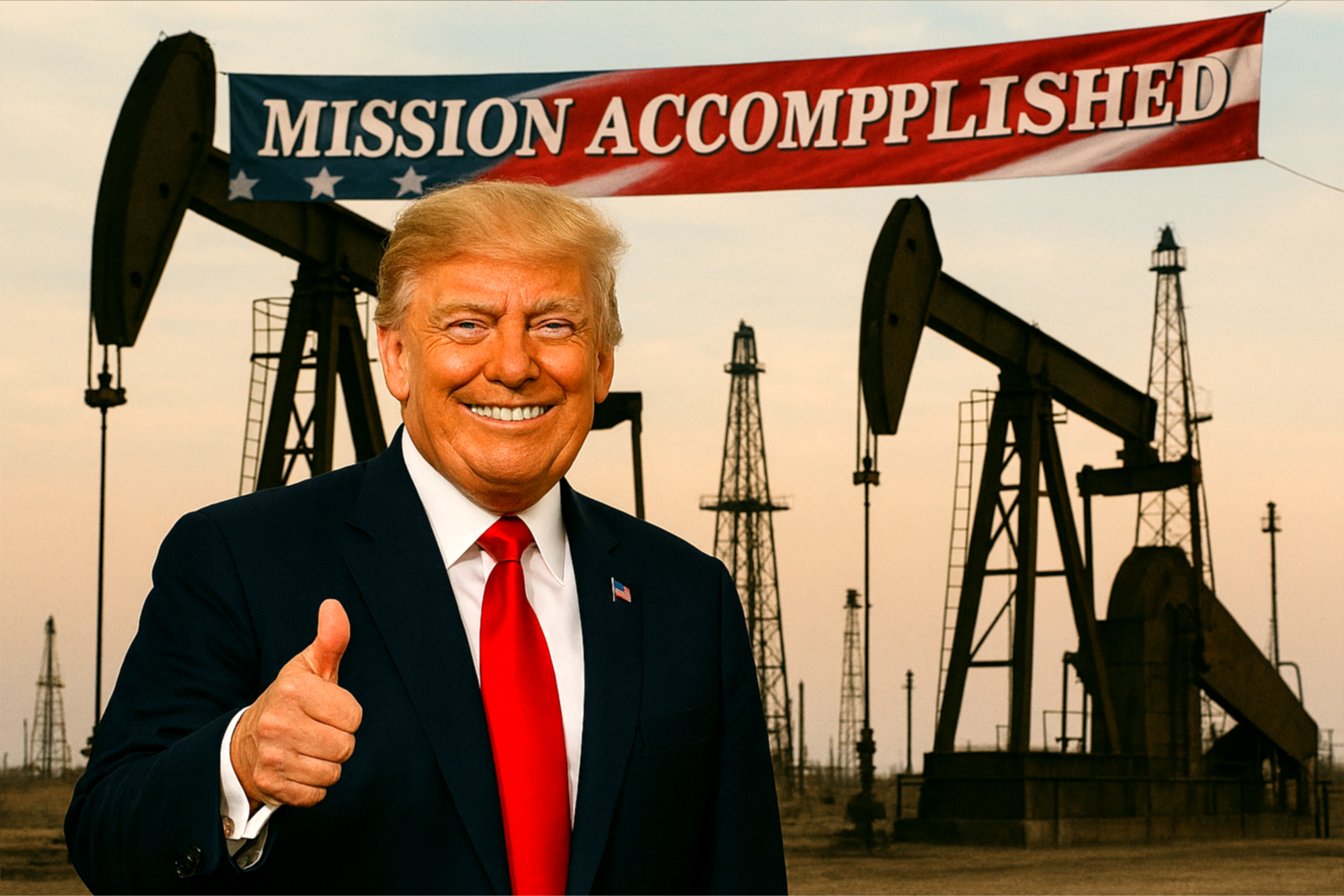
“They stole our oil … We’re going to make a lot of money.” With those words from his Jan. 3 press conference at Mar‑a‑Lago, President Donald Trump dispensed with the usual euphemisms about freedom and security, and framed the dramatic capture of Venezuelan leader Nicolás Maduro as a project of corporate restitution and profit. Trump promised to bring in “our very large United States oil companies” to “spend billions of dollars” fixing Venezuela’s “badly broken” infrastructure and to “start making money for the country”—and for the United States (NBC News | U.S. News & World Report).
In the wake of an overnight operation that Trump boasted was “like people have not seen since World War II,” the president pledged that the U.S. would, for a time, “run” Venezuela. He insisted the country’s oil assets had been “stolen” from American companies and described the expropriations under Hugo Chávez as “one of the largest thefts of American property in the history of our country” (TIME | Fox Business).
Context: The Oil Company Coup
Trump’s comments align with a months‑long escalation that included the U.S. seizing tankers and implementing a partial oil embargo, as well as maritime strikes he said had “knocked out” vast quantities of drug trafficking from boats off Venezuela’s coast (PolitiFact | NPR/UPR). But the candor of the oil motive is striking. Where prior administrations couched interventions in the language of democracy promotion, Trump emphasized the commercial logic: “We’re going to be taking a tremendous amount of wealth out of the ground,” and the United States would be “reimbursed” for damages he says Venezuela caused to American companies (NPR/KPBS | USA Today).
He also argued that Venezuela’s oil industry, once a global force, had become “a bust, a total bust,” and that U.S. firms—Chevron among them—would lead the rebuild. Chevron, now the only major U.S. operator with a joint venture presence in the country, reiterated that it is focused on employee safety and asset integrity while operating under all “relevant laws and regulations” (U.S. News & World Report | Fox Business).
The Donroe Doctrine
Trump framed the operation as an update to the hemispheric guardrail set in 1823: “All the way back it dated to the Monroe Doctrine… but we’ve superseded it by a lot… They now call it the ‘Donroe doctrine.’” He added, “American dominance in the Western Hemisphere will never be questioned again” (Yahoo/AFP | NPR/KJZZ).
The dumbing down of Amercian foreign policy aside, that rebranding matters. The classic Monroe Doctrine warned European powers off the Americas, but it evolved over two centuries into a rationalization for U.S. interventions. Trump’s “Donroe” recasting centers extraction: “We’re going to have a presence in Venezuela as it pertains to oil,” and “We’re going to get the oil flowing the way it should be” (USA Today | NBC News).
Hardly reassuring, considering Russia’s own resource-related aims in Ukraine or China’s in Taiwan—or indeed, our own with regard to Nigeria.
Corporate Beneficiaries: Boots for Big Oil
Trump touted U.S. energy giants as the agents of recovery: “We’re going to have our very large United States oil companies—the biggest anywhere in the world—go in, spend billions of dollars, fix the badly broken infrastructure… and start making money for the country.” He accused Venezuela of having “taken all of our property,” calling it “one of the largest thefts of American property” ever (Fox Business | TIME).
Chevron’s limited license to operate in Venezuela has long made it the exception among American majors; Trump’s remarks, alongside reporting that the administration had explored reopening business with firms like Exxon and ConocoPhillips, suggest a larger corporate return once the dust settles. Industry analysts caution, however, that Venezuela’s dilapidated infrastructure and heavy, sour crude will require years—perhaps a decade—of investment to restore volumes to meaningful levels (U.S. News & World Report | Axios).
In short, we should be prepared for the sort of long, protracted operations we saw in Iraq if we ever hope to arm-twist the nation into accepting U.S. ‘help’ getting their oil operations back up and running. No matter how they’re selling it now, this was never going to be a scenario where we quickly rush in and rush out and all is well.
On that note…