The Price of Disruption: Big Tech’s Broken Promises
How Silicon Valley’s Visionaries Became the New Gatekeepers of Our Public Square
Introduction: The Broken Promise
Once, Silicon Valley promised us a digital utopia. Facebook’s mission was to “bring the world closer together.” Google wanted to “organize the world’s information.” Twitter was the “free speech wing of the free speech party.” We were told the internet would democratize knowledge, empower the powerless, and flatten hierarchies. Social media would connect us, algorithms would make life frictionless, and technology would be a force for good.
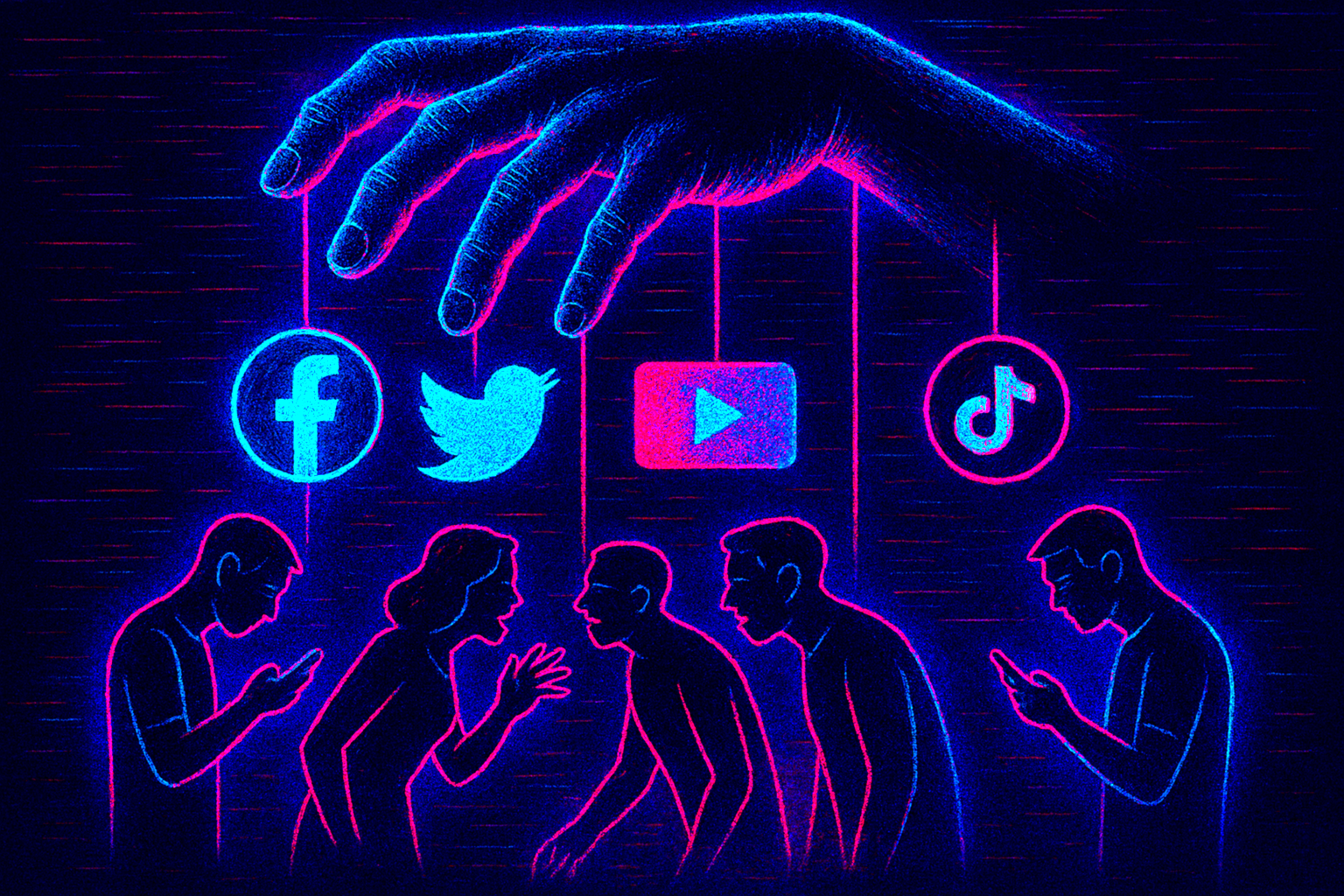
But as these companies grew, their incentives shifted. The product wasn’t connection, it was engagement. The customer wasn’t the user, it was the advertiser. The metric wasn’t truth or well-being, it was time spent scrolling.
Instead of utopia, we got a handful of trillion-dollar monopolies, a surveillance economy, and a digital public square hijacked by outrage, misinformation, and manipulation. Now, as the same architects promise that artificial intelligence will usher in a new golden age, we have to ask: are we preparing to repeat the same mistakes, only faster, and on a far larger scale?
This isn’t just a story of broken promises. It’s a story of power—how it’s accumulated, how it’s wielded, and how it’s now being used to undermine the very freedoms it once claimed to champion. The question is: what will we do about it?
1. The Surveillance Economy: How Big Tech Monetizes You
At the heart of Big Tech’s business model is what Harvard’s Shoshana Zuboff calls surveillance capitalism: the extraction and commodification of personal data to predict and shape our behavior (Zuboff). Every click, like, and swipe is tracked, analyzed, and sold. And not just to advertisers, but to political operatives, data brokers, and even governments.
This model rewards engagement above all else. The more time you spend on a platform, the more data you generate, and the more valuable you become. But engagement isn’t driven by truth or well-being—it’s driven by outrage, novelty, and emotional manipulation. A 2018 MIT study found that false news spreads six times faster on Twitter than the truth, and is 70% more likely to be retweeted (MIT News). Why? Because it’s more novel and emotionally charged.
The result is a digital environment optimized not for connection or understanding, but for addiction and division. As Zuboff warns, “Surveillance capitalism unilaterally claims human experience as free raw material for translation into behavioral data.”
That’s a long way from the utopian vision of connectedness we were promised, and which I suspect these tech oligarchs still believe their products embody.
If you’re not paying for it, you’re not the customer; you’re the product being sold
Liberty’s Lens is entirely reader‑supported. We don’t answer to corporate masters deciding what we say or what we cover.
If you find our work valuable, please consider upgrading to a paid subscription. You can take 20% off with this coupon — and support independent media for about the price of a coffee per month.
Thank you to every reader who shares our work and helps it reach new audiences. We couldn’t do this without you. We love you all.
2. Monopolies and Market Power: The New Gatekeepers
The internet was supposed to be decentralized. Instead, a small group of tech giants—Google, Meta (Facebook/Instagram), Amazon, Apple, and Microsoft to name a few—control the infrastructure of modern life. These firms don’t just dominate markets; they set the rules for speech, commerce, and even democracy itself.
A 2020 House Judiciary report found that Big Tech uses “killer acquisitions” to snuff out competitors, self-preferencing to rig their own platforms, and predatory pricing to lock in users (House Judiciary). Over the past several years, the DOJ and FTC have launched landmark antitrust cases against Google, Amazon, and Meta. Progress has been mixed: the DOJ secured a major win against Google’s ad-tech business in 2025, while the FTC’s case against Meta was dismissed, and the Amazon litigation remains ongoing. Despite these efforts, the process is slow, and the companies’ lobbying power remains immense.
Legislation like the American Innovation and Choice Online Act (H.R. 3816) aims to curb self-preferencing and restore competition (Congress.gov). But without robust enforcement, these rules remain aspirational.
“If we’re not going to be ruled by monarchs, we also don’t want to be ruled by autocrats of trade. Because how people experience the economy in their day-to-day life has huge impact on whether they feel free.”
—Lina Khan, Offline
3. The Collapse of the Public Square
Local journalism is just one of Silicon Valley’s casualties—“disrupted” and discarded on the road to their so-called utopia. As Google and Facebook siphoned away ad dollars and attention, over 2,100 U.S. newspapers have vanished since 2004, leaving “news deserts” where communities lack reliable reporting (UNC CISLM).
Social media was supposed to fill the gap. The idea was good: democratize the news, take away the gatekeepers, let the people decide what matters. But algorithmic feeds simply replaced one set of gatekeepers with another. Now, instead of media moguls, we’re beholden to tech oligarchs to stay informed.
Platforms like Facebook, Twitter, and YouTube amplify outrage, misinformation, and extremism—because these drive engagement, and engagement drives profits. The result is a public square dominated by the loudest voices and vulnerable to coordinated disinformation campaigns, both foreign and domestic.
The Stanford Internet Observatory has documented how coordinated inauthentic behavior—ranging from Russian election interference to anti-Rohingya propaganda in Myanmar—has weaponized social media to destabilize societies (SIO). The tragic history of violence in Myanmar, fueled by hate speech and disinformation spread on Facebook, stands as a stark warning of what happens when platforms abdicate responsibility for the information ecosystem they control.
This erosion has consequences: civic engagement dips, corruption escapes scrutiny, and education in real public affairs weakens.
4. Algorithmic Harm & Whistleblower Revelations
Facebook whistleblower Frances Haugen testified in 2021: “Facebook knows that its algorithms are dangerous, but it will not make the necessary changes because it puts profits before people” (Law Commentary | MIT Technology Review).
The problem isn’t just Facebook. In 2024–2025, leaked TikTok documents revealed executives knew the platform’s design was addictive and harmful to young users. Internal research showed addiction can set in after just 260 videos—often under 35 minutes. TikTok’s algorithm promoted narrow beauty norms and could push users into harmful “filter bubbles” within 20 minutes. Internal communications confirmed executives were aware of the mental health risks, including anxiety and sleep disruption, and chose to proceed anyway (NPR).
Facebook’s feed, TikTok’s “For You” page, YouTube’s recommendations, and Twitter’s trending topics all operate as black boxes—shaping what billions see, believe, and do, without oversight or recourse.
5. Surveillance and the End of Privacy
It’s not just your posts that are tracked—it’s your movements, your purchases, your voice, and your face. Amazon’s Ring cameras turn neighborhoods into surveillance zones. Google and Apple track your every move. Meta’s data leaks have exposed millions to identity theft and manipulation. The Supreme Court’s Carpenter v. United States (2018) ruling limited warrantless cell phone tracking, but Congress has failed to pass comprehensive privacy legislation.
Meanwhile, the U.S. remains the only major democracy without a comprehensive digital privacy law. Europe’s GDPR is imperfect but has set a global standard. Americans deserve the right to control their data, know who’s collecting it, and opt out of surveillance.
 Liberty's Lens
6. Tech and Authoritarian Drift
Today’s tech oligarchs see any criticism or regulation as unacceptable interference. In private group chats and public statements, they lash out at journalists, regulators, and even their own users—insisting that only they are smart enough to fix the world, if only the rest of us would get out of the way. This sense of persecution has fueled a rightward drift in Silicon Valley, with many tech leaders now openly aligning with reactionary politics and treating democratic oversight as an existential threat (NY Mag).
In the U.S., platforms have rolled back content moderation and fact-checking under the pretext of “free speech,” shifting their stance just as the Trump administration took over in 2025 (CNBC). In India, Meta (Facebook) has allowed hate speech and extremist content to flourish under pressure from the Modi government. A former Facebook employee acknowledged that internal teams were discouraged from restricting BJP-linked accounts, even when hate speech was clearly being spread, due to concerns about provoking political backlash and harming the company’s business prospects in India (Caravan Magazine | Al Jazeera).
These are not glitches; they reflect a deliberate strategic posture. Appeasing authoritarian or authoritarian-leaning governments is now baked into the business model: profit over principles.
Silicon Valley wants us to have faith that they’ll get it right with AI, as long as they are left alone to win their race with China. But given their track record—social media platforms that amplified violence and hate, enabled disinformation, undermined democracy, and eroded the mental health of nations—should we really trust them? Their business model is built on evasion of responsibility, not the public good. If history is any guide, blind faith in their promises is the last thing we can afford.
 Liberty's Lens