Trump Thinks He’s Found the “One Weird Trick” of Foreign Policy
Trump seems genuinely convinced that everyone else lacked the courage or the wisdom to decapitate hostile regimes. That was never the case.
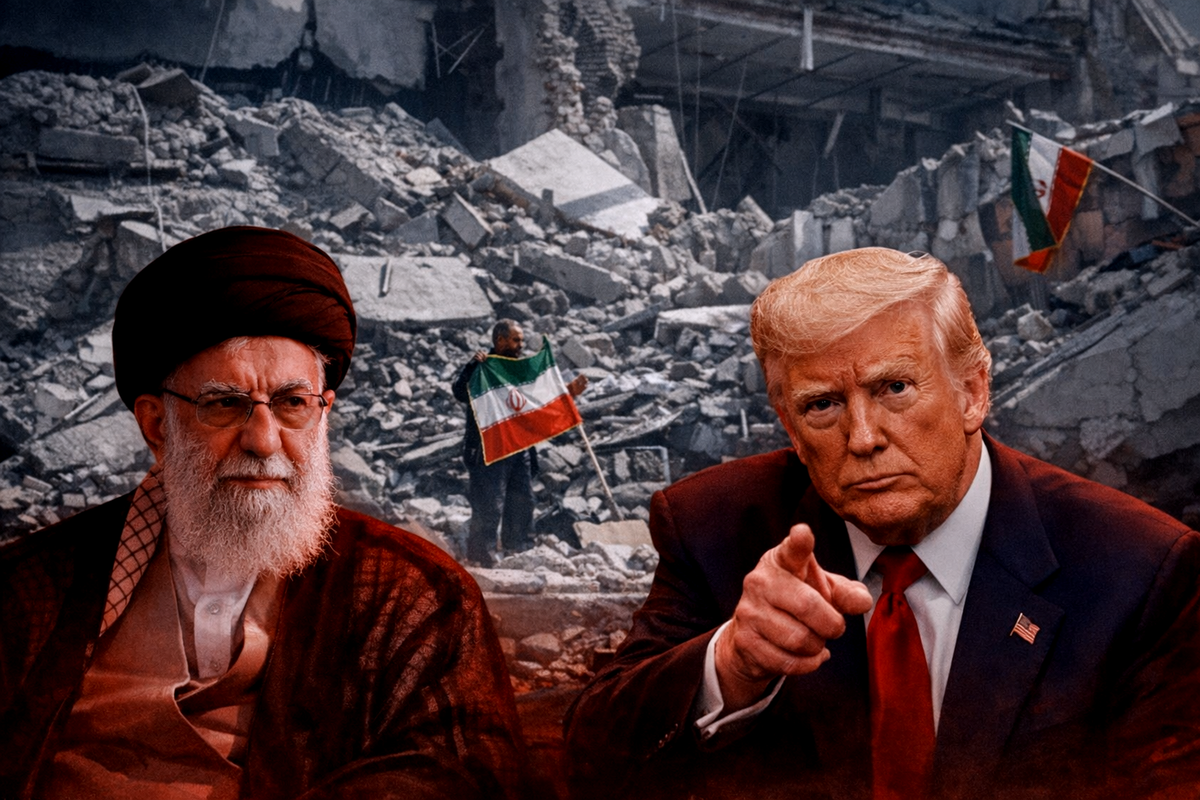
“This is not Iraq. This is not endless. Our generation knows better — and so does this president.”
— Pete Hegseth, press briefing on Iran war, March 2, 2026
There’s a certain kind of internet headline you can practically hear in your bones: “Doctors hate this one weird trick.” It’s always the same promise — a simple shortcut that powerful people have been hiding from you. The reader is supposed to feel clever, rebellious, in on the secret. The reality is anything but.
In his second term, it’s clear that Trump thinks he has been blessed with a brilliant stratagem that his forebears simply lacked — a belief that treats decades of restraint not as judgment, but as failure.
The “one weird trick,” as he appears to understand it, is straightforward: if a regime causes problems, remove the head. Don’t invade, don’t rebuild, don’t occupy, don’t get bogged down in the messy work of politics and legitimacy. Just decapitate the leadership, terrify whoever comes next, and demand compliance. Minimal commitment, maximal dominance. Strongman geopolitics for those with short attention spans.
It’s the sort of idea that sounds decisive in a speech and feels clean in the moment.
What stopped most presidents wasn’t timidity, but the recognition that the downside was uncontrollable and the outcome unknowable. Because here’s the part that matters: this “trick” isn’t new. It’s old. It’s obvious. It’s one of the first tools every administration considers when faced with a hostile state. And it’s precisely because it has been considered — over and over, by people with vastly more experience than Trump — that so many predecessors tried so hard to avoid turning it into the default answer.
Liberty’s Lens is entirely reader‑supported. We don’t answer to corporate masters deciding what we say or what we cover.
If you find our work valuable, please consider upgrading to a paid subscription. You can take 20% off with this coupon — and support independent media for about the price of a coffee per month.
You can also gift a paid subscription to a friend who’d appreciate what we do.
Thank you to every reader who shares our work and helps it reach new audiences. We couldn’t do this without you. We love you all.
Why Previous Presidents Didn’t Do This
Start with the most practical point: if your core objective is preventing a nuclear weapon, bombs are a blunt instrument. They can wreck facilities. They cannot erase knowledge, uninvent a fuel cycle, or keep scientists from rebuilding. At best, airstrikes buy time. At worst, they convince your target that the only reliable guarantee of safety is the thing you’re trying to stop them from obtaining.
That’s the paradox at the heart of this strategy: you can attack a nuclear program, but you may also accelerate the political logic for nuclearization. If the lesson learned is “compliance doesn’t protect you,” then restraint becomes a trap and deterrence becomes the only rational play. Just look at how differently the North Korean regime is treated by this administration to illustrate the reasoning.
But earlier administrations weren’t just thinking about the technical nuclear question. They were thinking about what war does to systems. War is a stress test. It breaks weak institutions, yes — but it also hardens the most ruthless parts of a regime and rewards the actors most capable of violence. When you shove a country into survival mode, you don’t get moderation. You get security states, militias, hardliners, purges, and paranoia. That’s not a moral claim; it’s a pattern.
And then there’s the regional reality. Iran is not an isolated chess piece. It sits in a neighborhood full of rivalries, proxy networks, energy infrastructure, fragile states, and nervous allies. Any major strike invites retaliation — not just against the United States and Israel, but against Gulf states, shipping lanes, and the global economy itself. Even if the U.S. “wins” tactically, it can lose strategically by igniting a wider conflict that can’t be put back in the bottle.
This is why the “why didn’t they do it before?” question has a dull, unglamorous answer: because they ran the scenarios. Because they understood that the other side always gets a vote in shaping outcomes. And because they knew that setting a region on fire to delay a program for a short window is a terrible trade.
Trump’s Decapitation Theory of Power
Trump’s approach seems built around a fantasy of control: remove the villain, intimidate the understudies, and the story resolves itself. You don’t even have to call it regime change; you can pretend it’s something else — something cleaner, faster, more “surgical.” In his telling, it’s not nation-building. It’s simply enforcing order.
But that fantasy relies on a fundamental misunderstanding of how regimes work — especially ideological, militarized regimes with deep institutional roots. In such systems, the leader is often less a lone mastermind than the visible capstone on a sprawling structure: security services, elite guard units, internal intelligence networks, patronage systems, militias, and a political culture built for survival. Removing the person at the top doesn’t dissolve that structure. If anything, it can empower the very factions most committed to confrontation.
There’s a second misunderstanding too: the belief that fear automatically produces compliance. Fear can produce caution, yes. It can also produce desperation. It can convince leaders that negotiation is weakness and deterrence is survival. It can lead to asymmetric retaliation, long wars, and a cycle of escalation. When you teach your adversary that their head is always on the chopping block, you shouldn’t be surprised when they decide the only way to stay alive is to strike first — or to build a deterrent you can’t easily remove.
The Great Lie: War as a Controlled Tool
Every war starts with a sales pitch about control. We’ll do X, achieve Y, then stop. It will be limited. It will be precise. It will be quick. But war is not a product you buy; it’s a system you enter. And once you enter, you don’t control the terms.