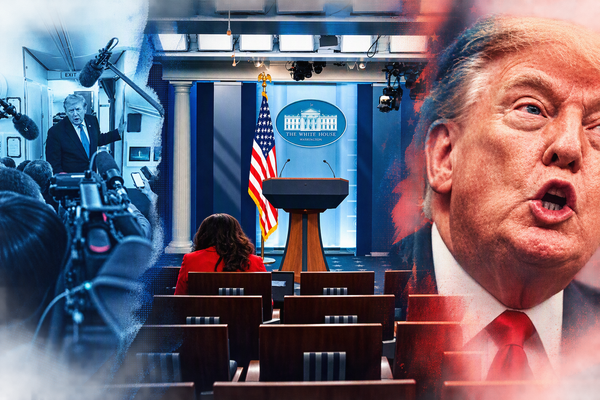
Who Is Steering American Foreign Policy? Trump, Netanyahu, and Congress’s Great Abdication
How Congress Abandoned War Powers—and How Trump Followed Netanyahu’s Lead
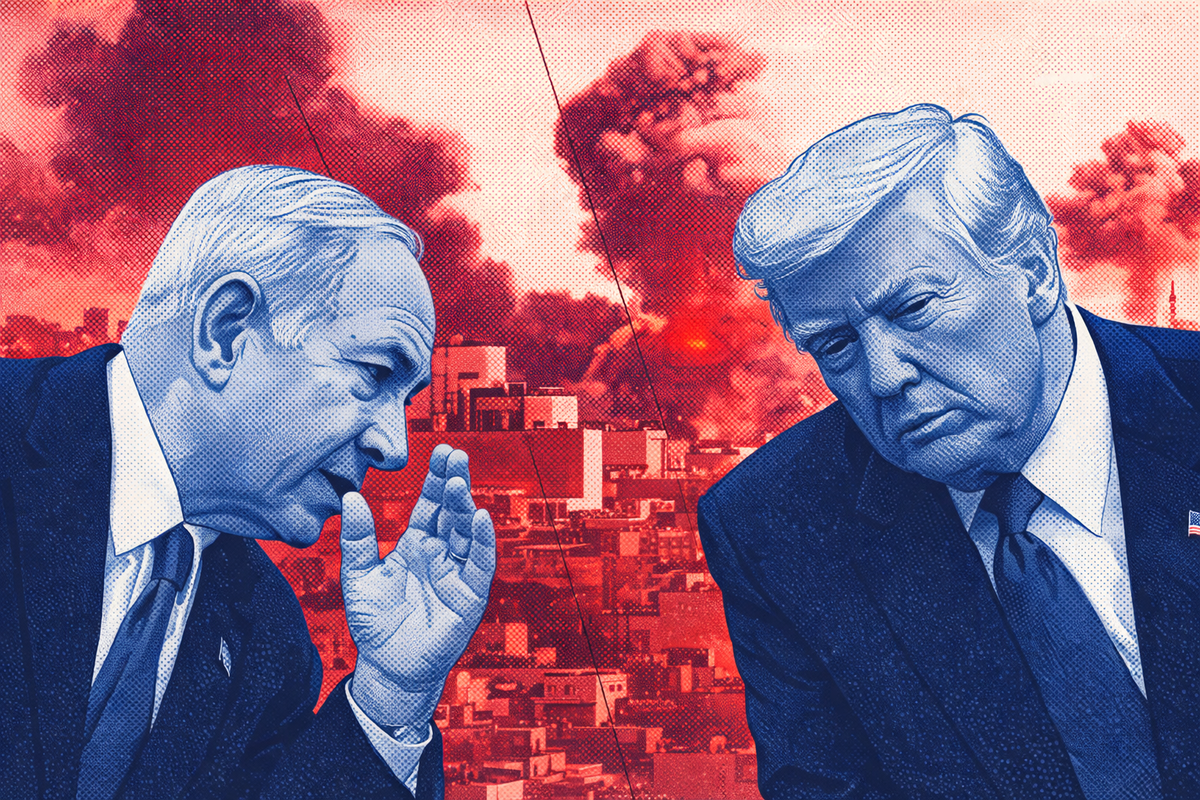
Two Failures, One War
Start with the simplest, ugliest truth: this war doesn’t feel like the United States made a decision. It feels like the United States got maneuvered into one.
Not “America” in the democratic sense—no public case, no congressional authorization, no national debate. Just a president who treats war like a branding opportunity, an ally with a decades-long strategic obsession, and a Congress that has turned constitutional responsibility into an optional accessory.
Two failures. One war. And a country that’s being trained, again, to accept that the most consequential act a nation can take doesn’t require the nation’s consent.
Failure #1: The Commander-in-Chief looks like someone else’s junior partner
There’s a difference between supporting an ally and being steered by one. Right now, the line looks… smudged.
Israel has a coherent, long-term objective when it comes to Iran: degrade capabilities, fracture networks, blunt missile stockpiles, and if the regime weakens or collapses under pressure, so much the better. That’s not a moral judgment. It’s strategic clarity. Israel has a national security doctrine shaped by proximity, history, and existential threat perceptions. Israel’s timeline is not America’s timeline. Israel’s interests are not necessarily America’s interests.
America’s interests are broader, messier, and—this matters—more globally expensive. The U.S. has to think about alliance cohesion, regional stability, energy shocks, retaliatory terrorism, global legitimacy, and what it means to normalize preemptive war without authorization. The U.S. has to think about deterrence in other theaters. The U.S. has to think about the next decade, not the next news cycle.
But the posture here doesn’t look like America carefully weighing those costs. It looks like America entering a conflict after the fundamental decisions have already been made—about timing, escalation, and acceptable risk—and then treating those decisions as its own.
That distinction matters, because it tells us where decision‑making authority actually resides. This is a question of agency. Who set the tempo? Who chose the escalation ladder? Who benefits even if this ends in chaos? Who can disengage if things go badly, and who is left managing the consequences?
If the answers here require prevarication, it’s because straightforward answers would reveal who is actually deciding. The United States is acting less like a sovereign decision‑maker and more like a participant in someone else’s strategic framework.
Why Trump is especially easy to steer
A more disciplined presidency can support an ally without getting dragged into the ally’s preferred war. This presidency is not disciplined.
Trump’s foreign policy isn’t strategy. It’s impulse plus ego, filtered through spectacle. He is attracted to the appearance of strength more than the substance of it. He loves “decisive” moves because they let him perform power. He craves the kind of operation that can be narrated in simple verbs: hit, destroy, obliterate, win.
And Israel—whatever you think of its politics—has demonstrated real operational competence in modern warfare: intelligence penetration, technical sophistication, precision capability. That competence creates a temptation for a president who confuses tactical success with strategic wisdom.
This is how you end up with a leader who thinks war is a “smash-and-grab.” Drop bombs, spike the ball, declare victory, collect the applause. The problem is that countries are not convenience stores. You don’t smash the glass, take what you want, and leave without triggering alarms, retaliation, chaos, and consequences.
Netanyahu understands time horizons. Trump lives in the next 48 hours. Netanyahu thinks in years. Trump thinks in headlines. That combination is combustible: an ally focused on a window of maximal American backing, and a president chasing a short burst of dominance he can claim as his own. It’s a match made in the worst place.
If you wanted to design a president who could be walked into escalation, you would build someone exactly like Trump: impatient, easily flattered, hungry for “wins,” and fundamentally uninterested in the “day after.”
And the “day after” is where wars become real.
Liberty’s Lens is entirely reader‑supported. We don’t answer to corporate masters deciding what we say or what we cover.
If you find our work valuable, please consider upgrading to a paid subscription. You can take 20% off with this coupon — and support independent media for about the price of a coffee per month.
You can also gift a paid subscription to a friend who’d appreciate what we do.
Thank you to every reader who shares our work and helps it reach new audiences. We couldn’t do this without you. We love you all.
The deeper problem: U.S. power is being spent like it’s disposable
The United States is not just firing missiles. It’s spending legitimacy. It’s spending deterrence credibility. It’s spending global trust. It’s spending military readiness and munitions stockpiles that do not refill by magic. It’s spending alliance cohesion that took generations to build and can be shattered in a week.
When America looks like it’s acting at the direction of another leader—even if that’s not literally true—the perception alone is corrosive. Allies ask: are we still dealing with an independent superpower, or a presidency that can be influenced like a coin-operated machine? Adversaries ask: can we exploit this chaos? Can we widen it? Can we make the U.S. bleed slowly?
This is what happens when war becomes personalized—when national interest is replaced by a particular leader’s interest.
Which brings us to the second failure, the one that makes the first failure lethal.
Failure #2: Congress has turned war into a one-man decision
The Constitution didn’t put war powers in Congress for decoration.