Why the Strait of Hormuz Isn’t a Short‑Term Problem
Trump threatens allies and enemies alike to force the strait open, but it isn't that simple.
Liberty’s Lens is entirely reader‑supported. We don’t answer to corporate masters deciding what we say or cover. If you find our work valuable, please consider upgrading to a paid subscription (get 20% off an annual subscription using this coupon)—or gifting a paid subscription to a friend who’d appreciate what we do. Thank you to every reader who shares our work and helps it reach new audiences. We love you all.
1) Why Everyone is Suddenly Talking about the Strait of Hormuz
If you hadn’t heard of the Strait of Hormuz until recently, you’re not alone. It wasn’t on most people’s travel itinerary. Believe it or not, there are some truly unique and scenic beaches there—including Silver Beach, which features sand that glitters and shines due to the presence of metallic minerals and silica. By all accounts, it’s quite stunning. Regardless, tourism to the area by English speakers is fairly limited, especially on the Iranian side. The point is, you could be forgiven for not thinking much about the Strait of Hormuz so long as it wasn’t a problem demanding your attention.
But become a problem it did, and fast. Now this area, long familiar to people who study shipping lanes or energy markets, has intruded upon the broader global consciousness.
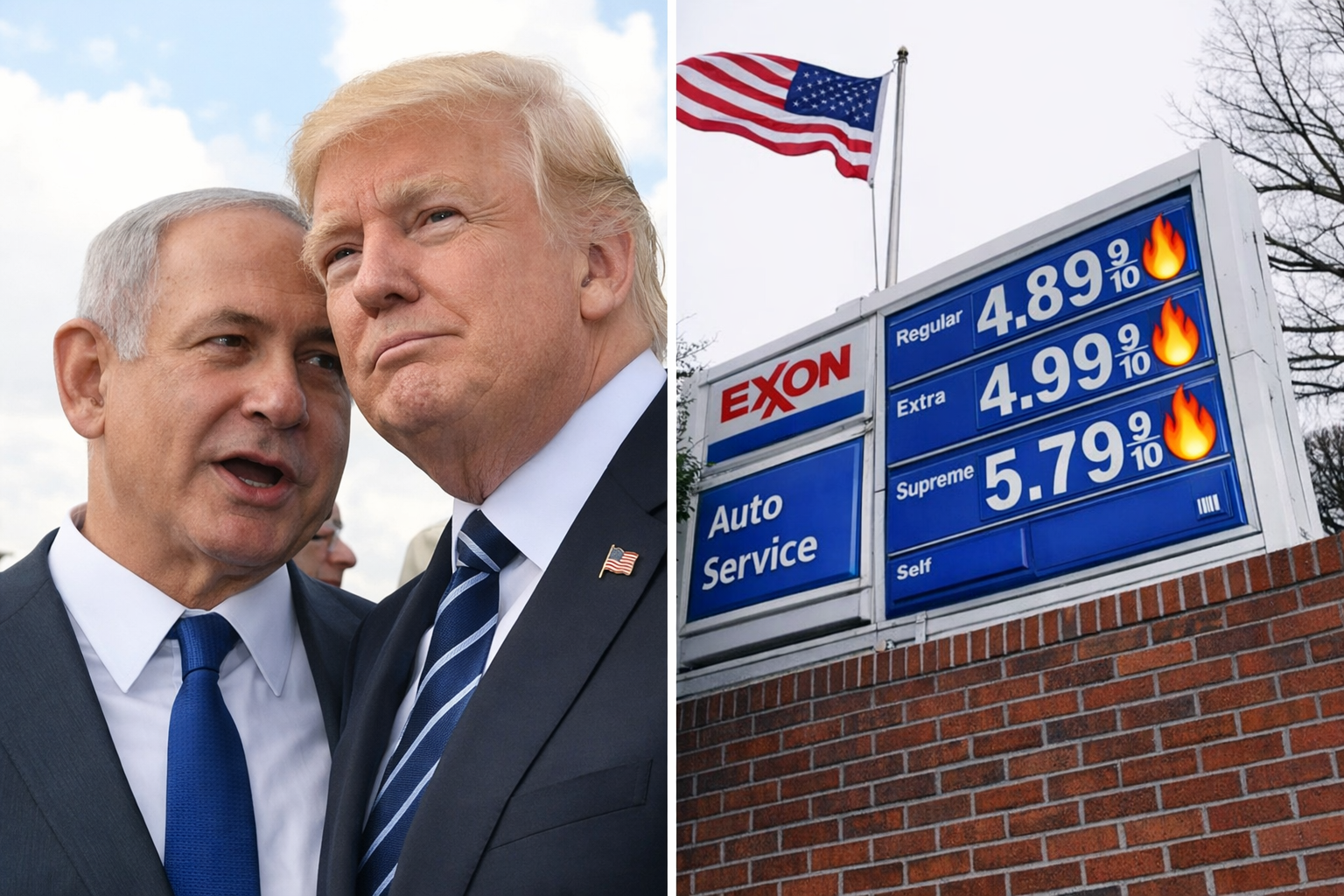
What you need to know is this: the strait is basically a narrow doorway from the Persian Gulf out into the wider Indian Ocean, and an enormous amount of global commerce squeezes through it, especially energy. We’re talking oil tankers, liquefied natural gas carriers, petroleum products, bulk cargo—day after day after day. So when the war with Iran kicked off and the Strait started getting squeezed, it didn’t take long for the economic disruption to show up. Not months. Weeks. Really, almost immediately—as anyone who has purchased gas in the last couple of weeks can attest.
And the thing about global trade is this: it’s efficient, but it isn’t very resilient. It works because it’s always moving. Once you interrupt flow at a chokepoint like this, you don’t just get a pause—you get knock-on effects that spread outward: higher prices, delayed deliveries, rerouted voyages, and a lot of frantic scrambling that doesn’t neatly resolve even when the immediate crisis begins to ease.
2) What “Closing the Strait” Actually Looks Like in Real Life
People hear “closed” and picture a giant padlock. That’s not how it works here. What happened is more like: traffic got ground down dramatically—sometimes to a trickle—and then a kind of new pattern emerged where some ships can get through, but only the ships Iran wants to let through.
So you start hearing about certain countries going to Iran and essentially getting clearance. And you start seeing ships take weird routes—hugging Iranian waters, moving in ways that suggest inspection or permission rather than normal commercial transit. And once you’re in that world, it’s not “free navigation” anymore. It’s “Iran decides.”
There’s even talk that ships are effectively paying for passage—serious money—because if you’re a shipping operator and you can get your cargo through while everyone else is stuck, that’s worth a lot. The result is: Iran is not just disrupting traffic. Iran is shaping it. Controlling it. Turning a global artery into something conditional. (Forbes | Newsweek | Al Jazeera | Financial Express)
3) The Weird Part: Military Dominance vs Economic Control
This is the part your MAGA curious Uncle on Facebook is probably struggling to fully grasp: militarily, the U.S. looks dominant in the region. Flying sorties, hitting targets, doing what it wants in the air. And yet economically, Iran ends up holding the lever that matters most—because Iran can make the Strait unsafe.
And the reason is pretty simple: in modern shipping disruption, you don’t need to “win the sea.” You just need to create enough threat that commercial operators decide it’s not worth it. You don’t need a massive navy to do that. You can do it with drones, with small explosive boats, with the threat of mines—honestly, sometimes just the credible possibility of mines is enough. Clearing mines is slow and uncertain. Threatening mines is cheap and fast.
People have seen versions of this play out elsewhere. You can run an effective anti‑shipping campaign without a traditional fleet if you’re willing to create persistent risk. Ukraine has managed a similar feat in its war with Russia. And that works because commercial shipping is incredibly risk‑sensitive, given how catastrophic the downside can be.
So this ends up being this bizarre mismatch: one side can be “winning” militarily in the conventional sense and still not be winning where it counts economically—because ships don’t move based on press statements. They move based on whether insurers, operators, and crews believe they’ll survive the trip.
4) Why it will be difficult to “reopen” the strait
The tools used by Iran here aren’t mysterious, but the effect is brutal. You’ve got drones like the Shahed models—cheap, plentiful, hard to stop perfectly. You’ve got unmanned surface vessels, basically remote‑controlled explosive boats. You’ve got the possibility that mines could already be present or quickly deployed. And the key point is this: you don’t have to sink ships left and right. You only have to show that you can hit them.
Tankers loaded with fuel, especially pressurized LNG, carry catastrophic risk if breached. They’re designed on the assumption that they’ll be kept as far away from explosives as possible. Even a small attack that damages a ship, injures or kills crew, or produces dramatic footage is enough to change the entire risk equation. Because now captains, companies, and insurers are all asking, “Are we the next one?”
That leads to the core difficulty for the U.S. Navy or anyone trying to “secure” the route. This isn’t one big threat you can defeat in a single decisive engagement. It’s lots of small threats, coming in different ways, from different angles. Being prepared to stop a few large incoming attacks is one thing. Stopping a swarm of smaller, cheaper, messier threats is something else entirely.
And the punchline is cruel: the defender can do an excellent job and still fail, because the attacker only needs a few successes—or even the fear of success—to keep traffic suppressed.
5) Why “99% Safe” Still Isn’t Safe Enough
This is where I think White House strategists misunderstand how commerce actually works.
Military planners can look at a threat environment and say, “We’re intercepting almost everything. The success rate is extremely high.” From a military perspective, that’s a win.
From a commercial shipping perspective, if you tell them “there’s a 99% chance you’ll get through,” what they hear is “there’s a 1% chance you won’t.” And in this context, “won’t” could mean crew members killed, a ship burning, cargo lost, an environmental catastrophe, bankruptcy‑level losses, and a geopolitical incident layered on top of it all.
That risk is especially acute with LNG carriers. These are not normal ships. Their cargo is stored at extreme temperatures, and the failure modes are terrifying. The industry doesn’t operate on “pretty good odds.” It operates on “we need this to feel boring again.” And right now, nothing about this feels boring. It feels like roulette.
That’s why you can’t just bomb your way into restoring shipping confidence. Confidence is psychological and financial as much as it is military. Once it breaks, it’s hard to rebuild.
6) The Human Reality: Thousands of Ships, Tens of Thousands of People, Stuck
And while everyone’s talking about gas prices and geopolitics, there’s this other reality that’s largely been ignored: thousands of ships, with tens of thousands of seafarers, are effectively trapped.
Ships don’t carry infinite supplies. They rely on routine port calls to restock water, food, fuel, spare parts, medical support, and to rotate crews. But ports are scared to take them—because ports don’t want to become targets. So crews end up stuck offshore, unable to dock, unable to safely transit out, watching supplies slowly run down.
It starts turning into a slow‑burn humanitarian crisis. People ration. People worry about water. People worry about fuel. People worry about how long they’re going to be stuck there. This isn’t entirely unprecedented. From 1967 to 1975, fifteen ships and their crews were trapped in the Suez Canal after the Six‑Day War. Sailors know that history. So they start reaching for that language, that fear: Are we about to become the next stranded fleet the world forgets about?
That’s when you know something is seriously broken—not just economically, but operationally and humanly.
7) The Sanctions Problem: We’re Fighting Iran, But Also Quietly Making Room for Its Oil
Now here’s where it gets politically and economically messy.
Normally, if you’re trying to exert pressure on Iran, you don’t just let Iranian oil flow freely. You enforce sanctions. You interdict. You make it painful.
But in this situation, once the Strait gets squeezed and energy markets tighten, you see policy start bending. You see waivers. You see carve-outs. You see allowances for oil already loaded, oil already “on the water.” And the logic behind it is obvious: the world needs supply, and leaders are staring at rising gas prices and soaring inflation and starting to worry about their increasingly angry constituencies.
So you end up with something that looks contradictory on its face: Iran is choking global energy flows and the response includes measures that effectively make it easier for Iranian oil to reach markets because the markets are panicking.
And if you’re trying to understand why that happens, the simplest answer is: domestic economics. Gas prices are political kryptonite. Once prices start climbing, a lot of ideological clarity evaporates.
8) Russia’s Quiet Win in the Background
You can’t talk about all of this without acknowledging Russia.
Former Senator John McCain once described Russia as “a gas station with nukes.” Crude, but useful shorthand. Any time global oil prices jump, Russia benefits. Any time enforcement of energy restrictions softens—even temporarily—Russia benefits. And when the U.S. starts issuing waivers or relaxing constraints to keep oil flowing, it’s not just Iran that gets breathing room. Russia does too, directly or indirectly, because the entire market is being rebalanced under stress.
So while everyone is locked onto the immediate war dynamics, there’s a broader reality unfolding in the background. Two petro‑states under pressure are watching that pressure ease the moment markets get tight. And that teaches a dangerous lesson—not just about leverage, but about how durable sanctions really are when they start to bite at home.
It also means the economic effects of the Strait crisis don’t stay contained to the Gulf. They ripple outward—into Europe, into Asia, into global inflation expectations, into central bank decisions. What starts as a regional chokepoint ends up reshaping incentives far beyond it. That tension is already visible. Ukraine has publicly criticized recent decisions to temporarily ease restrictions on Russian oil, arguing that even short-term waivers granted under market pressure ultimately feed the very war effort sanctions were meant to constrain. (BBC)
9) How “We Don’t Use the Strait” Arguments Miss the Point
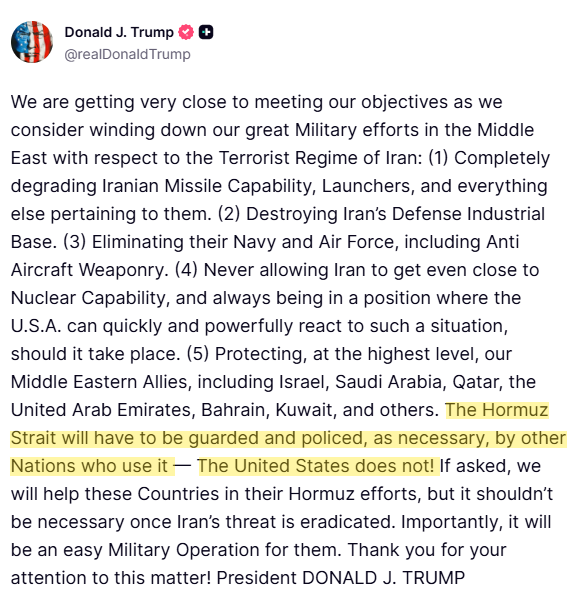
There’s this line of thinking that pops up sometimes: “Well, the U.S. doesn’t rely on that strait the way other countries do.” And even if you can argue the U.S. imports less directly through it, that misses how interconnected this is.
If you remove a big chunk of global supply from the market—oil, LNG, fertilizer—prices rise everywhere. And then what happens? Buyers pull supply from other places. They pull it from wherever they can. That includes the U.S. market—unless we nationalize oil and gas, or reassert the crude export bans reversed late in Obama’s second term. Otherwise, U.S. energy can get diverted outward because the global price signals are screaming for it, which means Americans still feel the hit at the pump and in costs downstream.
That’s why this matters even if you want to pretend it doesn’t. We don’t live in a sealed-off economy. Energy markets are global. Supply shocks travel.
10) The “How Long Can This Last?” Question—and the Scary Answer
If you start asking, “Okay, what if this lasts one month… three months… six months?” the answers get darker fast.
At first, you can lean on buffers. Offshore oil storage. Strategic reserves. Alternate sourcing. But those aren’t infinite. And once buffers drain, you start pulling closer and closer to the bone—directly from reserves, directly from constrained production, directly from routes that take longer and require more ships.
And longer routes are their own problem. Longer routes tie up tankers for longer. If you have to move the same amount of cargo over greater distances, you need more vessels in the system—and we don’t have endless extra ships sitting around.
So the longer this goes, the more it stops being “a disruption” and starts becoming “a reconfiguration.” That’s the real fear: trade patterns change. Investment changes. Shipping routes change. Insurers re‑rate whole regions. Companies decide that “normal” is gone for years. Repeated Suez Canal closures helped push the industry toward the modern supertanker. It takes a shock of that scale to permanently change how global trade works.
11) The Closing Feeling: This Is Serious, and It Won’t Unwind Cleanly
If you take all of this together, the conclusion is unavoidable: this is serious, and it’s not going to unwind on command. It has the potential to be every bit as impactful as the Covid‑era supply chain disruptions.
Even if you could flip a switch tomorrow and slow the fighting, shipping companies would still be asking, “Is it truly safe? Is this going to flare again next week? Next month?” Because once you’ve shown that a chokepoint like this can be weaponized, that risk gets priced in—permanently.
So yes, shipping is resilient and humans adapt. But resilience doesn’t mean no damage. It means we find a new normal. And the real worry here is that the new normal is more expensive, more volatile, and more politically destabilizing than most people expected when this war began.
Support Independent Journalism!
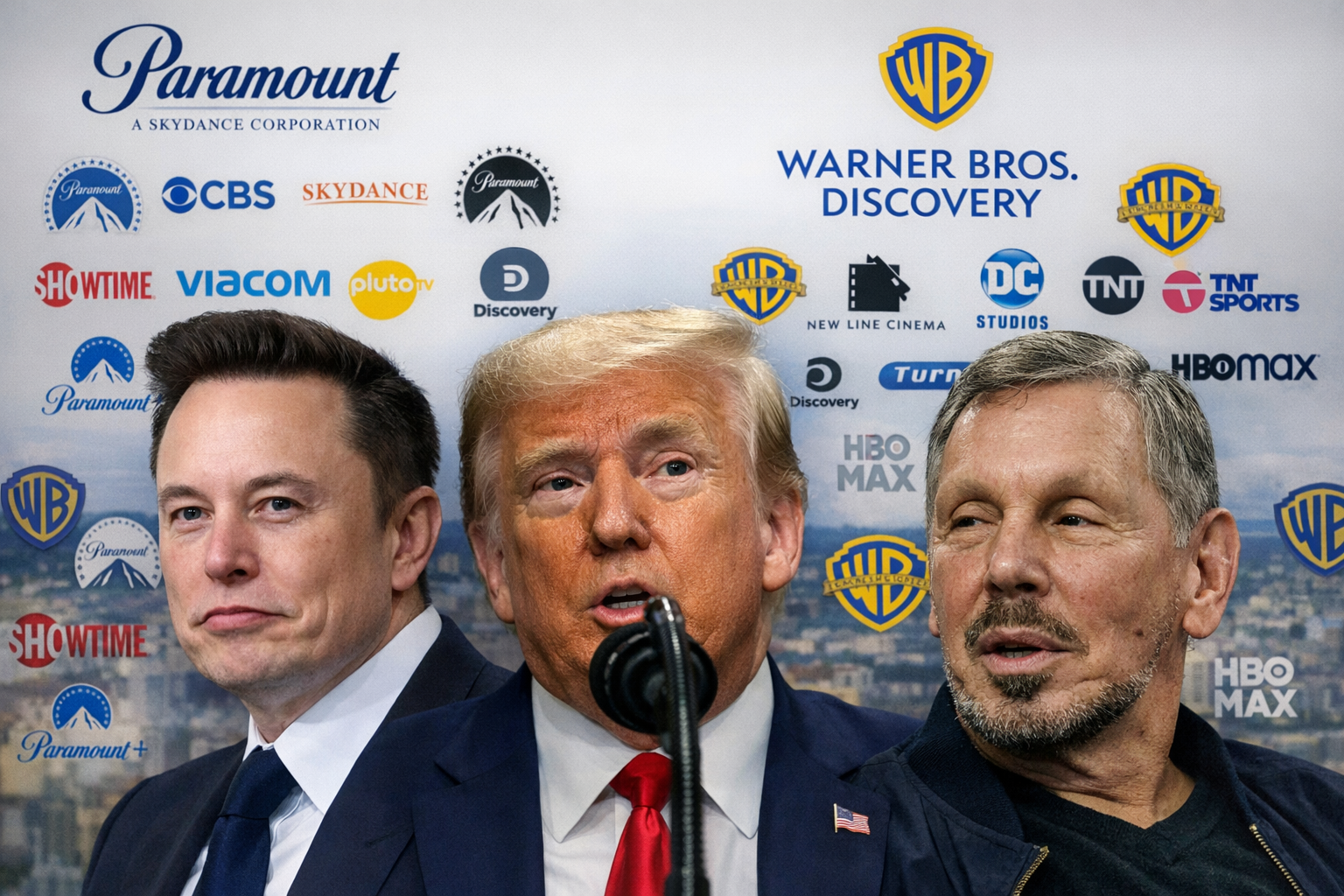
Look around: media consolidation isn’t subtle anymore.
A single ideological camp is amassing platforms—social networks, news outlets, streaming services—all under its banner. One by one, spaces for open dialogue are being converted into echo chambers.
But not independent media.
Liberty’s Lens is part of a growing movement of independent progressive voices refusing to be absorbed, censored, or silenced.
We publish what powerful interests would prefer you not see.
We ask the questions their platforms no longer allow.
We stay independent because independence is the last defense against narrative control.
👉 Join the resistance to media monopolization:
When you upgrade, you get:
✅ 20% off your annual subscription for the next year
✅ Full access to all premium reporting and commentary
✅ A direct role in sustaining independent media
Thank you for standing with independent media.
Together, we keep it alive.
— Liberty’s Lens
This article is provided for public interest reporting and analysis. All external links open in a new tab and point to their original publishers.
© 2026 Liberty’s Lens. All rights reserved.