“Worked Out Perfectly”: How Silicon Valley Elites Learned to Stop Worrying and Love Oligarchy
A story of how tech elites traded market capitalism for direct access to power
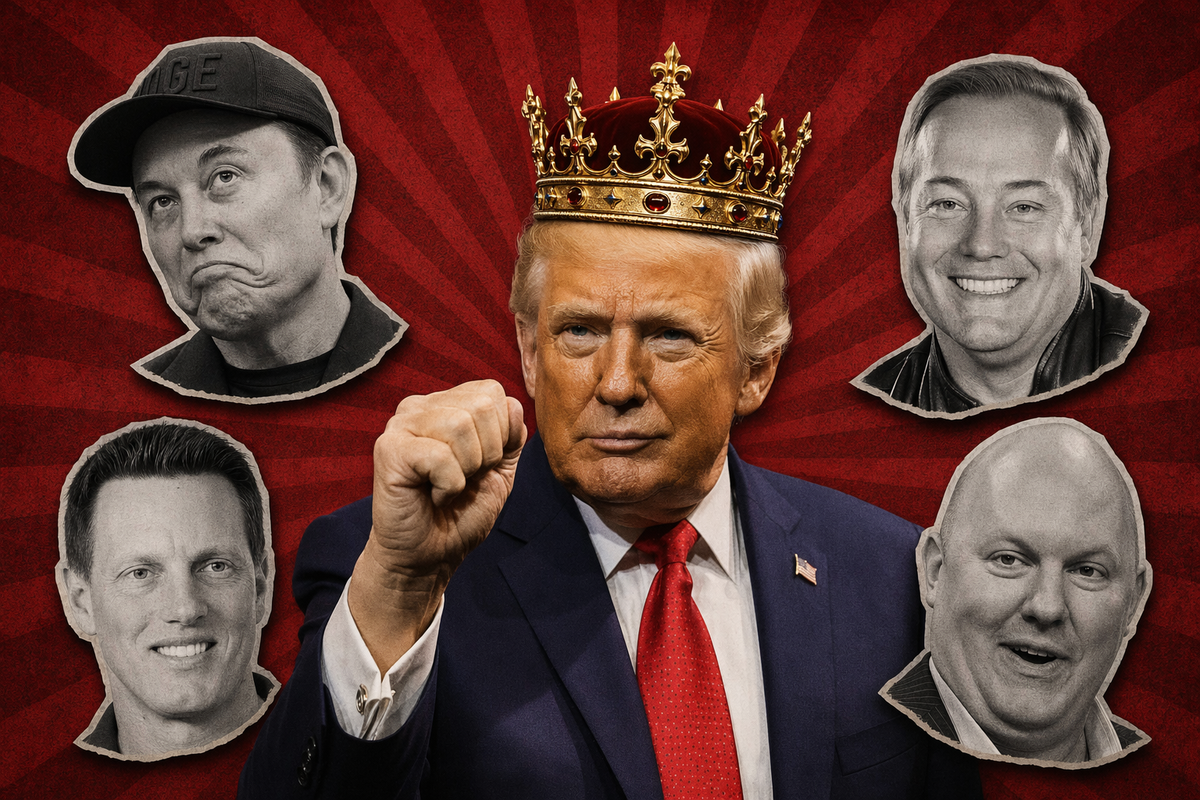
There is nothing more radicalizing against capitalism as a system than listening to Silicon Valley elites defend the version of it now dominating American political life. Jason Calacanis (jason@calacanis.com), appearing on The Bulwark, offered the clearest version of that worldview, explaining why so many in the VC and CEO class believe everything has “worked out perfectly” in Trump 2.0.
For them, of course.
Calacanis doesn’t pretend there were no costs. He acknowledges the viciousness of the mass deportation agenda and the recklessness of the Iran war. But what he reveals—almost casually—is that for America’s 21st-century robber barons, much of the rest of it, especially the brazen corruption, isn’t a problem to be solved. It’s a system that works. In his telling, the instability, the arbitrariness, even the spectacle of power being openly traded are not failures of the system—they are features.
Is he right? From an elite’s perspective, he is.
A comprehensive analysis by Americans for Tax Fairness found that U.S. billionaire wealth surged 22% in 2025 alone, rising from $6.7 trillion to $8.2 trillion. The number of billionaires climbed from 814 to 935 in the same period. At the same time, the Gini coefficient—the standard measure of inequality—returned to 60-year highs, reversing the modest compression that followed pandemic-era relief.
And while wealth surged at the very top, the rest of the economy lagged behind. High-income earners saw wages grow by 3.0%. Low-wage workers saw growth of just 1.1%. Real disposable income barely moved, rising a stagnant 0.4% as higher costs ate away at gains.
This is what “perfectly” looks like.
The system delivered exactly what it was supposed to deliver—for the people it was designed to serve.
Trump demands complete fidelity… we all know in order to be in the Trump circle, you have to have complete utter fidelity to him.
How Did We Get Here?
America has been here before.
In the late 19th century, the rise of railroads and industrial monopolies concentrated enormous power in the hands of a few “robber barons,” pushing millions of Americans out of independent work and into wage labor. That system proved unstable. It took decades of labor organizing, political pressure, and outright conflict to force a new settlement—one where workers weren’t just inputs, but stakeholders. Wages rose, unions gained power, and corporations, however reluctantly, accepted a basic obligation to the people whose labor sustained them.
That arrangement—never perfect, but stabilizing—began to unravel in the late 20th century. The shift to 401(k)s replaced guaranteed pensions. Workers were recast as individual market participants, responsible for navigating risk on their own. Long-term economic security became tied not to employers or institutions, but to financial markets.
And those markets became increasingly concentrated.
Today, a small number of technology companies—overwhelmingly rooted in Silicon Valley—dominate the U.S. stock market. Their fortunes drive overall market performance. Their growth is treated as synonymous with national prosperity. The result is a system where Americans are told to measure their well-being by the same metric that measures the wealth of the people at the very top: whether the line is going up.
That is why Silicon Valley matters.
Their companies don’t just shape markets—they define them. Their leaders don’t just influence policy—they increasingly operate alongside it. And their worldview, their assumptions about how the world works and who matters within it, now sit at the center of American economic life.
Our future isn’t just affected by them.
It is organized around them.
You find it offensive, reasonably so, that people have to go bend the knee and bring a gold bar and wait in line. That’s what business people like. They like transactions. You may not like it. You may think it’s crass. Business people love to have a coin operated situation.
Liberty’s Lens is entirely reader‑supported. We don’t answer to corporate masters deciding what we say or what we cover.
If you find our work valuable, please consider upgrading to a paid subscription. You can take 20% off with this coupon — and support independent media for about the price of a coffee per month.
Thank you to every reader who shares our work and helps it reach new audiences. We couldn’t do this without you. We love you all.
A Deal with the Devil – Silicon Valley Goes MAGA
The distance between Silicon Valley and the American right has been closing for years. What began as a backlash to COVID restrictions and a growing sense among tech elites that they were losing control—over their workers, over their platforms, over the boundaries of acceptable speech—slowly hardened into something more deliberate. Figures like Marc Andreessen framed the shift in the language of “free expression,” insisting that “it’s much healthier to live in a society in which people are literally not scared of what they’re saying.” But the version of “freedom” they were defending had less to do with open discourse than with restoring their own sense of impunity.
When pressed, the economic justifications for the turn toward Trumpism collapse quickly. Calacanis points to a supposed strangling of mergers and acquisitions under Lina Khan, a claim that doesn’t hold up to even basic scrutiny. He gestures toward geopolitical fears—like the idea that a Harris administration would have been dragged into war with Iran—because Netanyahu was “going to attack anyway.” But that argument doesn’t survive contact with history. Israeli leadership has pushed for a harder U.S. line on Iran across multiple administrations, including proposals for military action that presidents from both parties have ultimately rejected in favor of restraint or diplomacy. Former Obama officials have described these dynamics as recurring pressures rather than one-off events. The idea that Harris would have suddenly broken that pattern isn’t analysis. It’s an excuse.
 Liberty's Lens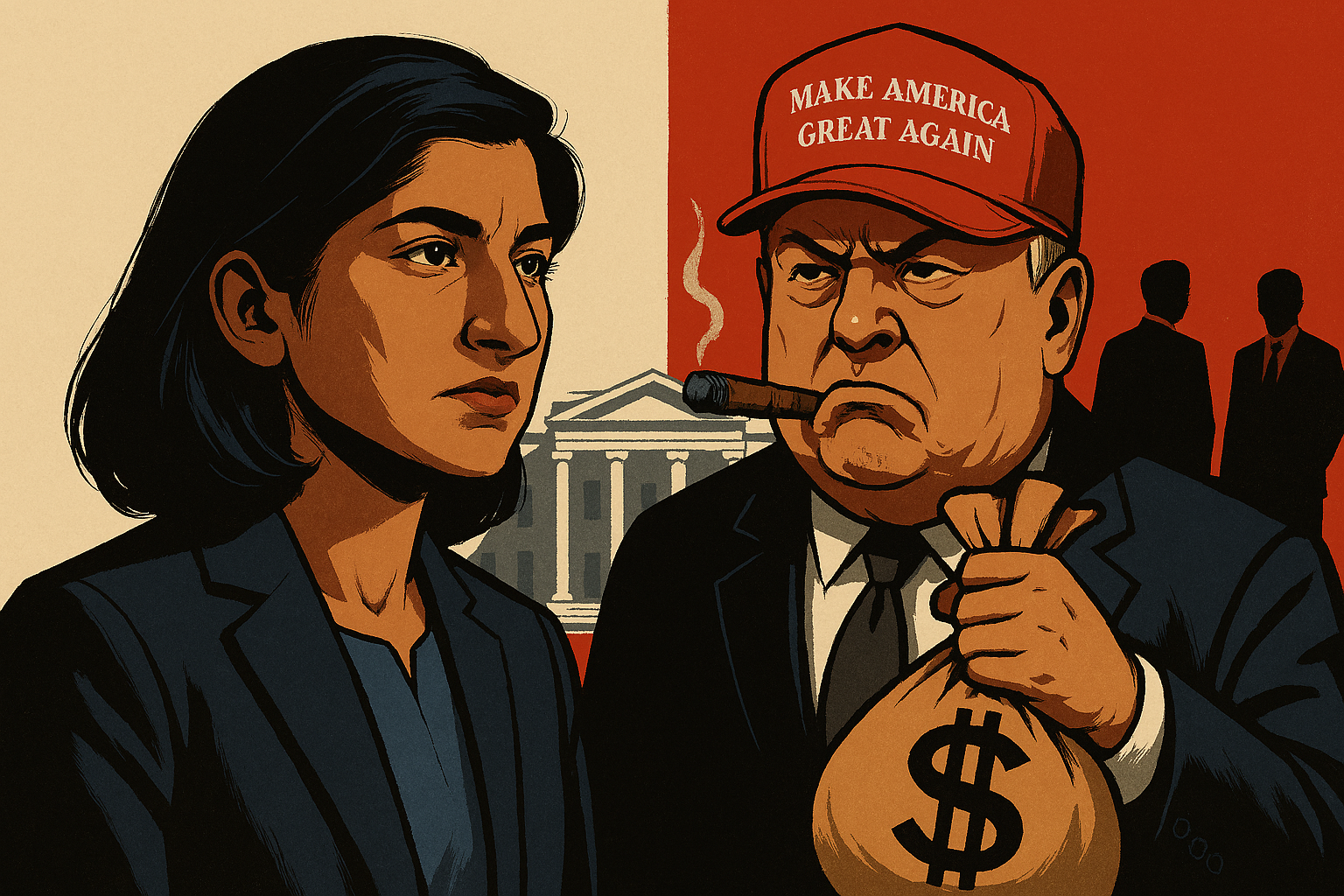
These are not serious arguments. They are post-hoc rationalizations.
Calacanis undermines them himself. When Tim Miller presses him on the silence of Silicon Valley leaders as Trump destabilizes markets and consolidates power, Calacanis doesn’t deny the shift—he explains it. Trump demands “absolute fidelity.” The absence of criticism isn’t puzzling. It’s a condition of entry.
And with that, the earlier complaints about censorship collapse under their own weight. The same executives who spent years warning that they were being silenced by progressive norms now operate inside a system where criticizing the president risks exclusion from power itself. The problem was never that they couldn’t speak. It was that they couldn’t speak without consequences.
So the justifications fall away, one by one. M&A wasn’t crushed. The war argument was hollow. “Cancel culture” was a convenient frame, not a root cause.
What remains is much simpler.
“Biden wouldn’t return their calls.”
This was never primarily about tax rates or regulation. It was about access—about who picks up the phone, who gets in the room, who gets to shape the rules in real time. Faced with a choice between a system that treats everyone equally and one that privileges them—where corruption is simply the cost of entry—Silicon Valley made a rational calculation.
They chose the system where they matter more.
They much prefer bending the knee, having to show up… I’ll do whatever it takes to keep selling iPhones. I got to keep this supply chain open.
Masks Off – Oligarchy Was Always the Point
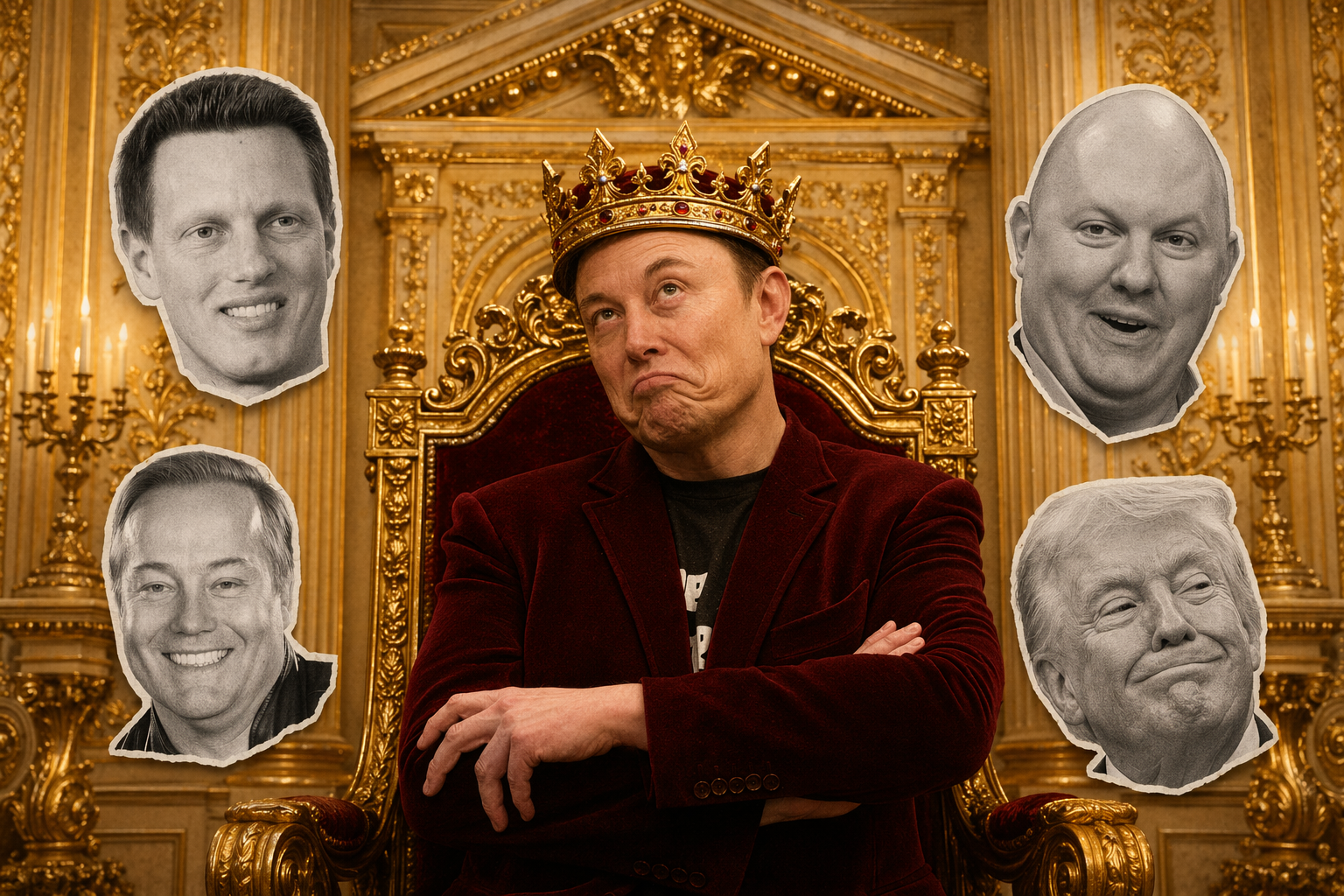
Calacanis says the quiet part out loud: “if you told a bunch of business leaders this could become oligarchic, they would be like, sign me up. Sounds great. Oligarchy sounds pretty great to a capitalist for a short period of time.”
For years, these same figures have argued that higher wages or corporate taxes would strangle the engine of American growth. But as it turns out, this was never about the money.
Calacanis defends the lack of pushback from CEOs on tariffs—taxes by any other name—by suggesting that Trump’s blanket “liberation day” tariffs, so long as they stayed under 15 percent, were “easily absorbed on one side or the other” and “made no difference to these businesses.”
Higher pay for workers is a crisis. Taxes aimed at funding public goods are a threat to the system. But taxes imposed by a rightwing strongman—paired with arbitrary demands, personal loyalty tests, and open displays of submission—are treated as manageable, even preferable.
Turns out the system runs just fine on a bended knee.
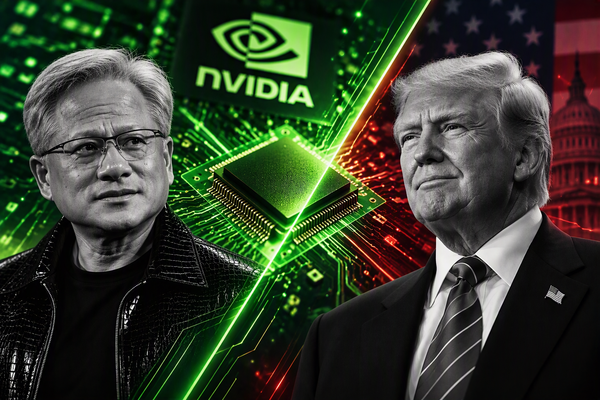
Take Jensen Huang, the head of Nvidia. Facing the prospect of stricter export controls on chips to China, Huang launched a full-court lobbying campaign that took him from Mar-a-Lago to Saudi Arabia. He pledged hundreds of billions in U.S. investment, publicly distanced himself from the Biden administration, and worked the system directly. By the end of it, Trump was calling him a friend and easing restrictions. When Huang took the stage at a major AI summit, he didn’t hesitate: “America’s unique advantage that no other country could possibly have,” he said, “is President Trump.”
In other words, the system worked.
“Business people love to have a coin-operated situation,” Calacanis explains. The terms may be crude, even humiliating, but they are clear. Show up. Pay up. Align yourself with power. In return, you get what you need.
Too bad most Americans can’t afford the price of admission.
The tariffs were, when they’re under 15%, when they actually hit, are easily absorbed on one side or the other… when it actually hit the ground, it made no difference to these businesses. So a lot of hand-wringing for not a lot of impact.
And yet…
It’s a binary choice… if the choice was Kamala… after what Biden did… they need low taxes and high M&A.
The Trump regime’s authoritarian project depends on misinformation and disinformation. It thrives in darkness and resists scrutiny. That’s why exposure matters — and why independent media does too.
A free society depends on a free press. Not one shaped by access, intimidation, or political loyalty, but one willing to report what those in power would rather keep hidden.
Liberty’s Lens exists for that purpose. We’re independent, reader‑supported, and committed to reporting without fear or favor.
If that work matters to you, consider supporting it by subscribing — free or paid. Paid subscriptions directly fund our reporting, and right now you can subscribe at 20% off with this coupon, roughly the cost of a monthly coffee.
If a subscription isn’t workable at the moment, one‑time contributions are a meaningful alternative. And whether or not financial support is possible, sharing this work matters — it’s how reporting like this reaches people it would otherwise be kept from.
Your support keeps independent journalism alive.
Find us on X, Blue Sky, and Facebook. Wherever you are, that’s where we want to be.
— Liberty’s Lens
This article is provided for public interest reporting and analysis. All external links open in a new tab and point to their original publishers.
© 2026 Liberty’s Lens. All rights reserved.