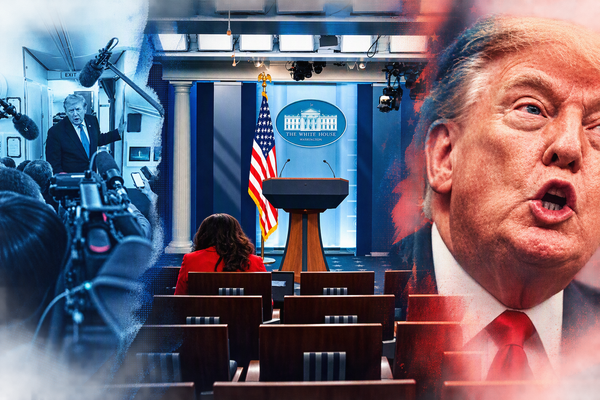
One Year Into Trump 2.0: Are things really as bad as they seem?
A Liberty’s Lens reassessment of spectacle versus substance after Year One — and the case for optimism
This publication is entirely reader‑supported. We don’t answer to corporate masters deciding what we say or cover. If you find our work valuable, please consider upgrading to a paid subscription—or gifting a paid subscription to a friend who’d appreciate what we do. Thank you to every reader who shares our work and helps it reach new audiences. We love you all.
It’s easy to feel like we’re living in the darkest possible timeline. Everywhere you look — abroad or at home — the news feels like a kaleidoscope of crises, each louder than the last. But feelings aren’t the same as facts, and driving a news cycle isn’t the same as driving real transformation. The question worth asking is simple: are things truly as bad as they seem, or just as overwhelming as they feel?
What follows is our best case for grounded optimism.
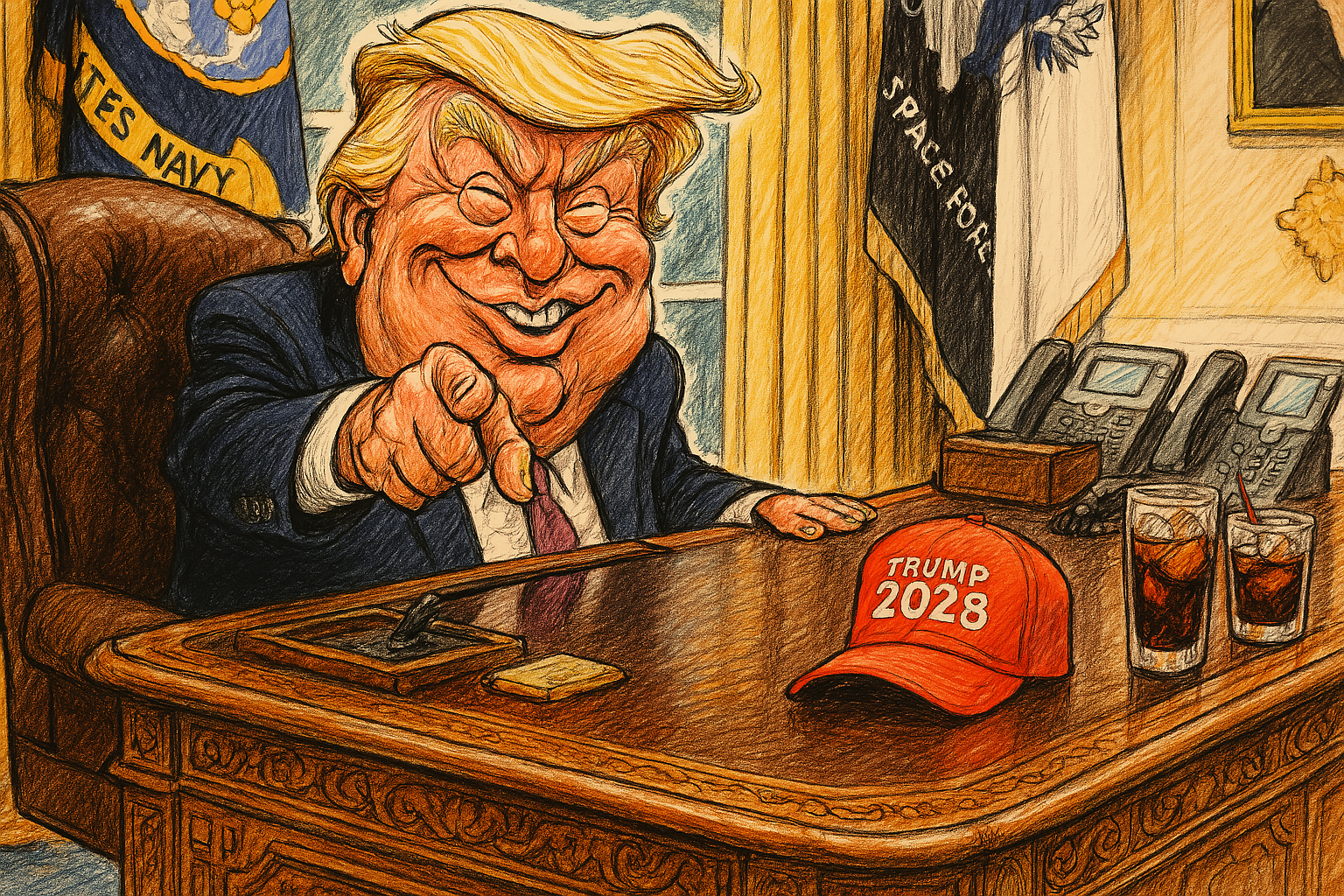
TL;DR: The first year of Trump’s second term has felt overwhelming. But when you look for durable policy change, the record is surprisingly thin. Congress and the courts have quietly blunted much of the agenda; spending largely rode Biden-era baselines; and the administration’s big plays cluster in immigration (more durable) and tariffs (legally fragile). The spectacle is loud because the machinery underneath is weaker than it looks.
 Liberty's Lens
What “weak-but-loud” looks like in practice
If you want to understand the gap between how Trump’s second term feels and what it has actually done, start with personnel. Year One produced an unusually thin legislative record, but the more revealing metric is how the administration handled the basic work of staffing up. Independent Hill reporting documented a record pace of withdrawn nominees—57 by December 1, more than any modern president has logged at this point in a term. These withdrawals weren’t symbolic. They reflected a combustible mix of intra‑party resistance, loyalty tests, thin vetting, and internal White House churn. POLITICO reported Senate Republicans themselves were often the ones quietly signaling that certain nominees were non‑starters, while the Senate’s own “Nominations Withdrawn” page shows the steady drumbeat across Treasury, State, Defense, Education, HUD, and more (POLITICO | U.S. Senate).
Taken together, the numbers paint a clear picture: the administration could announce sweeping ambitions, but it struggled to install the people needed to execute them. A presidency that boasts of decisive action found itself repeatedly tripping on the most mundane institutional task—getting its own picks through committee.
That broader appointments picture reinforces the same conclusion. Even with unified government, the administration couldn’t consistently move nominees through Senate committees, leaving critical leadership roles unfilled months into the term. The nonpartisan Political Appointee Tracker—maintained by the Partnership for Public Service and The Washington Post—shows hundreds of roles still vacant or pending long past the timelines common in prior administrations. And unlike the tweets and press conferences, this pattern isn’t a matter of optics. These are the pipes and valves of governance: general counsels, inspectors general, undersecretaries, and assistant secretaries. When they’re missing, the government doesn’t become “leaner”—it becomes slower, more brittle, and more dependent on spectacle to mask administrative weakness (Political Appointee Tracker).
In other words: the loudest presidency in modern memory is, behind the scenes, one of the least staffed, least structurally capable, and least successful at turning its own priorities into operational leadership. That’s not strength. It’s noise standing in for muscle.
Rule by headline meets rule of law
For all the noise of Year One, the legal system has been unusually clear‑eyed. When the administration governed by announcement—executive actions delivered as spectacle—the courts subjected those actions to the far less glamorous discipline of statutory authority and administrative law. And here, the gap between performance and reality became impossible to ignore.
In early May, a Bloomberg analysis found that judges had paused or blocked far more Trump‑era policies than they allowed to proceed, with injunctions and stays piling up across immigration, labor, national security, and civil service cases. Crucially, this wasn’t partisan resistance: Republican‑appointed judges joined Democratic appointees in halting actions that exceeded statutory authority or bypassed procedural requirements (Bloomberg). And for anyone wanting to track the pattern rather than the anecdotes, Just Security’s litigation tracker has documented hundreds of suits across 2025—an unmistakable signal of a presidency whose legal footing is far shakier than its rhetoric (Just Security).
In court, Trump is losing more than he’s winning—not because judges are hostile, but because the administration repeatedly overreaches.
The clearest example came in the year’s most important test of the government’s spending obligations: the NIH funding freeze. After the administration abruptly halted billions in congressionally appropriated medical‑research grant funds—part of a broader political campaign against “equity‑related” spending—the Government Accountability Office ruled that HHS and NIH had violated the Impoundment Control Act, the 1974 law designed precisely to prevent presidents from setting aside money they don’t like. Coverage in STAT, The Hill, Inside Higher Ed, and the National Law Review underscored the significance of that finding: it was not symbolic. NIH resumed obligating funds afterward, reversing course and avoiding the constitutional showdown many observers had feared (STAT | The Hill | Inside Higher Ed | National Law Review).
The takeaway is simple but important:
When executive‑branch theatrics collide with judicial and statutory guardrails, the guardrails keep winning.
Far from the image of an unchecked presidency, the first year of Trump 2.0 revealed a legal and constitutional system that still asserts itself—quietly, methodically, and effectively.
The DOGE era: splash, then sputter
The launch of the “Department of Government Efficiency” was one of the most aggressively branded initiatives of Trump’s second term — a Musk‑inflected promise to bulldoze the federal bureaucracy, slash headcounts, and “delete the mountain” of regulation. But from the outset, independent analysts pointed out a basic structural truth: executive orders can rearrange, but they cannot dismantle what Congress has created. A Congressional Research Service (CRS Insight) brief made this clear early on: reorganizing the U.S. Digital Service into the so‑called DOGE Service might reassign reporting lines or add temporary teams, but it could not erase statutory mandates, funding streams, or agency obligations without congressional action (CRS Insight). Even libertarian commentators at the Cato Institute — typically sympathetic to aggressive federal downsizing — stressed that no president can “chainsaw” Cabinet departments or independent agencies without the oversight, appropriations, and statutory revisions that only Congress can supply (Cato/Reason).