Prosperity with Dignity: How Democrats Win the Working Class in 2026
Sanders’ anti‑oligarchy, Gallego’s prosperity‑first pragmatism, and Emanuel’s cultural legitimacy converge on a simple promise: lower costs, fair rules, and a country that works for people not donors
This publication is entirely reader‑supported. We don’t answer to corporate masters deciding what we say or cover. If you find our work valuable, please consider upgrading to a paid subscription—or gifting a paid subscription to a friend who’d appreciate what we do. Thank you to every reader who shares our work and helps it reach new audiences. We love you all.
I. The 2026 Verdict
“The Roberts Court is corrupt. Corporate America is spineless. Republicans in Congress and both branches are useless. So we’re down to the judgment of the American people. And thank God for them… They are going to issue a judgment in 2026. And I’m very confident unless something dramatic happens, it is going to be a verdict of guilty on the president of the Republican Party. And thank God for them because they are the thin blue line that’s going to put a stop to Donald Trump and pause it. Where Roberts, the Republicans, corporate leaders, titans of media are useless… Every one of them have failed the test of integrity.” (Pod Save America)
Rahm Emanuel’s forecast is blunt: 2026 will be a referendum on Trumpism. In referendum years, independents tend to swing toward the out‑party, turnout among the in‑party slackens, and the side that speaks most directly to everyday anxieties usually wins. Emanuel’s wager is that voters, confronted daily by high costs and a sense of rigged rules, will pass judgment on a project that gilded ballrooms while telling families to ration—and find it guilty. The question for Democrats isn’t whether Trumpism is vulnerable; it’s whether Democrats present a credible, felt alternative built on affordability, fair play, and cultural respect. (Pod Save America | The Ezra Klein Show)
That alternative has been developing in plain sight across three voices: Bernie Sanders, Ruben Gallego, and Rahm Emanuel. Each emphasizes a different part of the solution—class power, pragmatic prosperity, and culturally fluent credibility—but together they point to a coherent strategy: Prosperity with dignity.
This is something Liberty’s Lens readers will be familiar with. We’ve talked about a “Respect Agenda for a Progressive Majority That Lasts,” emphasizing that centering dignity is vital to this effort. People feel the system is rigged against them—they don’t want a handout; they want someone to un-rig it for them. All they’re asking for is a fair shot at the American dream.
 Liberty's Lens
II. The Promise: Prosperity with Dignity
The promise begins where Americans live—at the grocery aisle, the rent payment, the childcare bill, and the health‑insurance premium. It acknowledges the lived reality: your paycheck hasn’t kept up, housing is scarce and expensive, and too many institutions seem designed to serve donors and monopolists more than families. The pledge is simple:
- Lower costs you feel every week.
- Fair rules that curb oligarchy and corruption.
- Respect for working‑class views and everyday priorities.
Sanders calls on us to remember it is “government of, by, and for the people”—patriotism grounded in economic fairness, not pageantry. Gallego insists we speak to prosperity the way people do—status markers and concrete outcomes, not abstractions. Emanuel argues Democrats must earn permission to be heard on economics by signaling cultural legitimacy and strength against concentrated power. Taken together, they define a party that fights for ordinary families first.
III. Three Voices, One Path
1) Bernie Sanders: Democracy vs. Oligarchy
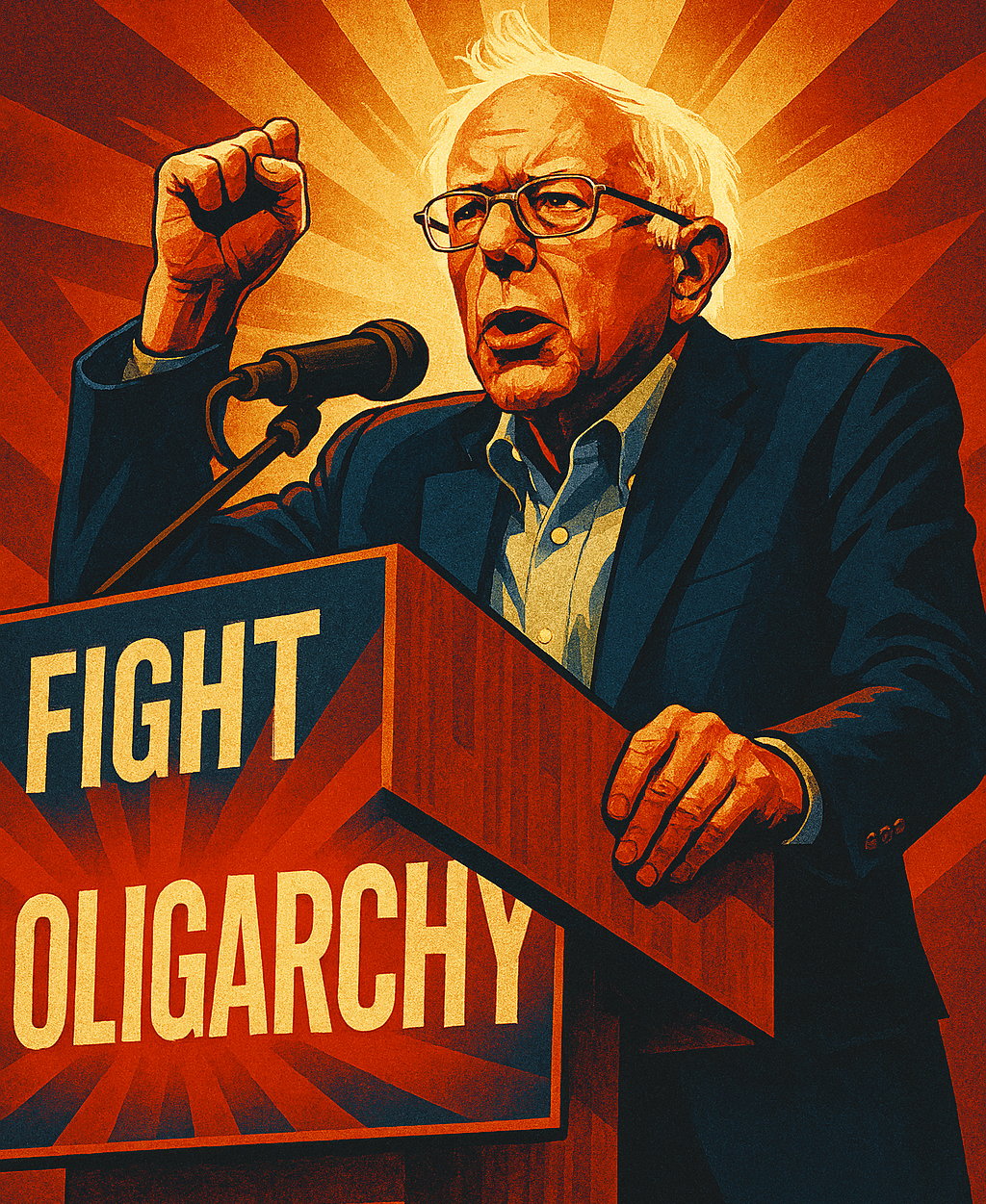
Sanders’ critique is surgical: American politics and markets have been increasingly captured by a billionaire class, with media, money, and policymaking aligned to protect wealth while workers fall behind. He links oligarchy and authoritarianism—as wealth concentrates, power centralizes, and democratic institutions hollow out. The antidote is a set of universal guarantees and fair taxation that restores bargaining power: health care as a right, real investment in housing and childcare, and a tax code that actually asks the very wealthy to pay their share. It’s a progressive patriotism anchored in Lincoln’s promise, not culture‑war theatrics.
Sanders is also clear on borders: reject “open borders,” improve border security, and pass comprehensive immigration reform with a path to citizenship for long‑settled workers. He argues that we must not leave the people who kept meatpacking plants open during COVID and have become part of our communities out in the cold, but that doesn’t mean allowing more immigration than our economy can handle. As Sanders puts it, “so long as we have nation states, you have borders—and if you don’t have borders, you don’t have a nation state.” The point isn’t permissiveness; it’s order with humanity.
2) Ruben Gallego: Prosperity‑First Pragmatism
Gallego’s breakthrough is tone. He speaks in the vernacular of aspiration—the “big‑ass truck” as a status symbol for making it, the second bathroom as shorthand for living without constant squeeze, the ability to take the kids on a weekend trip without checking the bank account three times. He tells voters that prosperity—owning a home, starting a business, having some joy—is a perfectly normal desire, while the Democratic Party seems to be awkward in the way they talk about ambition. Here again, it’s not about nebulous terms like “economic equity”; it’s about reminding people that you support their drive to achieve the American dream. Gallego insists Democrats stop lecturing in abstractions and start delivering felt gains.
Policy‑wise, Gallego is the “por qué no los dos?” guy: you can be pro‑abundance (build more homes, speed up permits, scale childcare) and anti‑monopoly (crack down on price‑rigging and market power that drive up costs). You can pursue secure‑and‑humane borders—serious asylum rules, worker visas, pathway to permanence for long‑settled families—and choose empathetic cases that show human stakes without walking into MAGA’s pre‑set traps. His Marine’s “mission objective” discipline translates into campaigns that meet voters where they live—boxing matches, car shows, pickleball—and then speak to rent, wages, and security.
3) Rahm Emanuel: Cultural Legitimacy as Precondition
Emanuel’s warning is strategic: in 2024, Democrats briefly won with change + affordability, then drifted back to continuity and lost altitude. He argues that the most successful Democrats first “cross a cultural land”—they make clear they understand mainstream values and will stand up to excesses inside their own coalition when needed. That earns permission to talk economics. In his construction, 2026 is a referendum—hit affordability hard, present strength against monopolists and corruption, and avoid getting boxed into identity skirmishes that make the party look permissive rather than fair‑minded. The brand, he says, must be “Make the American Dream affordable again”—job, home, retirement, education, health care—and it must be delivered with a sense that the rules apply to everyone, from billionaires to politicians.
Especially politicians.
IV. The 2026 Agenda: Abundance + Accountability
A referendum year rewards clear, near‑term wins. Here’s the fused agenda:
A) Cut costs fast
- Repeal broad consumer‑facing tariffs. Tariffs function like taxes at the register; removing them is a day‑one cost‑cut on goods families buy. Frame it simply: “Tariffs are taxes you pay every week.” (Pod Save America)
- Extend ACA subsidies to stop premium hikes. If healthcare is the worst issue for the GOP, force votes and keep premiums down for millions. Pair the policy with a contrast: “We cut your premiums; they shut down the government to raise them.”
B) Build more, faster (the abundance piece)
- Housing shot‑clocks & by‑right infill near transit; modernize codes; reduce duplication in permitting. Basically, policy should default to a “yes” when it comes to requests to build new housing, so long as basic rules are met. That’s how we keep up with demand and make homes more affordable.
- Childcare capacity build with workforce pipelines, stipends, and facility grants—so parents can take the shifts that pay without losing their minds on logistics.
- Grid and transmission approvals on deadlines; prioritize clean energy and reliability upgrades. The message: “Get things done. The project pipeline should flow, not stall.”
C) Fair markets & clean government (the accountability piece)
- Anti‑monopoly enforcement against price‑rigging and exclusionary practices; spotlight industries where consolidation drives costs.
- Ban stock trading in Congress; strengthen conflict‑of‑interest rules; force sunlight on influence networks. Make “clean government affordability” a single concept: end self‑dealing that inflates costs and erodes trust.
D) Order and opportunity on immigration
- Streamlined asylum with credible timelines, worker visas to match demand, pathway for long‑settled families, and DHS accountability for civil rights.
- Message: secure borders + humane rules. This is neither permissiveness nor cruelty; it’s order with empathy, consistent with Sanders’ stance and Gallego’s political realism.
V. The Tone: Speak Human, Not Faculty‑Lounge
This is where Gallego shines and where Sanders and Emanuel converge: don’t talk in graduate‑seminar terms; do talk like someone who knows the mortgage payment is due Friday.
Use status markers people actually want: a truck you’re proud of; a second bathroom; a weekend at the lake; childcare that doesn’t blow up the budget; groceries you don’t dread at checkout.
Avoid the airy, self‑referential “equity” jargon. Replace it with outcomes and timelines: permits in 45 days; premiums down this quarter; tariffs off now; 40,000 childcare slots by summer.
Advance straight‑ahead contrasts:
“Tariffs are taxes. We’ll cut them; you’ll feel it at the register.”
“We’ll build the homes, fund the childcare, and break the price‑fixers.”
“They gold‑leaf ballrooms and ration toys. We cut your costs and your wait times.”
VI. Progressive Patriotism: Take Back the Flag
Sanders’s appeal to Lincoln’s ‘of, by, for the people’ is more than a flourish; it’s the country’s moral center. Patriotism isn’t cosplay; it’s self‑government that works. When Democrats promise prosperity with dignity, they’re promising a nation where work pays, rules are fair, and power serves the common good. That’s how you steal back the frame from a movement that confuses gilded spectacle for greatness. Link cost‑cutting, anti‑monopoly enforcement, and clean government to national pride: “A great country doesn’t need palaces; it needs families who feel they’re getting a fair shake.”
VII. Strategy Notes for a Referendum Year
Emanuel’s reminder that 2026 isn’t 2028 is crucial. This year is about checks and balances—stop making things worse, start making costs lower. That means:
- Discipline over diffusion: pick three near‑term affordability wins and hammer them—tariffs off, premiums down, permits sped up.
- Credibility cues: showcase mayors, veterans, cops, small‑business owners—messengers who telegraph mainstream values while arguing for cost‑cuts and fair play.
- Choose empathetic casework on immigration and civil rights that shows real families, not pre‑set MAGA traps. In his interview, Gallego referenced the civil rights movement’s strategic choice to make Rosa Parks the face of the Montgomery bus boycott. Parks was chosen not just because she was brave, but because her story and character would resonate most powerfully with the public and withstand scrutiny. The movement was careful to pick a case that would generate the most empathy and support for their cause. The lesson applies: be strategic about the story that carries the principle.
VIII. Verdict Rendered
If Democrats deliver prosperity with dignity—lower costs you can feel, fair rules that curb oligarchy and corruption, and respect for working‑class views—the referendum Emanuel predicts will write itself. Voters will look at a movement like MAGA Trumpism, which rations dignity while rewarding donors, and they will render judgment. The verdict in 2026, if Democrats stick to this plan, won’t just be against Trumpism; it will be for a country where work leads to prosperity, rules apply to everyone, and government serves people, not wealthy elites.
For readers who want the receipts
- Rahm Emanuel on 2026 as a referendum and his “verdict of guilty” forecast—(Pod Save America interview, Dec. 2025).
- Bernie Sanders on oligarchy, progressive patriotism, health care as a right, and strong borders + humane reform—(The Opinions conversations).
- Ruben Gallego on prosperity‑first rhetoric, “por qué no los dos” (abundance + anti‑monopoly), and secure‑and‑humane border realism—(The Opinions conversations).
- Affordability contrasts: tariffs as consumer taxes; extend ACA subsidies; message discipline on cost of living—(Pod Save America affordability episode).
— Liberty’s Lens
This article is provided for public interest reporting and analysis. All external links open in a new tab and point to their original publishers.
© 2025 Liberty’s Lens. All rights reserved.