Trump Does Not Recognize the Problems Americans Face: And a president who denies problems cannot solve them
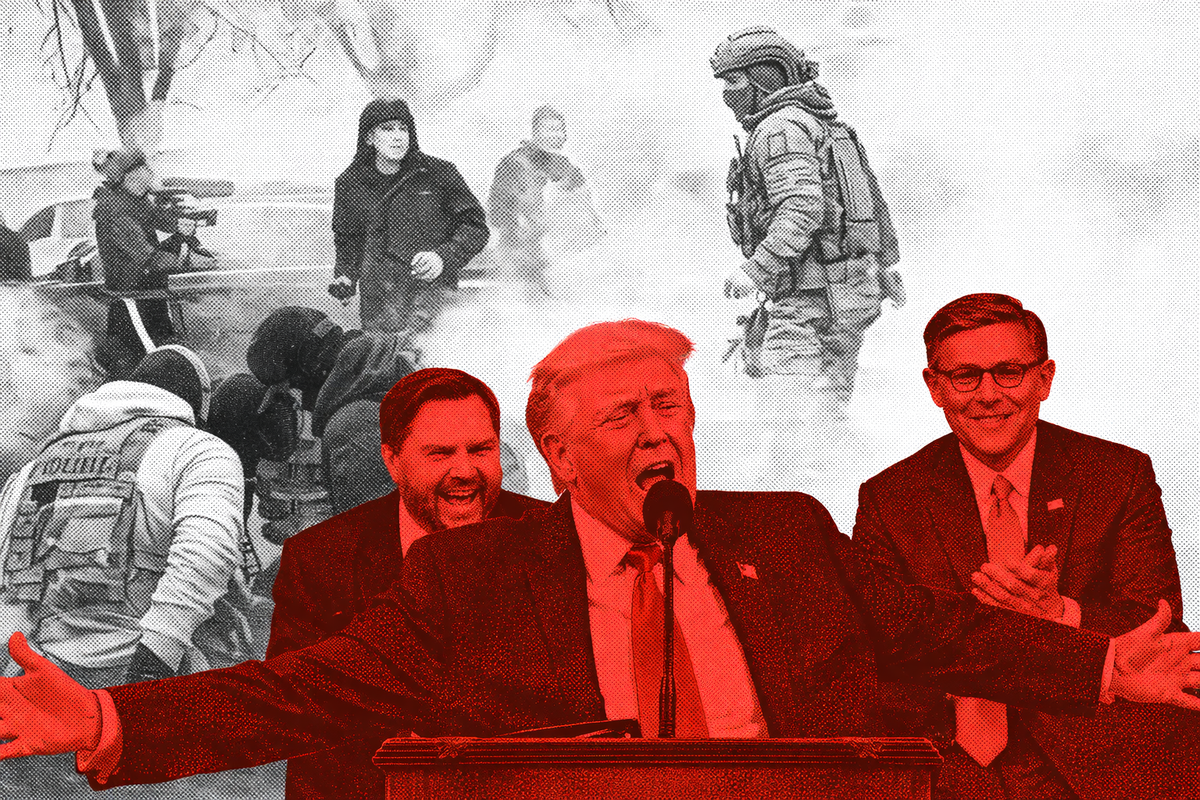
During the president’s hours-long State of the Union speech, one thing became unmistakably clear: he does not recognize the problems Americans are living with as problems at all. In his telling, the country is roaring, success is complete, and dissent is deception. The gap between that performance and lived experience is not accidental. It is the product of a presidency that has sealed itself inside a closed feedback loop, surrounded by loyalists who cannot risk contradiction even as public approval erodes.
In that kind of environment, correction becomes impossible. A leader who believes the work is already done has no reason to adjust, no capacity to diagnose failure, and no incentive to change course. The speech did not merely exaggerate success; it revealed a presidency that no longer sees error as possible — and therefore cannot govern its way out of the problems it refuses to acknowledge.
Liberty’s Lens is entirely reader‑supported. We don’t answer to corporate masters deciding what we say or cover. If you find our work valuable, please consider upgrading to a paid subscription—or gifting a paid subscription to a friend who’d appreciate what we do. Thank you to every reader who shares our work and helps it reach new audiences. We love you all.
A State of the Union address is often treated as a message delivered to the public: a televised speech aimed at persuading swing voters and rallying supporters, while providing the opposition with material to respond to. But that’s not really what the night is for. The number of Americans who watch the full speech is meaningful, yet limited. The deeper audience is the political system itself: lawmakers, donors, operatives, allied interest groups, and the broader media ecosystem that amplifies and translates the speech into the next day’s headlines. A State of the Union is not only communication. It is a signal.
And the signal sent this year was unusually clear: the presidency is not adjusting to its vulnerabilities. It is denying them.
There are two ways an administration can respond when the issues that carried it into power begin to reverse. One is to acknowledge the friction—prices that still feel high, policies that created disruption, enforcement tactics that produced backlash—and offer either a course correction or at least a theory of how the pain will be temporary. The other is to tell the country that its lived experience is wrong. That what people feel at the grocery store, in their rent renewals, in their daily sense of calm or chaos, is an illusion—or worse, a lie told by enemies.
This speech chose the second option. It presented an America already reborn, polished to a gilded sheen — an America that looked less like a report from the ground than a demand for applause.
That choice matters because democratic politics has one stubborn feature: you can’t message people out of their own senses. If costs remain tight, if housing feels out of reach, if daily life feels unsettled, the rhetoric of “best ever” doesn’t soothe. It irritates. It doesn’t persuade. It alienates. People don’t need experts to tell them whether their rent is lower or higher than last year. They know. They write the check.
What makes this more than a bad night of speechwriting is that it reveals a larger governing posture: a preference for performance over correction. The address was built less like a strategy for a second year than like a victory lap insisting the first year has already succeeded at historic scale. That kind of rhetoric isn’t simply exaggeration. It’s a refusal to admit the possibility of fault—one that deepens the gap between how the administration describes its record and how many Americans experience it..
Which raises the real question: why deliver a speech like that at all?
There is an explanation here: the information system around a leader can break.
Every presidency struggles with reality, because power itself distorts perception. Subordinates learn quickly that good news travels farther than bad news. In healthy systems, that problem is mitigated by process: briefings that contain unwelcome facts, internal debate, agencies empowered to contradict one another, staff who can tell a president “no” or “not yet” without risking exile. In unhealthy systems, the incentive structure flips. The job becomes less about informing the president and more about pleasing him. Flattery becomes a currency. Naming initiatives after the leader becomes a ritual. Public performance becomes the proof of loyalty.
When that happens, the presidency stops functioning as a learning organization. It becomes a court — a dynamic Liberty’s Lens has described before, and one this speech only reinforces.
 Liberty's Lens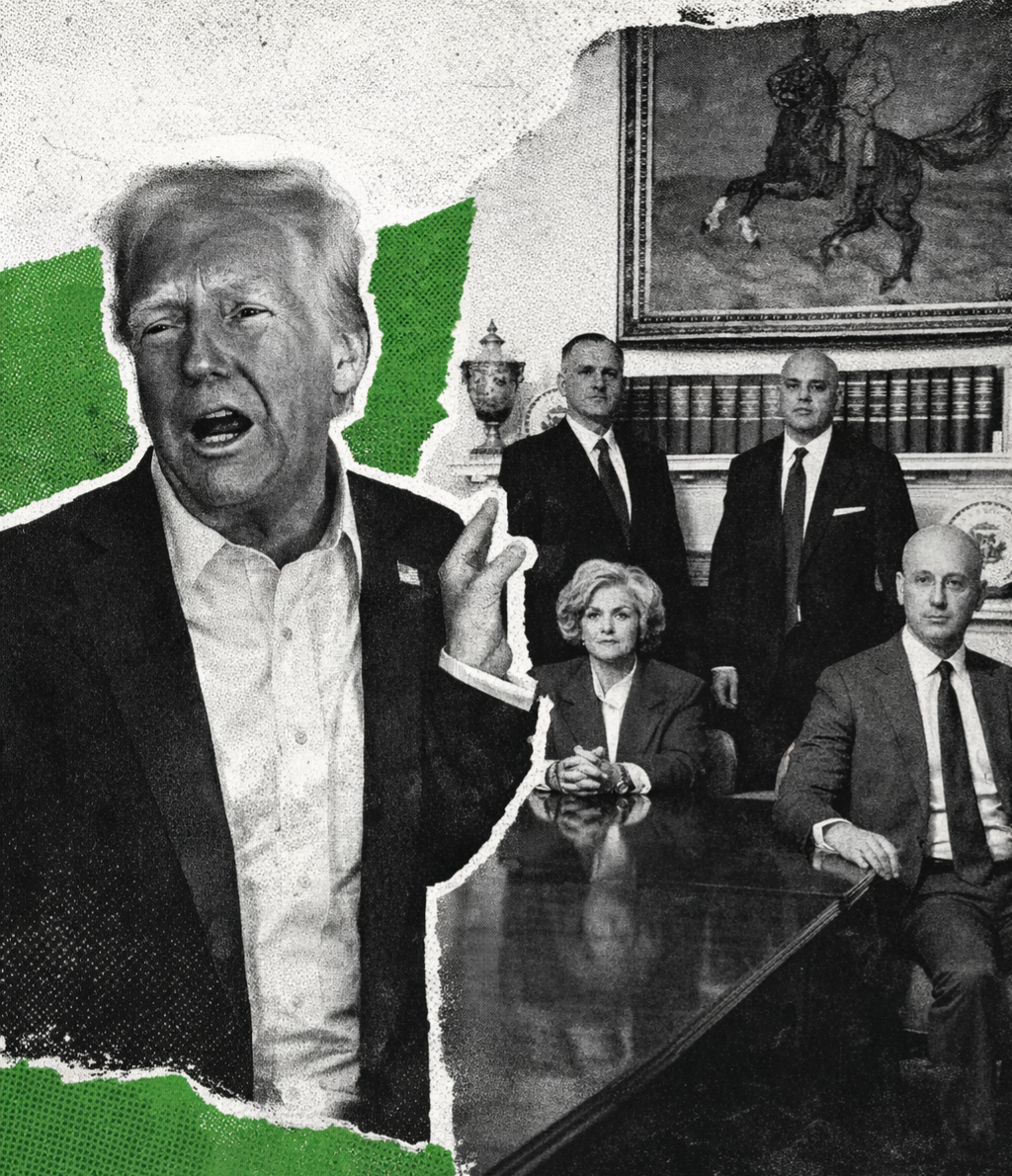
And courts are bad at self-correction. They punish dissent. They reward affirmation. Over time, the leader hears the same story told again and again: that the economy is booming, that public dissatisfaction is fake, that critics are traitors, that the only problem is the opposition’s sabotage. The leader may or may not fully believe all of it in private. But the system behaves as if belief is mandatory. Eventually, the line between cynicism and conviction blurs. The speech doesn’t just sell a rosy picture to the country; it tells the country what it must accept as true.
That dynamic also explains a second feature of the address: its reliance on what might be called retail governance. In a court system, systemic problems are dangerous to acknowledge, because they imply fault that no one is allowed to name. What survives instead are discrete victories — small, narratable wins that can be showcased without challenging the larger story of success.
Retail governance is deal-by-deal, announcement-by-announcement, story-by-story. It is built for moments: a singled-out policy here, a branded program there, a negotiation framed as a breakthrough, a name designed to travel on social media. Sometimes those moves can produce real benefits at the margins. But they cannot replace wholesale policy when the problem is structural.
If people are squeezed by broad price levels, you can’t fix that with a handful of showpiece discounts. If health costs are systemic, you can’t resolve them by extracting concessions that shift costs elsewhere. If the sense of disorder is widespread, you can’t restore calm by staging more confrontations. A country is not a reality show season where you can reset the narrative in the finale.
This is why the speech’s most striking weakness was not any single falsehood. It was that it offered no governing theory connecting the administration’s actions to the public’s actual complaints. It treated the country’s dissatisfaction as either ignorance or hostility. That is not how you build legitimacy. It’s how you drain it.
Nowhere was that disconnect sharper than on the issue that once provided the presidency its clearest advantage: immigration.
For years, the politics of immigration has been bound up with a public appetite for order. Even when crime statistics fall, even when rates improve, people can still recoil from a felt sense of disorder: street-level rule-breaking, visible instability, an impression that no one is in control. Voters often want leaders who can project competence, steadiness, and proportionality.
But order is not the same as force. And force is not the same as control.
When enforcement becomes a spectacle—when operations feel militarized, when agents are masked, when cities feel occupied rather than protected—the public can experience that not as restored order but as a different kind of chaos: state-sanctioned disorder. Even voters sympathetic to enforcement can recoil when they see institutions behaving unpredictably or violently. In a democracy, the legitimacy of enforcement rests not only on goals but on methods—on transparency, restraint, and accountability. The more enforcement resembles domination, the more it can trigger the very backlash it is supposed to prevent.
The speech tried to frame the country’s fear as fear of outsiders, of blood and mayhem caused by a single demonized group. But when a leader tells stories that don’t fit the facts—or stretches tragedies into a prewritten narrative—it reveals something important: that the stories are not meant to understand reality. They’re meant to replace it.
And this brings us back to what the speech signaled to the political system.
The danger for an administration heading into midterms is not simply being unpopular. Unpopularity can be managed if it’s paired with adjustment: a pivot to broadly felt concerns, a credible plan to address costs, a rhetorical softening that invites persuadable voters back into the tent. What allies fear most is a leader who refuses to do any of that—who responds to vulnerability with denial.
Because denial has a political consequence: it locks in exposure.
A leader can sometimes survive a hard year by demonstrating responsiveness. But when a leader insists there are no problems, he implicitly tells his party there is no new message, no new agenda, no permission to distance, no lane to reframe. The party becomes tethered to the fantasy. Lawmakers are photographed applauding it. Strategists are forced to defend it. Candidates down-ballot inherit it.
In that sense, the speech was not merely long. It was clarifying.
It clarified that the administration is governing inside a closed loop. It clarified that the answer to public dissatisfaction is not policy correction but rhetorical escalation. It clarified that the impulse is not to build a broader coalition but to demand submission: stand when I tell you, applaud when I cue you, accept the story I’m telling, or be cast as an enemy.
That is a risky posture in a country where elections are still real, where economic experience is still personal, and where most voters are not ideological actors but tired people trying to live.
If you want to know why an opposition party might quietly welcome such a speech, it’s because it makes the next campaign simpler. It turns the midterm choice into a referendum on a single question:
Do you believe your own life, or do you believe the performance?
Say NO to Trump’s attempts to silence dissent by supporting independent media!

Independent media is being squeezed harder than ever. Consolidation keeps swallowing voices that don’t toe the line — and staying truly independent takes real, sustained support.
✅ 20% off an annual Liberty’s Lens subscription — for one full year
This is about more than a discount. It’s about choosing to support journalism that isn’t owned, filtered, or diluted by corporate interests.
When you upgrade, you get:
✅ 20% off your annual subscription for the next year
✅ Full access to all premium reporting and commentary
✅ A direct role in sustaining independent media
Once those 30 spots are gone, the offer disappears.
👉 Upgrade now and claim your 20% savings before it’s gone
Every new paid subscriber moves us closer to 500 — and farther from the forces trying to shrink independent voices into silence.
Thank you for standing with independent media.
Together, we keep it alive.
No Receipts today, just our analysis of the President’s State of the Union speech, so please enjoy this poem by a gifted writer here on Substack.
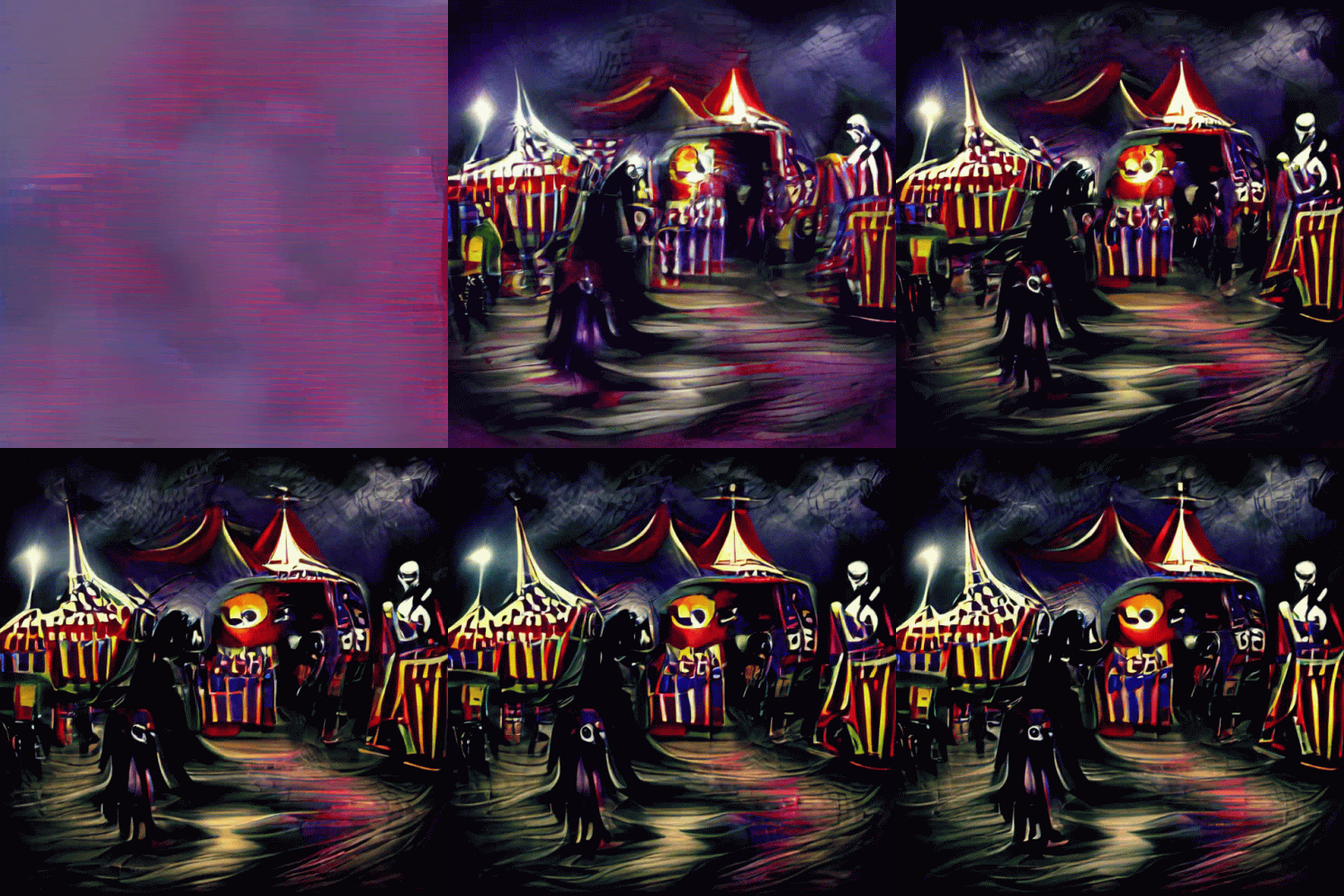
For fifteen years, I’ve listened to students write about crossing borders and surviving here. This piece is built from their stories and what continues to happen.
ICEy Clowns Under Canvas
I’m young
My family
starts the long journey
to the carnival
Bare feet
Sharp rocks
Broken glass
Split up families
Arrive without escort
We’re lucky
Silly border strongmen
with guns
ICEy clowns
in masks
Ringmasters “representing”
interests
A show under canvas
The Show of America
Not allowed
Undocumented
Family makes a run for it
Clowns catch us
Now in the tent
In cages
Split up
Ringmasters visit
Give quotes
Eat popcorn
Enjoy entertainment
Months later
I’m out
Not all family is
Taken to the Tunnel of Love
Education the American Way
Inside, attend my classes
Oh no!
Late for class
Inside the tunnel
I’m punished
Late. Tardy. Unexcused!
Uncle disappeared
from his cage
in the night
Nobody knows where
He must not have
been entertaining enough
Hurting their test scores
graduation rates
and DATA!
Some family still in cages
Some removed
from the carnival at night
Called bad names
for taking help
Not many jobs
Work extra hours
After class
Brought in the tent
Your amusement
At 5 pm and 11 pm
Sometimes
the clowns chase us
Take us
Make examples
The ringmasters talk
of us every night
But the Tunnel of Love curtain closes
and I need to graduate.
Others in the tunnel drown
Are removed
Picked off
Forgotten
Continue through school
Every year
More ringmasters
Want you to pick them
We’re such an issue
Then who cares
In the tunnel
Was lucky
Graduated and walked the tunnel
Friends disappeared
or didn’t make it
This is it?
Success?
Can barely continue
Get a job
Later on
a green ticket
to the show
Have popcorn
Entertainment without subtitles
Either give in
or fight back
But the clowns
are watching
Become
Be safe?
Or
Resist
Be risky?
More put in cages
Removed
Round up by clowns
People laugh
Choose risky
March in tent With many others Clowns, ringmasters, strongmen All watch Wait Wonder
Let the lion loose
Mauled
Hurt
Told it’s my fault
Months later
March under canvas
Clowns know me
Wait
I’m unarmed
but dangerous
One looks
Lions in the background People in cages
Clown
aims
Fires
BANG!
COUGH!
Wheeze…
End.
— Liberty’s Lens
This article is provided for public interest reporting and analysis. All external links open in a new tab and point to their original publishers.
© 2026 Liberty’s Lens. All rights reserved.