Trump’s Iran Debacle and the Authoritarian Turn Against the Press
How a politically desperate deal gave way to retaliation against those who exposed it
Liberty’s Lens is entirely reader‑supported. We don’t answer to corporate masters deciding what we say or what we cover.
If you find our work valuable, please consider upgrading to a paid subscription. You can take 20% off with this coupon — and support independent media for about the price of a coffee per month.
You can also gift a paid subscription to a friend who’d appreciate what we do.
Thank you to every reader who shares our work and helps it reach new audiences. We couldn’t do this without you. We love you all.
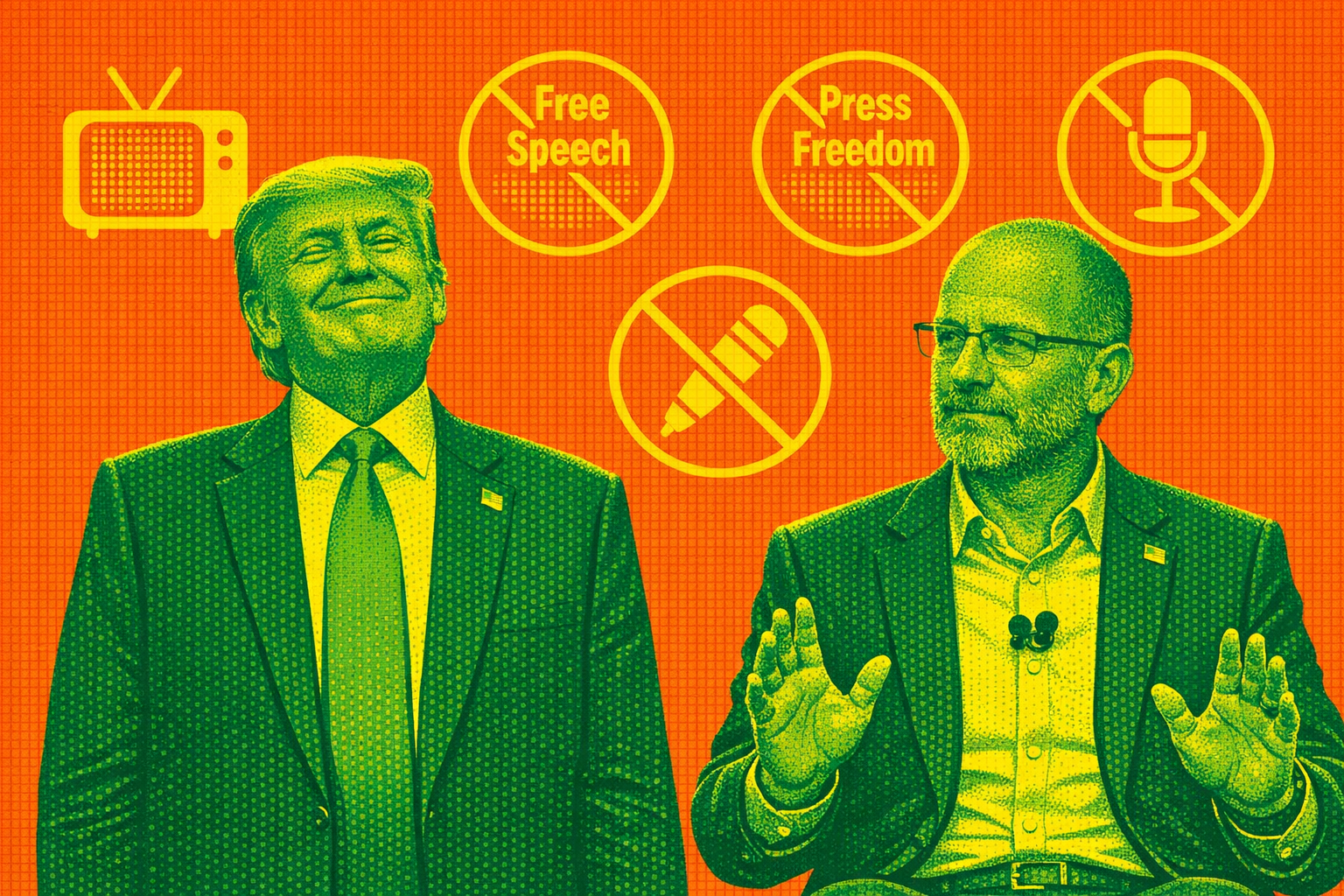
I. The Collapse Everyone Could See
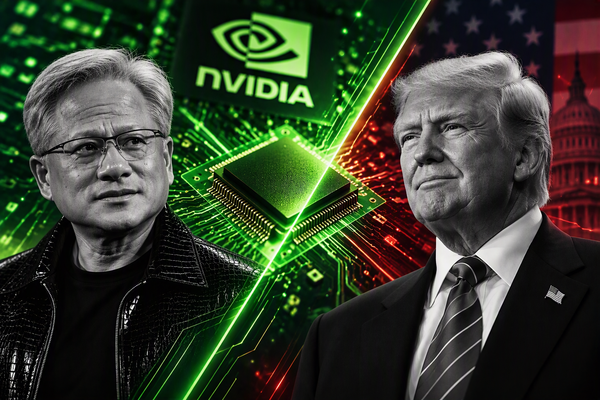
Donald Trump is panicking after what can only be described as a massive and catastrophic defeat in his unlawful war against Iran.
Across Iran — in Tehran, in Baghdad, and throughout the broader Middle East — people poured into the streets. Parades. Rallies. Public celebration. What they understood, immediately and instinctively, was that this was not a mixed outcome or a partial compromise.
This was complete capitulation.
The Trump regime has now openly acknowledged that it is negotiating on the basis of Iran’s ten‑point framework — the same framework Trump and his team dismissed, mocked, and rejected for weeks.
To understand why this moment matters, it helps to remember how we got here.
Trump entered negotiations with a fifteen‑point proposal that amounted to Iran’s surrender. Iran countered with a ten‑point framework demanding the U.S. surrender instead. For weeks, Trump officials called Iran’s proposal “maximalist,” “nonsensical,” and incompatible with peace.
They said it would never happen.
Iran never budged.
Trump then set another deadline, warning that failure to agree would result in the obliteration of Iran’s civilization. “They would die tonight — never to be brought back” he said. As the clock ran down, Iran did not move. No concessions. No revisions. No compromise.
Instead it was Trump who folded.
The result was immediate and unmistakable: celebration in Iran, shock across the region, and a scrambling White House trying to regain control of a narrative that had already slipped away.
The reality was simple:
Trump blinked, and the world saw it.
II. The Deal Wasn’t Leaked — It Was Revealed
None of what followed happened in a vacuum.
Iran’s ten‑point negotiating framework was not secret. It was not leaked intelligence or anonymous sourcing. Iran put it forward repeatedly and explicitly, and it had been discussed publicly for weeks. (The Independent | SBS News)
Trump’s own words confirmed it.
He acknowledged receiving the ten‑point proposal. He called it “a workable basis” for negotiations. He admitted that “almost all of the points of contention” had already been agreed to — all of this after Iran had already released it publicly. (Sky News | Fox News)
The White House has since claimed that the framework now under negotiation is different from the ten‑point plan Iran released. That may even be true.
But the timeline matters.
Trump praised Iran’s ten‑point proposal as a workable basis at the moment he was under maximum political pressure, with support collapsing among former allies. It was only after those terms were laid out clearly and publicly, and their implications became impossible to hide, that the administration began insisting this was some other peace plan entirely.
When the media — and especially CNN — placed the ten points side by side, anyone could see how far negotiations had shifted in Iran’s favor.
That is when the narrative changed.
And that is when Trump lost it.
III. Don’t Debate the Facts — Attack the Messenger
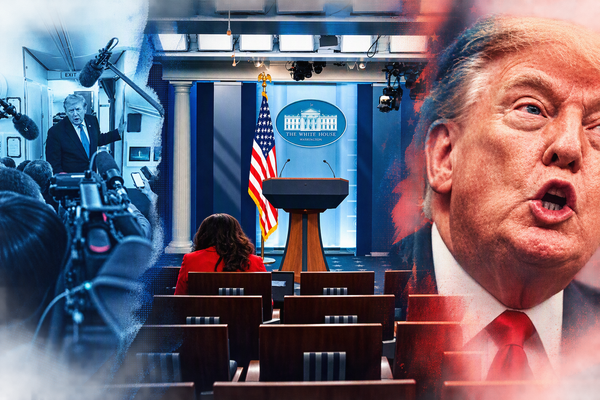
Rather than dispute the substance of the reporting, Trump went after CNN directly.
He claimed the graphic was fraudulent. He alleged it was tied to a fake foreign source. He insisted it originated in Nigeria. He accused CNN of knowingly spreading disinformation. (Deadline)
He demanded the statement be withdrawn.
He demanded apologies.
He floated investigations.
He implied criminal wrongdoing.
“The statement published by CNN World News is a fraud, as CNN well knows.” (Mediaite)
But none of this addressed the actual issue — because it couldn’t.
CNN didn’t invent the ten‑point framework. They didn’t distort it. They didn’t speculate. They simply showed the public what Trump himself had acknowledged acceptance of.
The problem was never accuracy.
The problem was visibility.
Trump’s anger wasn’t about getting the facts wrong. It was about making the facts impossible to spin.
That’s why the response wasn’t argument.
It was retaliation.
Instead of explaining the deal, Trump tried to delegitimize the reporting. Instead of owning the outcome, he attacked the people who took it public.
And then the threat escalated.
IV. When Regulatory Power Enters the Picture
Almost immediately, Trump’s FCC chair, Brendan Carr, stepped in to reinforce the message.
Carr echoed Trump’s rhetoric and began openly threatening CNN — suggesting its leadership needed to be replaced and hinting at regulatory consequences for airing factual information embarrassing to the president. (The Hill | Mediaite)
This was no longer about criticism or media bias.
This was about punishment.
It was the moment when the story stopped being about a failed negotiation and became something else entirely: the use of government power to intimidate journalists for doing their job.
 Liberty's Lens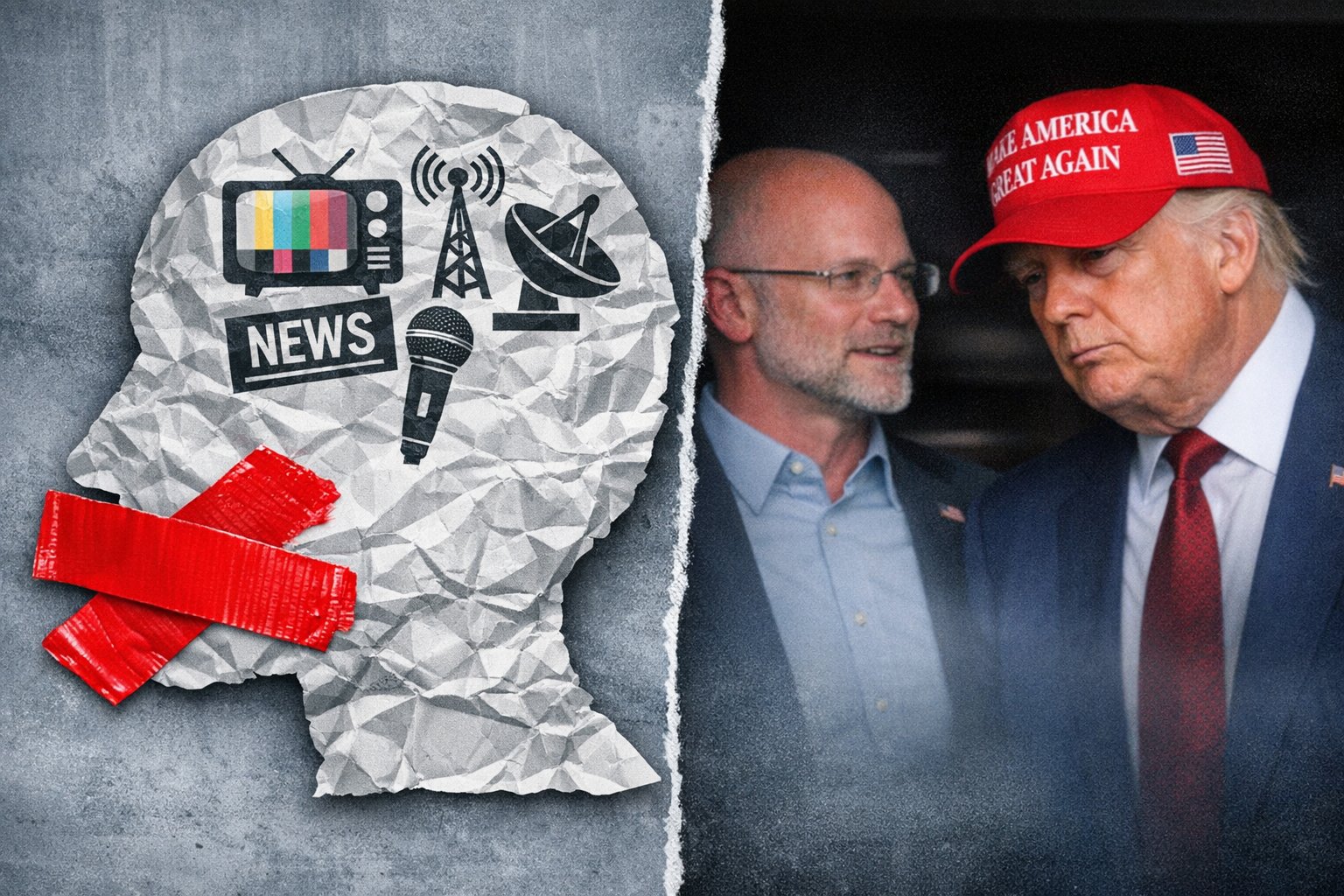
V. Replacing Reality Instead of Confronting It
Once the deal could no longer be hidden, Trump pivoted to a familiar tactic: rewriting reality in public.
He began calling the outcome a “golden age.”
He claimed the United States had achieved a “total and complete victory — no question about it.”
He insisted the U.S. and Iran were about to make enormous amounts of money together, floating the idea that some of it would come from “helping with the traffic buildup in the Strait of Hormuz.”
He also claimed that Iran’s uranium enrichment would be “perfectly taken care of.” (New York Post)
These claims bear no resemblance to the framework Trump himself described as workable.
Under that framework:
- Iran controls the Strait of Hormuz
- Iran escorts transiting ships and collects tolls
- Iran retains the right to continue uranium enrichment
- Iran determines who passes through the strait — and when
There was no confusion here. The terms were clear. Trump substituted narrative for reality because the reality was politically fatal.
Anything that contradicted the new story was dismissed as “fake news.”
If the public accepted what actually happened, the rest of Trump’s claims collapsed with it. And so, as always, the facts themselves became the enemy.
VI. Fox News and the Authoritarian Reflex
This is where friendly media stepped in.
Almost immediately, Fox News reframed the outcome as strategic brilliance — “4‑D chess,” brinkmanship, masterful negotiation. Hosts insisted Trump took Iran to the edge and forced it to blink.
Laura Ingraham called it a “home run.” It’s worth evaluating that claim against the recognized starting point for these negotiations. (Mediaite | AFP via Yahoo News)
Before the war:
- Iran did not control the Strait of Hormuz
- Uranium enrichment was constrained
- U.S. military bases remained in the region
After the war:
- Iran controls the Strait of Hormuz
- Sanctions are lifted
- U.S. forces withdraw
That outcome was presented as victory.
And as the spin escalated, something darker emerged.
Threats to obliterate an entire civilization were retroactively reframed as jokes. Genocide rhetoric became “theater.” Critics were accused of bad faith for taking the president’s words seriously.
That is the authoritarian reflex:
- Facts become irrelevant
- Outcomes are reframed as intentions
- Power decides truth
Independent media becomes dangerous not because it lies, but because it refuses to conform. It insists that words mean things, that agreements have consequences, and that threats are not theater.
A president threatening crimes against humanity means something.
And accountability still matters.
VII. The Reality Trump Can’t Rewrite
Ben Rhodes, former Deputy National Security Advisor under President Obama, laid it out starkly.
Even in the best‑case scenario, Rhodes said, Trump started a pointless war to reopen a strait that was already open — except now Iran controls it. (euronews)
The Islamic Revolutionary Guard Corps publicly demonstrated its power. Iran positioned itself to extract tolls, secure sanctions relief, and dictate terms in one of the most strategically critical regions on Earth.
And for what?
- Thousands of innocent people dead
- U.S. troops killed and wounded
- American embassies and military bases damaged
- U.S. credibility abroad severely diminished
- Hundreds of billions of dollars spent
Putin strengthened.
Iran empowered.
America weakened.
Even under the most generous interpretation, Rhodes called it a profoundly shameful episode in American history.
That is the reality Trump’s rhetoric cannot erase.
VIII. The Lesson
When you strip away the spin, the propaganda, and the threats aimed at journalists, what remains is simple — and damning.
Reporters didn’t get it wrong. They revealed something this administration would have preferred remained hidden.
Trump didn’t respond to exposure with transparency. He responded with denial, intimidation, and narrative control.
He reached for the power of the state to attack press freedom — pairing vague threats of investigation with regulatory pressure from his FCC chair. This was not an aberration. It fits squarely into the broader pattern of escalating attacks on speech and independent institutions that have defined Trump’s second term, accelerating during a moment when the administration simultaneously denied being at war while invoking the expanded leverage that wartime posture provides.
But Trump could not erase the record.
The ten‑point plan was real.
Trump acknowledged it.
Iran celebrated it.
The world understood it.
Only the propaganda machine pretended otherwise.
The media didn’t cause this humiliation.
Trump caused it. The media reported it.
And that — more than anything else — is why Trump went after them.
Thanks for reading! This post is public so feel free to share it. Sharing helps our content reach new readers and tells the algorithm that our content is valuable.
Support Independent Journalism!
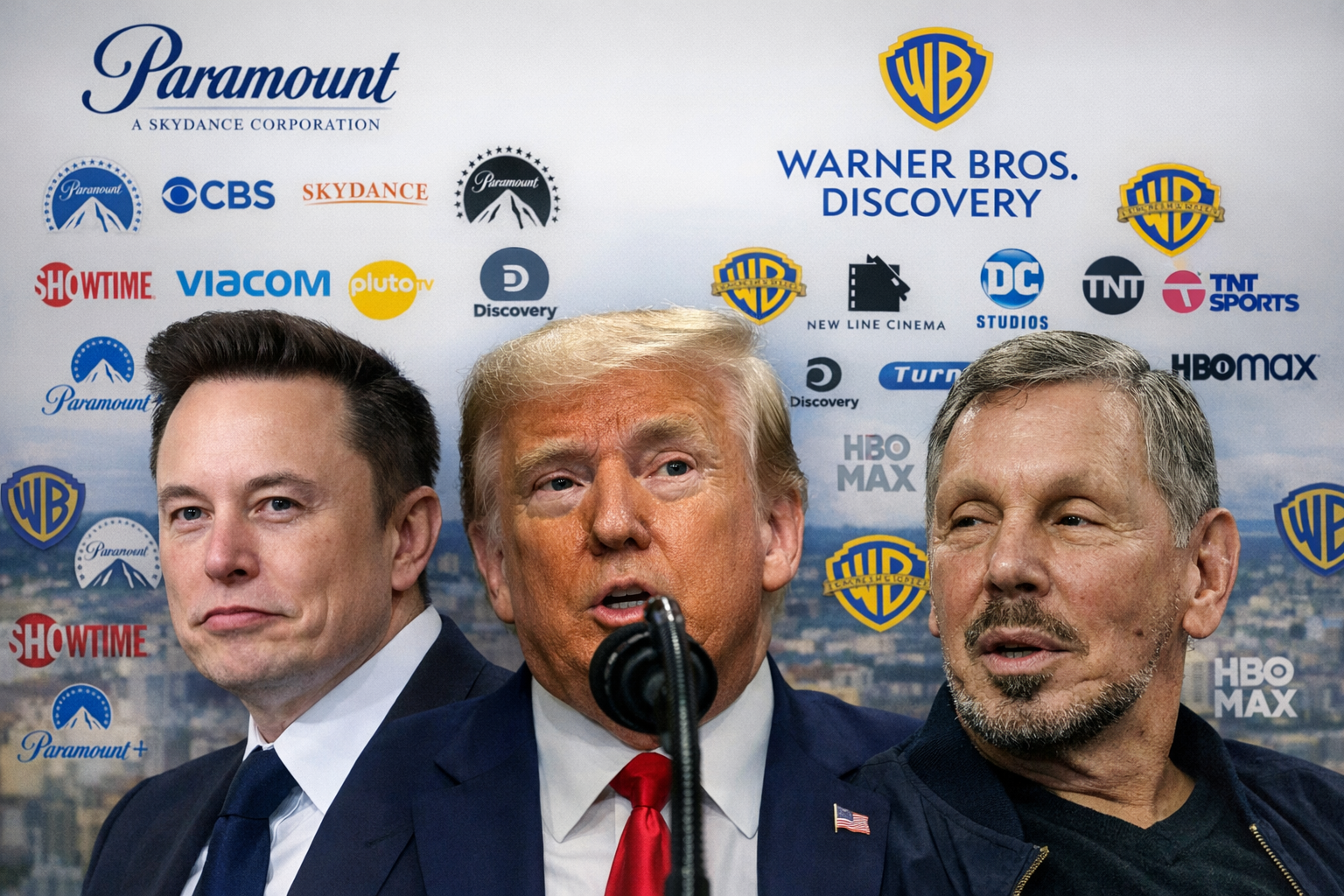
Look around: media consolidation isn’t subtle anymore.
A single ideological camp is amassing platforms—social networks, news outlets, streaming services—all under its banner. One by one, spaces for open dialogue are being converted into echo chambers.
But not independent media.
Liberty’s Lens is part of a growing movement of independent progressive voices refusing to be absorbed, censored, or silenced.
We publish what powerful interests would prefer you not see.
We ask the questions their platforms no longer allow.
We stay independent because independence is the last defense against narrative control.
👉 Join the resistance to media monopolization:
20% OFF for life when you upgrade to paid!
They can buy platforms.
They can’t buy us.
For readers who want the receipts
- Iran’s ten‑point negotiating framework was public and widely reported before the ceasefire — (The Independent | SBS News)
- Trump said Iran’s ten‑point proposal was a “workable basis” and that most points were already agreed to — (Sky News | Fox News)
- Trump accused CNN of airing a fraudulent Iran statement sourced from Nigeria and demanded it be withdrawn — (Mediaite | Deadline)
- FCC Chair Brendan Carr echoed Trump’s attack on CNN after Trump claimed CNN aired a fraudulent Iran statement sourced from Nigeria — (The Hill | Mediaite)
- Iran’s publicly released ten‑point proposal — which Trump said was a “workable basis” — included Iranian authority over transit through the Strait of Hormuz and recognition of Iran’s right to continue uranium enrichment —
(Sky News | The Independent) - Trump claims peace plan will lead to a golden age for Iran — (New York Post)
- Fox News hosts portrayed the outcome as a victory, with Laura Ingraham praising Trump’s handling on air — (Mediaite | AFP via Yahoo News)
- Ben Rhodes said Trump fought a war to reopen a strait that was already open, leaving Iran stronger — (euronews)
— Liberty’s Lens
This article is provided for public interest reporting and analysis. All external links open in a new tab and point to their original publishers.
© 2026 Liberty’s Lens. All rights reserved.