Truth or Truth Social: Inside Trump’s Reality Bubble
How loyalty, curation, and control of information are distorting reality—and shaping decisions at the highest level of government
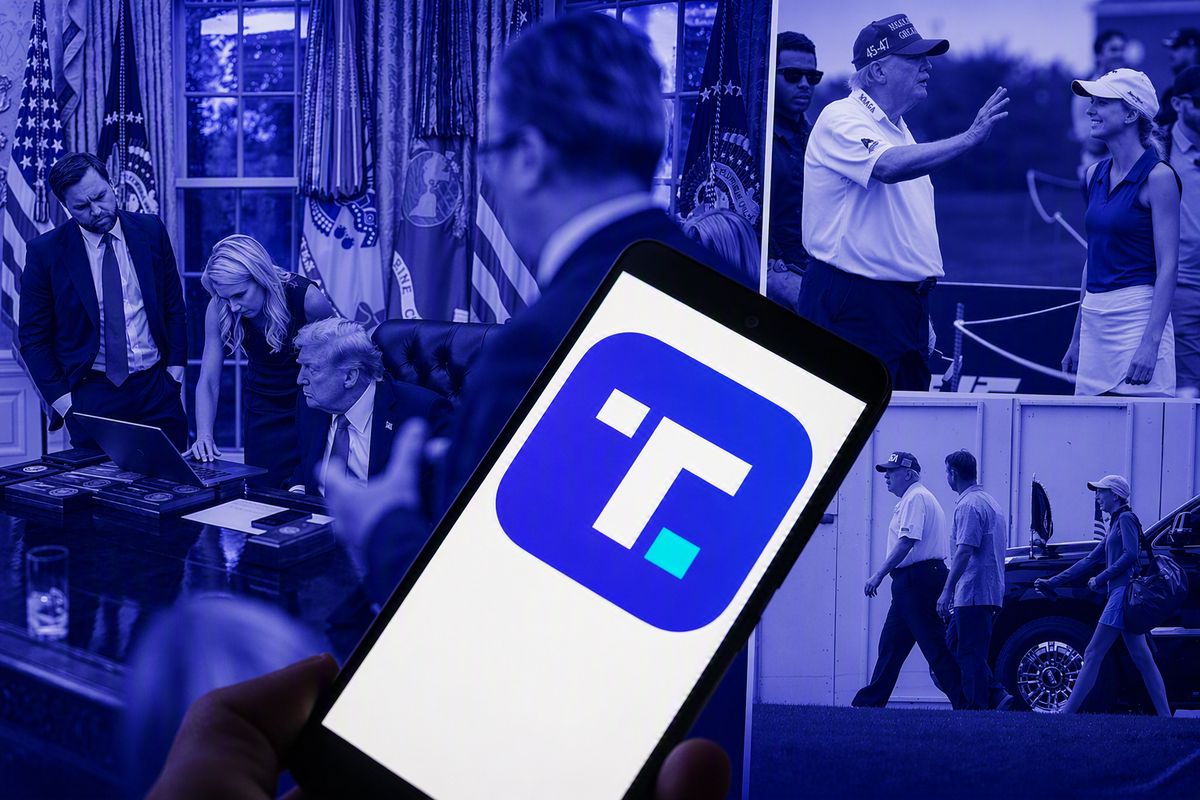
In Trump’s second term, reality itself seems to have lost its place in the decision-making process. At times, the president’s actions are out of sync not only with his party’s interests, but with his own. He has publicly claimed to “love the inflation” and admitted to not caring “even a little bit” about Americans’ concerns. At the same time, he has pursued adventurism abroad that has fractured his coalition in predictable ways.
Just as striking, he often appears genuinely surprised by the backlash that follows—including criticism from former allies like Tucker Carlson and Marjorie Taylor Greene. The pattern suggests something deeper than miscalculation. It points to a presidency operating under a fundamentally different understanding of reality.
The question is why. Is the president so insulated within a curated information environment that he can no longer see how his actions are perceived outside it? While the president’s raw, unfiltered worldview is on full display in rambling speeches and late-night posting sprees, the forces shaping it have remained harder to observe.
That picture is starting to come into focus. Based on more than 1,000 interviews with sources close to the president, New York Times reporters Maggie Haberman and Jonathan Swan offer a detailed account in their new book Regime Change: Inside the Imperial Presidency of Donald Trump.
They describe a presidency that has shed what little constraint once existed, evolving into something openly imperial. Their central argument is straightforward: Trump did not emerge from indictments, convictions, and political exile weakened. He came back more insulated, more aggrieved, and far less tethered to reality.
At the center of that transformation is the information environment surrounding him. What was once a contested flow of intelligence, analysis, and competing perspectives has collapsed into a closed feedback loop.
This is no longer an administration shaped by intelligence briefings or policy deliberation. It is one where information is curated, filtered, and delivered with a singular purpose: to reinforce the president’s instincts, validate his worldview, and weaponize whatever narrative serves him in the moment.
During Trump’s first term, senior officials often intercepted fringe material before it reached his desk. That buffer is gone. In its place is a small orbit of loyalists who function less as advisors than as amplifiers, cutting the presidency off from independent scrutiny.
No figure better captures that shift than Natalie Harp—dubbed “the human printer”—who reportedly follows Trump with a portable printer, feeding him a steady stream of handpicked articles and online content. In a White House increasingly defined by flattery and control of information, her role is less an oddity than a symbol of the dysfunction that now permeates the top echelon of American government.
Liberty’s Lens is entirely reader‑supported. We don’t answer to corporate masters deciding what we say or what we cover.
If you find our work valuable, please consider upgrading to a paid subscription. You can take 20% off with this coupon — and support independent media for about the price of a coffee per month.
Thank you to every reader who shares our work and helps it reach new audiences. We couldn’t do this without you. We love you all.
Nero, Caligula, Trump
In the imperial court of Donald Trump, reality is whatever he decides it is—and increasingly, whatever Natalie Harp places in front of him.
Because Trump famously avoids consuming information digitally, Harp has become the physical gatekeeper of his worldview. She tracks down flattering articles, screenshots, and favorable right-wing coverage, printing them out and delivering them directly to him in hard copy. In practice, that role extends beyond curation. She has reportedly acted as a kind of in-house arbiter of truth, at times overruling cabinet officials with the results of her own rapid searches.
More than a gatekeeper or advisor, Harp’s role begins to blur into something closer to personal devotion. The book describes her leaving handwritten notes for Trump in private spaces, including one declaring, “You are all that matters to me.” Trump, in turn, is said to boast to staff about her loyalty, framing it in terms usually reserved for family: “She loves me as much as my wife and children… she’ll never leave me.”
 Liberty's Lens
That dynamic spills directly into how information is selected and presented. In one Oval Office exchange, Trump called out, “Natalie, Natalie, go fetch me the thing.” Harp returned with a printed document ranking Trump as the “most powerful man who’s ever existed,” placing him above figures like Caesar, Alexander, Hitler, Mao, and Stalin. Trump reportedly embraced the comparison as validation—despite the document’s dubious origins, traced back not to a historian, but to a former golf caddy.
Harp’s influence doesn’t end with intake—it extends to output. She acts as a conduit for Trump’s social media presence, helping shape and distribute his most volatile late-night Truth Social posts. That includes amplifying conspiracy theories sourced from fringe outlets and circulating AI-generated imagery designed to provoke and dominate the news cycle—including images portraying Trump as a divine figure and his opponents in explicitly dehumanizing terms.
Individually, these details are strange enough. Taken together, they describe something more consequential: a presidency in which the flow of information has been narrowed, personalized, and ultimately subordinated to the preferences of the president rather than the needs of the country.
Truth or Truth Social
Inside that system, Natalie Harp’s role extends beyond what might otherwise be a mundane function—physically delivering information to an aging president who largely avoids engaging with it digitally. In practice, she functions as an emotional buffer. While other staffers have reportedly raised concerns about unvetted material reaching the president, Trump relies on her precisely because she ensures a steady stream of praise, validation, and affirmation.
That dynamic creates a deeper vulnerability. A president operating on instinct, sustained by a carefully curated feed of flattering narratives, becomes highly susceptible to manipulation—especially by those who understand how to simplify, frame, and present information in ways that align with his preferences.
This isn’t abstract—it shows up in how decisions are made. In deliberations over what would become a conflict with Iran, military leaders and intelligence officials presented detailed assessments warning that an air campaign would be costly and unlikely to succeed. Trump instead gravitated toward a far simpler narrative offered by Israeli Prime Minister Benjamin Netanyahu—one that promised a quick, decisive outcome. As Haberman and Swan describe it, Trump favored something closer to a cinematic “Venezuela-type” scenario than the far more complex reality outlined by his own advisors.