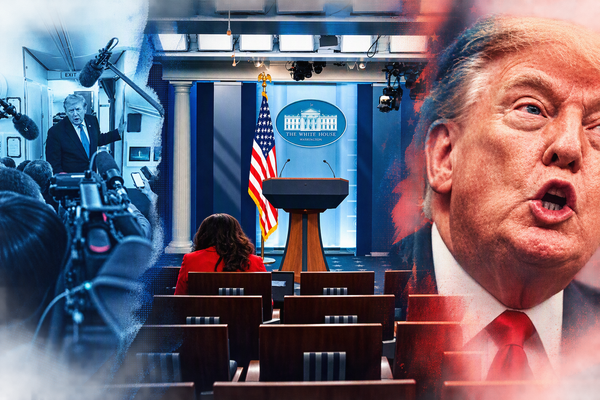
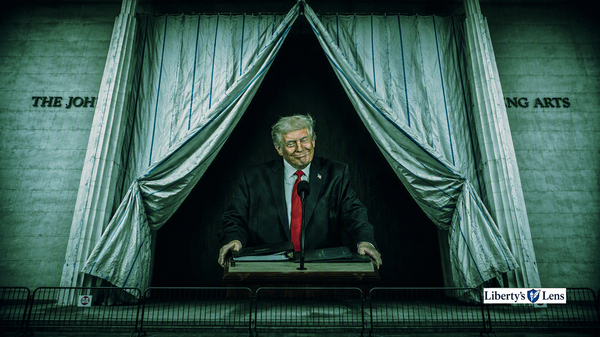
The Illusion of Strength: Trump’s Propaganda Through Force
A Liberty’s Lens investigation into performative violence and the hollow core of America’s strongman politics.
This publication is entirely reader‑supported. We don’t answer to corporate masters deciding what we say or cover. If you find our work valuable, please consider upgrading to a paid subscription—or gifting a paid subscription to a friend who’d appreciate what we do. Thank you to every reader who shares our work and helps it reach new audiences. We love you all.
Intro
One of the goals we set for Liberty’s Lens was simple: to make sense of what’s happening in America. The Trump era often feels inscrutable, and we’ve tried to do the work of “sense-making” for our readers. Lately, though, the administration’s actions seem almost ripped from another time. Trump’s tariffs feel like something out of the early 20th century. His war on supposed cocaine cartels and his foreign and energy policies could have been scripted in the 1980s. None of it feels suited to the problems America faces in 2025.
And that’s why it’s so confusing. Trump has Maduro snatched up, bombs boats, alienates trade partners other administrations spent decades cultivating—and many of us are left scratching our heads. What is this man doing?
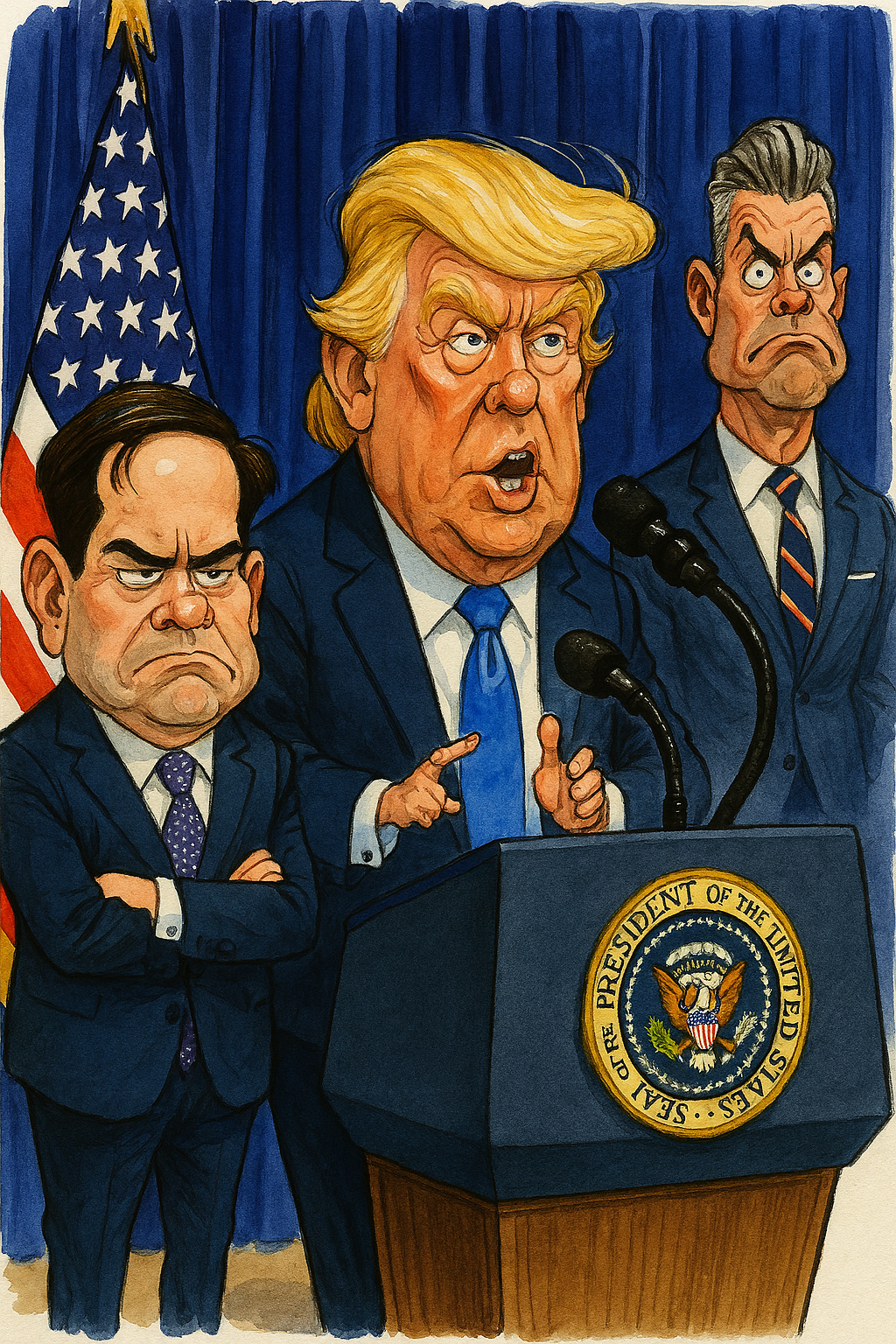
Oddly enough, it was something my mother said weeks ago that brought it into focus. Like many families, ours avoids politics because it’s divisive. But during a wedding trip, we caught a news broadcast of Trump threatening “guns-a-blazing” action in Nigeria when we’d stopped for a moment for me to feed my caffeine cravings. My wife, American by way of both Nigeria and Britain, reacted viscerally. My mother, completely unfazed, said something along the lines of: This is just Trump using threats to get what we want. It won’t spin out of control. It’s tough talk, maybe a few symbolic moves, but it gets results with minimal effort.
 Liberty's Lens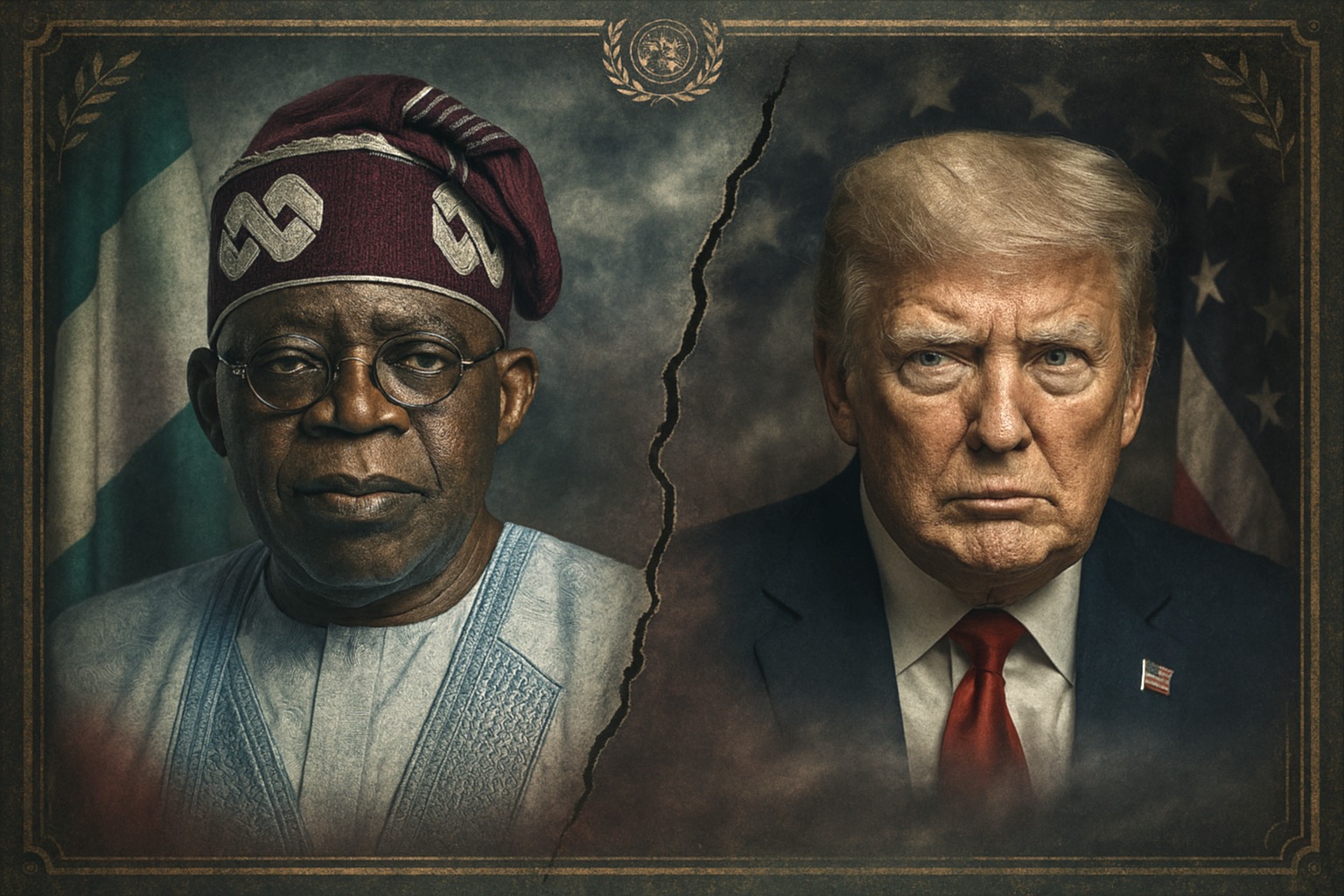
That comment stuck. I’ve started to see Trump’s actions through that lens and it really does line up. Ezra Klein recently called it “governing by spectacle.” And in October 2025, a former senior national security official described the administration’s military strikes on boats in the Caribbean as “propaganda through force,” telling The New Yorker that the so-called “War on Drug Boats” was less a measured tactical mission and more a performance for domestic audiences (The New Yorker).
Propaganda through force — the deliberate use of visible, often violent state action to intimidate, deter, and signal dominance. A governing logic that treats spectacle as policy.
Under Trump’s two terms, this logic has manifested as tightly choreographed displays aimed at two audiences: a domestic public meant to be cowed (or thrilled) by force, and an international sphere meant to be coerced by shock and awe.
Please, just a moment of your time...
Liberty’s Lens is entirely reader‑supported. We don’t answer to corporate masters deciding what we say or what we cover.
If you find our work valuable, please consider upgrading to a paid subscription. You can take 20% off with this coupon — and support independent media for about the price of a coffee per month.
If you've been thinking about upgrading to paid to support the work of Liberty's Lens, now is the time. Upgrade and save.
If a subscription isn't in the budget right now, a one time contribution, any amount, is always appreciated.
Thank you to every reader who shares our work and helps it reach new audiences. We couldn’t do this without you. We love you all.
Domestic Theater: Deterrence by Cruelty
In the United States, propaganda through force first took root not at sea or abroad but in family waiting rooms, courthouse lobbies, and chain‑link enclosures. The 2018 family‑separation regime—marketed as “zero tolerance”—was a calculated display: parents funneled into criminal custody while children were routed to caged intake pens and distant shelters, the separation itself intended to scare families from coming and pressure Congress to harden immigration law. Contemporary reporting and later advocacy work make the intent plain: deterrence through trauma, visible enough to ripple across the hemisphere and the evening news. In the second term, the pattern resurfaced, with attorneys and child‑advocacy groups warning that hundreds of children were again being transferred into federal custody during interior sweeps—an “unprecedented” return of separation dynamics, this time far from the border and often among mixed‑status households that had lived and worked in the U.S. for years (The Independent | Young Center).
The spectacle migrated from the border into workplaces. Raids—some involving sealed exits, mass questioning, and armored paramilitary forces—became the set pieces of a broader interior dragnet. The legal architecture for worksite enforcement long predates Trump, but the scale and choreography have been renewed and enlarged: a “whole‑of‑government” ramp‑up, billions in new funding, and explicit plans to raid more workplaces, add detention capacity, and expand contractor support for tracking and transport. The visual grammar—agents pouring into factory floors, buses idling outside—carries a message aimed at communities more than employers: we can reach you anywhere. Meanwhile, even pro‑enforcement analysts note the humanitarian and economic externalities, including family dislocation and chilled reporting of wage theft and abuse (USA Today | American Immigration Council).
 Liberty's Lens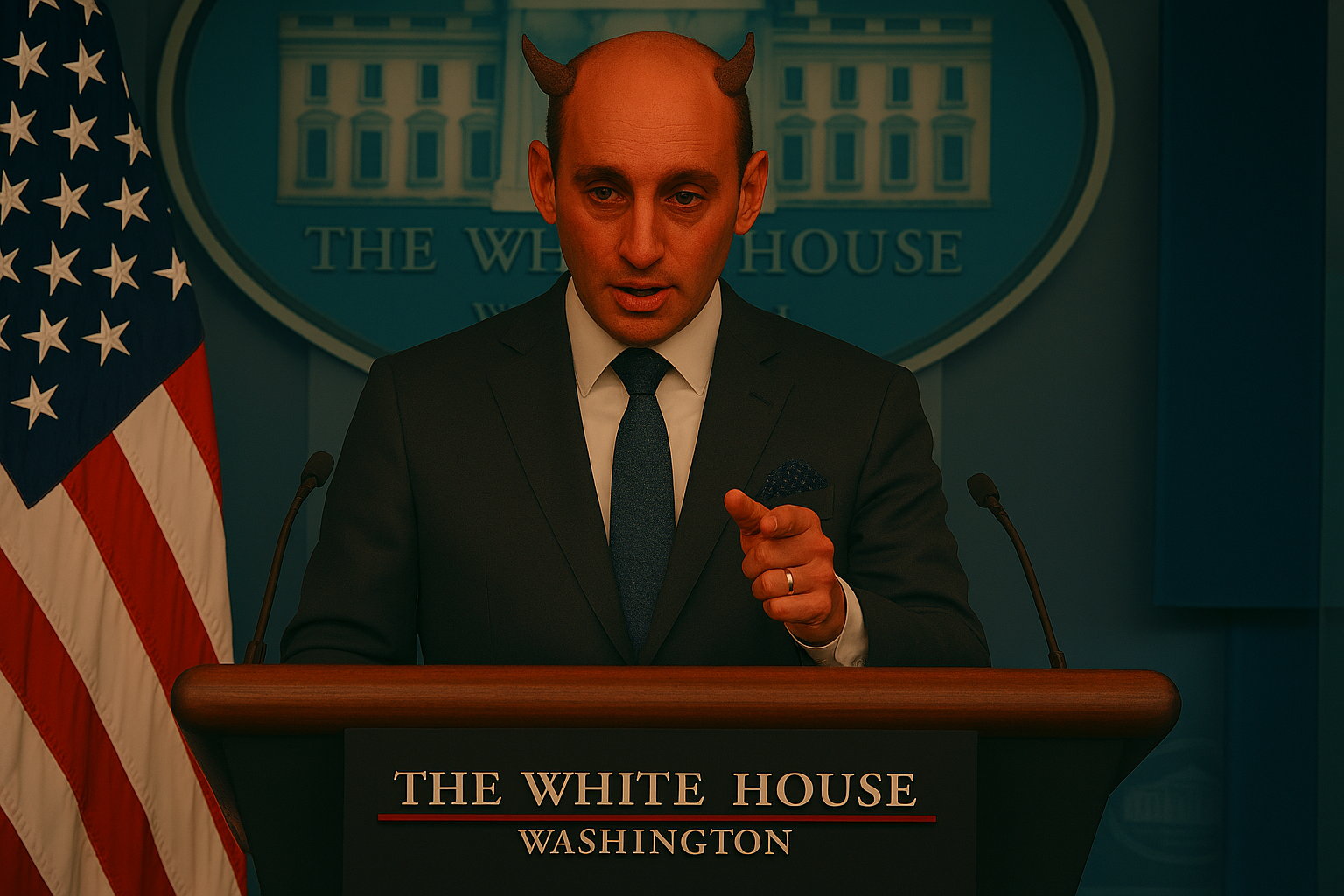
By 2025, the administration added a new domestic‑facing spectacle: outsourcing of cruelty. Under the revived use of the Alien Enemies Act, planeloads of migrants—mostly Venezuelans selected using arbitrary criteria rooted in appearance—were transferred to El Salvador’s mega‑prison CECOT, an institution widely documented for abuse and incommunicado detention. Human‑rights organizations described the arrangement as externalization of detention designed to disappear people from public view; a submission to the U.N. Special Rapporteur detailed indefinite, incommunicado confinement, routine beatings, and deprivation, warning that the U.S. had effectively contracted torture. In court filings, El Salvador itself asserted that the detainees remain the legal responsibility of the United States, contradicting Washington’s claim that they were now beyond U.S. reach—another crack in the theater’s façade, revealing operational control behind the spectacle. (RFK Human Rights | NILC | ABC News).
Taken together, these domestic scenes—family separation redux, worksite raids, and offshored incarceration—share a common grammar. They maximize visibility, minimize due process, and weaponize terror as policy. In each case, the administration’s stated goal—border integrity, employer compliance, public safety—may be the legal line on the memo, but the immediate effect is performative power. Neighbors see buses, workers see helmets, parents see cages, and communities learn that the sovereign can flip the lights and change the rules overnight. That is the essence of deterrence by cruelty: not a solution but a signal, sent to domestic voters and would‑be migrants, that the United States under Trump can and will govern through spectacle and that you can expect escalating harm as a result (The Independent | American Immigration Council | RFK Human Rights).
Sizzle reels of men in chains being dragged off to CECOT or elsewhere, photo ops with members of Congress or the administration signaling loyalty to the Trump regime through their embrace of the cruelties, influencers tagging along with raids or staged confrontations with protesters—all propaganda built for the digital age—a continuation of Trump’s governing logic: spectacle as policy. All funneled through friendly platforms and ideologically aligned networks or those cowed into functioning as little more than state media.
Hemispheric Spectacle
If domestic cruelty was Act One, the second term’s foreign policy became Act Two: a theater of force projected across the Caribbean and Latin America. The administration’s boat strikes were the opening salvo—a campaign launched in September 2025 and amplified through official videos and social media posts. These clips showed small craft erupting into fireballs under missile fire, accompanied by captions touting the destruction of “narco-terrorist” networks. The videos themselves, rather than helping the American public understand the justifications for the strikes, amounted to what many military commentators refer to as ‘war porn’.
 Liberty's Lens
Legal analysts and journalists quickly noted the absence of verifiable evidence: no confirmed cargo, no public identification of the dead, and no judicial process. Critics called it extrajudicial killing at sea, while the administration framed the strikes as a bold counternarcotics push. By December, the tally had surpassed 20 separate strikes, with fatalities estimated in the dozens (USNI News | U.S. News | FactCheck.org).
The maritime campaign soon expanded into an energy blockade. In late December, U.S. forces seized a Venezuelan oil tanker and pursued others, with Trump vowing a “total and complete blockade” of sanctioned vessels. The administration claimed the seizures were necessary to choke off revenue for Maduro’s regime and disrupt narcotics-linked smuggling. But the optics were unmistakable: U.S. warships intercepting tankers in contested waters, a spectacle of dominance broadcast to allies and adversaries alike. Russia lodged formal protests, calling the interdictions piracy, while legal scholars warned that the seizures blurred the line between law enforcement and acts of war (USA Today | Reuters via Yahoo | CBS News).
Then came the apex spectacle: the capture of Venezuelan President Nicolás Maduro on January 3, 2026. In a pre-dawn raid, U.S. special operations forces stormed a compound outside Caracas, seized Maduro and his wife, and flew them to New York to face narco-terrorism charges. Trump declared victory on social media: “Maduro is DONE. America is in charge now.” The administration alternated between framing the operation as a law-enforcement triumph and a geopolitical reset, while international law experts condemned it as a violation of sovereignty and a dangerous precedent. Even some U.S. allies expressed alarm at the extraterritorial reach of American power (CBS News | PolitiFact | Chatham House).
 Liberty's Lens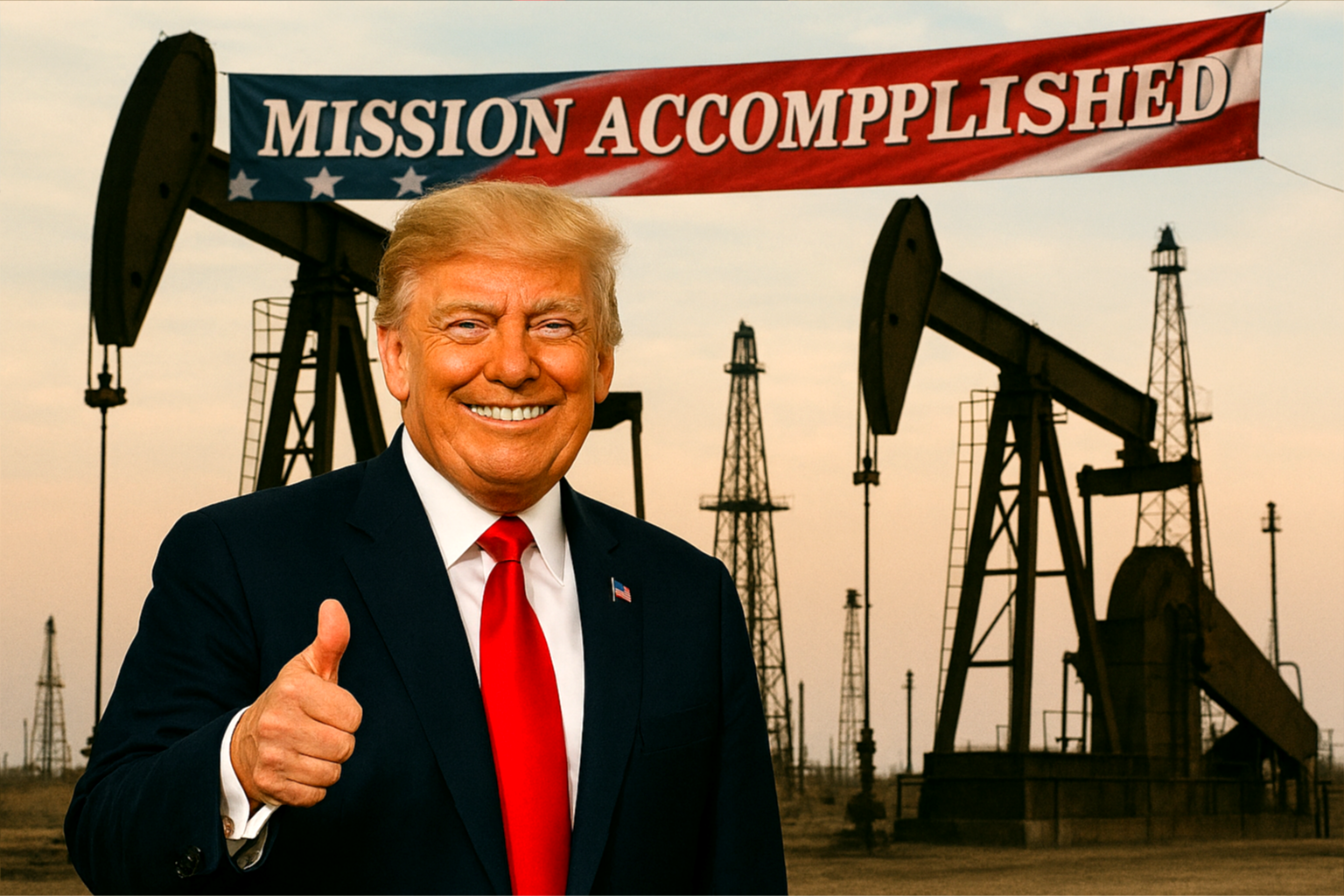
Taken together, these actions—boat strikes, tanker seizures, and the abduction of a sitting head of state—illustrate the hemispheric dimension of propaganda through force. Each move was staged for maximum visibility, each justified under elastic narratives of counternarcotics or “narco-terrorism,” and each carried profound legal and diplomatic risks. The message was clear: America under Trump would not just close its borders—it would project force deep into its neighborhood, rewriting norms in real time. (USNI News | CBS News)
The Drug War Pretext: Strength Wrapped in a Lie
If the administration’s boat strikes and Maduro’s capture were justified under the banner of counternarcotics, the logic collapses under scrutiny. From the start, Trump and senior officials branded these operations as blows against “narco-terrorists,” framing the campaign as a righteous extension of the drug war. Strike videos were captioned with claims that each destroyed vessel represented a major narcotics pipeline, and Maduro’s arrest was trumpeted as the takedown of a kingpin whose regime was “poisoning America.” Yet, as legal analysts and fact-checkers noted, the government provided no public evidence of narcotics cargo on the destroyed boats, nor did it release verifiable intelligence linking Maduro’s inner circle to active trafficking networks beyond long-standing allegations. The narrative was theater—elastic enough to justify kinetic action without the burden of proof (NBC News).